Paul Angell Foundation Commits $35m to Mayo Clinic for Lung Cancer AI Research
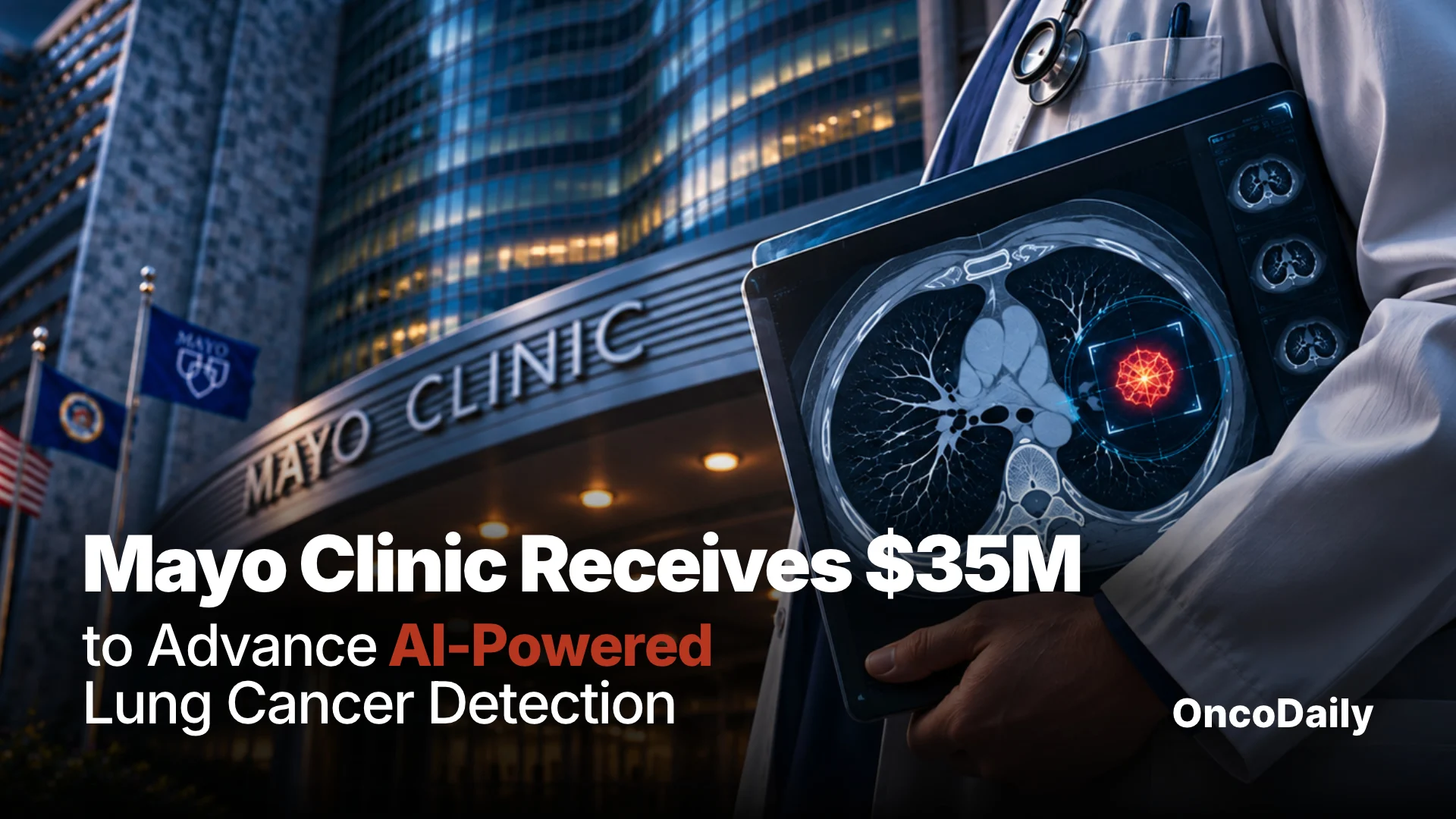
The Paul Angell Foundation committed $35 million to the Mayo Clinic Comprehensive Cancer Center to fund an interdisciplinary initiative that aims to detect lung cancer earlier and develop new treatments using artificial intelligence.
The gift will support research that combines medical imaging, digital pathology, genomic data and clinical histories from more than 94,000 lung cancer patients, according to Mayo Clinic’s announcement. Researchers plan to build AI models that integrate those data sources to identify patients at highest risk, distinguish aggressive nodules from benign ones and find biological signals of cancer before conventional screening can reliably detect them.
“The Paul Angell Foundation’s extraordinary philanthropy gives Mayo Clinic Comprehensive Cancer Center the opportunity to accelerate lung cancer research at a scale that would otherwise be difficult to achieve,” said Cheryl Willman, M.D., director of the Mayo Clinic Comprehensive Cancer Center, in a statement.
“By bringing together our clinical and research expertise, longitudinal patient data, biological specimens and advanced artificial intelligence capabilities, we can ask questions that no single discipline or data source or institution could answer alone.”
Lung cancer remains the leading cause of cancer death in the United States. The American Cancer Society estimates 229,410 new diagnoses and 124,990 deaths in 2026, accounting for roughly one in five cancer deaths. Low-dose CT screening reduces mortality by about 20% compared with chest radiography, but many patients fall outside current eligibility guidelines and suspicious nodules are often difficult to classify.
The initiative pursues three connected objectives: AI-powered risk prediction, earlier biological detection and new therapeutic strategies including cellular and immune-based therapies. Sharon Angell, a member of the Paul Angell Foundation’s Board of Directors, said the foundation wanted to direct resources where they could make a genuine difference for families affected by the disease.
Sharon Angell, a member of the Paul Angell Foundation’s Board of Directors, said the foundation wanted to direct resources where they could make a genuine difference for families affected by the disease. “Lung cancer touches so many families in devastating ways, and we wanted to direct resources where they could make a genuine difference,” Angell said.
Low-dose CT screening reduces mortality by about 20% compared with chest radiography, but many patients fall outside current eligibility guidelines and suspicious nodules are often difficult to classify.
Mayo Clinic’s scale supports its AI research capacity, employing 5,500 physicians and scientists and receiving over $1 billion in research funding as of 2022. This enables large-scale studies, like the current initiative using data from 94,000 lung cancer patients. The clinic’s three major campuses (Rochester, Jacksonville, and Phoenix/Scottsdale) and 2022 patient volume of 1.3 million provide diverse data to train and validate AI models.
“Lung cancer touches so many families in devastating ways, and we wanted to direct resources where they could make a genuine difference,” Angell said. “What gave us confidence in Mayo Clinic was the depth of its vision, the rigor of its science and its ability to translate discovery into patient care.”
Related reading
- Lifestyle Changes and Vaccinations Help Reduce Cancer Risk
- Falaise Students Organize Blood Drive and First Aid Training
- Intermittent Fasting Has No Clear Weight Loss Advantage Over Calorie Restriction, Research Indicates (archyde.com)
- Cleveland Clinic Tests Virtual Reality for Cancer Distress (newsdirectory3.com)