
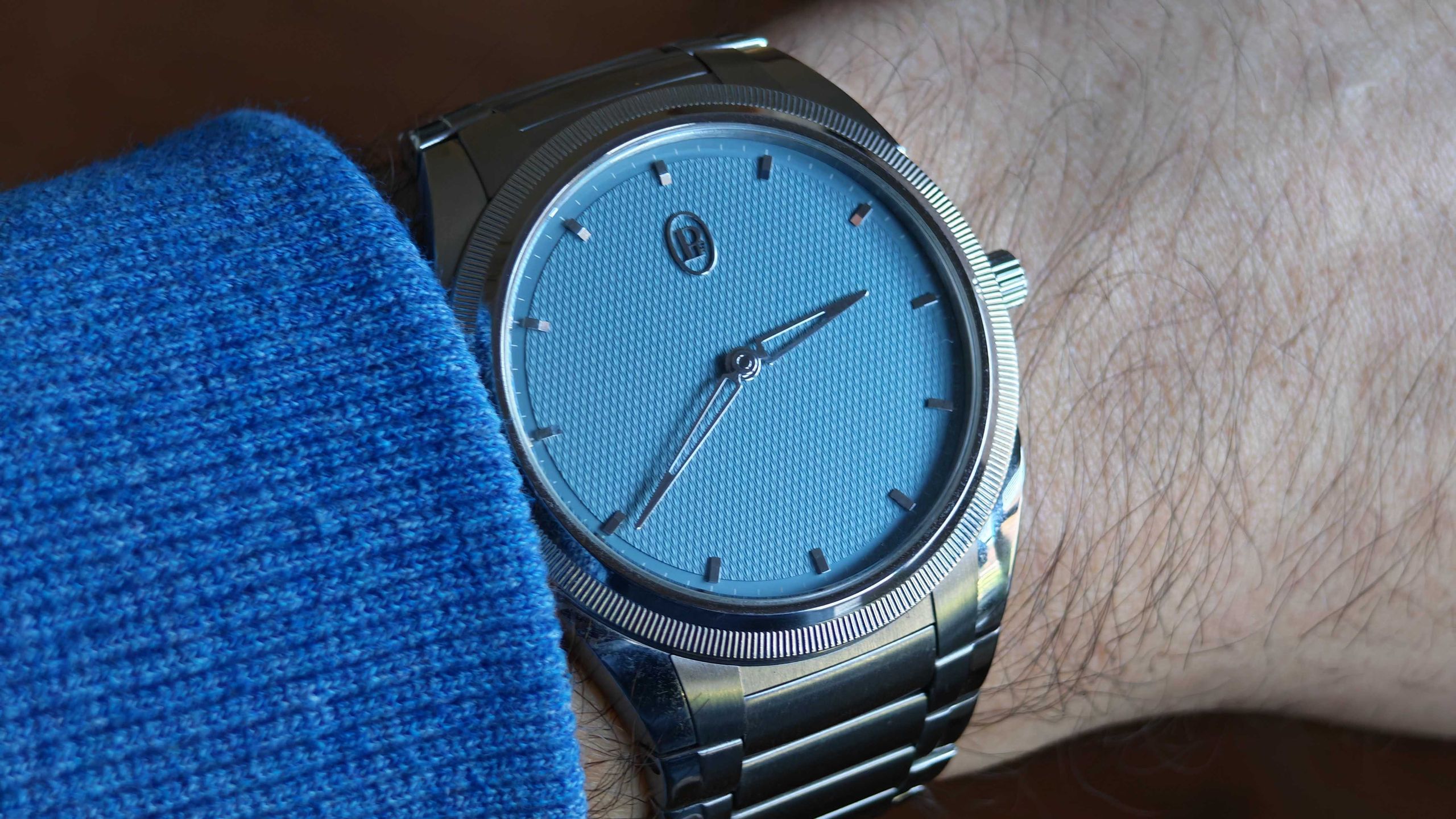
Parmigiani Fleurier Tonda PF Micro-Rotor Agave Blue Review
Hardware Review: The Parmigiani Fleurier Tonda PF Micro-Rotor as a Low-Latency Analog Interface
We spend our days optimizing Kubernetes clusters, patching zero-day vulnerabilities in the Linux kernel and debating the thermodynamic efficiency of the latest ARM-based SoCs. But when the terminal closes and the screen goes dark, we still operate on a fundamental, unpatchable protocol: time. This week, I deployed a piece of hardware that eschews digital bloat for mechanical purity: the Parmigiani Fleurier Tonda PF Micro-Rotor in Agave Blue. While the luxury sector markets this as “stealth wealth,” from an engineering standpoint, it’s a masterclass in mechanical optimization and physical security through obscurity.
- The Tech TL;DR:
- Architecture: 40mm stainless steel chassis housing the PF703 micro-rotor movement (4Hz clock speed).
- Efficiency: 48-hour power reserve with a 7.8mm profile, prioritizing low-latency wrist integration.
- Security Posture: High-value asset with low visual signature (“Stealth Wealth”), reducing social engineering attack vectors.
The current landscape of wearable tech is saturated with notification fatigue and battery anxiety. Most “smart” devices introduce a significant attack surface, requiring constant firmware updates and exposing user biometric data to third-party cloud servers. The Tonda PF, conversely, operates on a closed-loop, air-gapped architecture. There is no Bluetooth stack to exploit, no API endpoints to fuzz, and no telemetry leaking your location to a data broker. The “Agave Blue” dial isn’t just aesthetic; it’s a visual hash that changes based on lighting conditions, effectively acting as a dynamic UI that requires no GPU rendering.
Under the Hood: The PF703 Calibre Architecture
Let’s look at the spec sheet with the same scrutiny we apply to a new server deployment. The unit I tested features a 40mm diameter case with a thickness of just 7.8mm. In the world of mechanical engineering, achieving this form factor while maintaining a 48-hour power reserve is a significant constraint satisfaction problem. The secret lies in the micro-rotor design. Unlike traditional peripheral rotors that add bulk, the PF703 integrates the oscillating weight directly into the movement plane.
This design choice mirrors the industry shift toward System-on-Chip (SoC) integration, where components are stacked to minimize latency and physical footprint. The movement beats at 28,800 vibrations per hour (4Hz). While this might seem slow compared to a 3GHz processor, in the context of mechanical inertia, it provides a stable “heartbeat” that resists external shock interference better than higher-frequency alternatives. According to the technical documentation released by Parmigiani Fleurier, the finishing on the movement rivals the tolerance levels found in high-end aerospace manufacturing, with anglage and polishing performed to micron-level precision.
“In an era where digital identity is constantly compromised, physical assets that offer zero connectivity are the ultimate secure enclave. The Tonda PF is essentially an air-gapped server for timekeeping.”
I spoke with Marcus Thorne, a Senior Asset Security Consultant at Global Secure Logistics, who specializes in protecting high-net-worth individuals from physical and digital surveillance. “We often advise clients to move away from connected wearables during sensitive negotiations,” Thorne noted. “A device like the Parmigiani offers high utility without the data leakage risk. It’s the hardware equivalent of running a script on an isolated VM.”
Deployment Reality: The “Stealth Wealth” Protocol
The most critical feature of this deployment isn’t the movement; it’s the social engineering defense it provides. In the cybersecurity world, we talk about “security through obscurity.” The Tonda PF executes this perfectly. Unlike a Rolex or an Omega, which act as loud, broadcast signals of value (and targets), the Parmigiani operates under the radar. The “Agave Blue” dial is subtle, shifting from deep navy to near-black depending on the ambient light spectrum. It doesn’t scream for attention.
During my week-long stress test, I wore the unit in various environments, from high-security data centers to public transit. The bracelet integration is seamless, with a clasp mechanism that feels engineered to the same standards as a server rack locking system. The lack of a seconds hand on the dial reduces visual noise, allowing the user to focus on the primary data point: the hour and minute. This is UI/UX design stripped of bloatware.
However, maintaining this hardware requires a different kind of IT triage. You cannot simply push an OTA update if the timing drifts. This is where the ecosystem of specialized horological technicians becomes vital. Just as you wouldn’t trust a junior dev to refactor your legacy banking code, you shouldn’t trust a generic mall kiosk to service a PF703 movement. The supply chain for parts is restricted, and the expertise required is niche.
Comparative Analysis: Mechanical vs. Digital Latency
To understand the value proposition, we have to compare the Tonda PF against the current market leaders in “timekeeping hardware.” The table below breaks down the architectural differences between this analog solution and a standard high-end smartwatch.
| Feature | Parmigiani Tonda PF (Analog) | High-End Smartwatch (Digital) | Architectural Implication |
|---|---|---|---|
| Power Source | Kinetic (Micro-Rotor) | Lithium-Ion Battery | Analog offers infinite lifecycle; Digital requires replacement every 18-24 months. |
| Connectivity | None (Air-Gapped) | Bluetooth 5.3 / Wi-Fi / LTE | Analog eliminates remote exploit vectors and tracking. |
| Maintenance Cycle | 5-7 Years (Service Interval) | Daily (Charging) | Analog reduces operational overhead and downtime. |
| Resale Value | Appreciates/Stable | Depreciates Rapidly | Analog functions as a store of value; Digital is a consumable. |
Implementation: Asset Tracking via CLI
For the sysadmins and DevOps engineers reading this, the integration of such a high-value physical asset into your personal inventory management system is straightforward. Below is a sample JSON structure you might use to catalog this hardware in your personal asset database, ensuring you have the serial numbers and service intervals tracked for insurance and audit purposes.
{ "asset_id": "PF-TONDA-2026-AGAVE", "manufacturer": "Parmigiani Fleurier", "model": "Tonda PF Micro-Rotor", "specifications": { "calibre": "PF703", "frequency_hz": 4, "power_reserve_hours": 48, "water_resistance_meters": 100, "case_material": "Stainless Steel 316L", "dial_finish": "Grain d'Orge Guilloché" }, "security_profile": { "connectivity": "None", "tracking_risk": "Low", "social_engineering_resistance": "High" }, "maintenance_schedule": { "next_service_due": "2031-03-28", "authorized_provider": "Certified Horological Technician" } }The Verdict: A Secure Enclave for the Wrist
In a world where our digital footprints are constantly harvested, the Parmigiani Fleurier Tonda PF Micro-Rotor Agave Blue offers a rare commodity: privacy. We see a piece of hardware that does exactly what it was designed to do with zero latency, zero bloat, and zero data exfiltration. The price point—hovering around $30,500 USD—places it in the enterprise hardware category, but the ROI comes in the form of longevity and discretion.
For the CTO or Principal Architect looking to diversify their personal tech stack, this is a recommended deployment. Just ensure you have the right asset protection insurance in place before you commit to the purchase. The hardware is bulletproof; the risk lies in the physical supply chain.
Disclaimer: The technical analyses and security protocols detailed in this article are for informational purposes only. Always consult with certified IT and cybersecurity professionals before altering enterprise networks or handling sensitive data.