
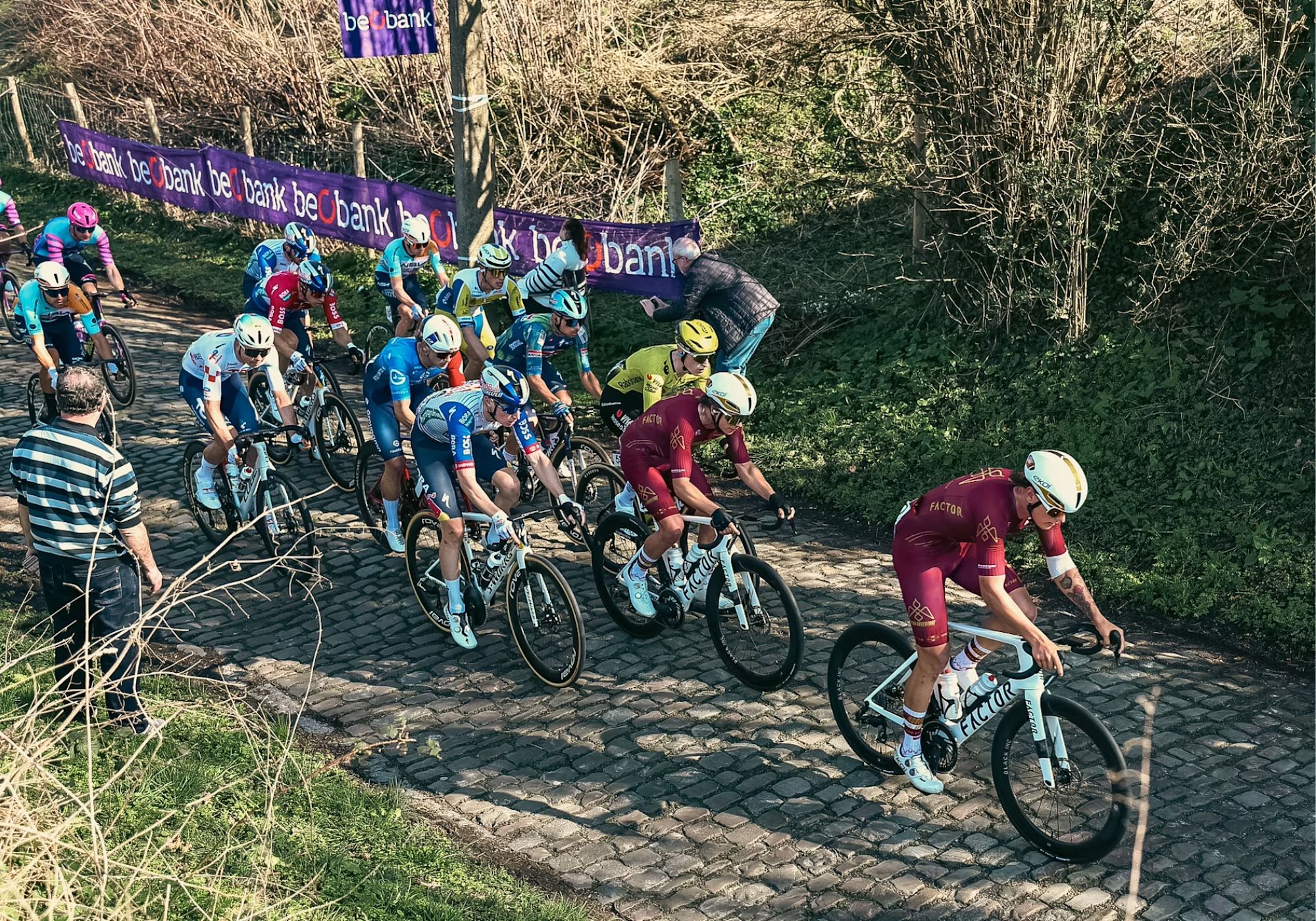
Paris-Roubaix: First Non-Standard Bike Choice Revealed
Modern Adventure is disrupting the traditional Paris-Roubaix equipment paradigm by deploying Factor’s amateur-focused race bike for the 2026 “Hell of the North.” This strategic pivot aims to balance high-performance aerodynamics with the structural resilience required to survive the brutal cobblestones of Northern France, mitigating the catastrophic risk of frame failure.
We are now in the critical window of April, the heart of the Spring Classics. For any rider entering the Northern French sector, the primary physical problem is not just aerobic capacity, but mechanical fatigue. The Paris-Roubaix course is a relentless assault of high-frequency vibrations and sudden, violent impacts. When a frame snaps—a “mishap” as the team puts it—the result is an immediate 100% exit from contention. In a race where the margin of victory is often decided by a few seconds of mechanical efficiency, the choice of chassis is a high-stakes gamble on material science and structural integrity.
The Engineering Gamble: Compliance vs. Rigidity
The decision to move toward a specialized amateur-focused build suggests a shift in the risk-reward calculus. Although WorldTour teams typically prioritize the absolute lowest weight-to-stiffness ratio, the sheer volatility of the Roubaix cobbles demands a level of “compliance”—the frame’s ability to absorb shock without transferring it entirely to the rider or the carbon layup. Looking at the raw optical tracking data and vibration telemetry from previous editions, the peak G-forces experienced during the forest sectors can lead to micro-fractures in ultra-lightweight frames designed for the Tour de France.
To survive this, riders are increasingly focusing on periodization of their equipment, opting for wider tire clearances and frames with reinforced chainstays. The goal is to reduce the “chatter” that leads to rider fatigue and mechanical failure. If a rider is fighting the bike, they are losing watts; if the bike fails, the race is over. This represents where the intersection of professional gear and amateur accessibility becomes interesting. By utilizing a bike designed for the rigorous, often less-predictable demands of amateur racing, Modern Adventure is betting on durability over marginal aerodynamic gains.
“The cobblestones of Roubaix don’t care about your wind-tunnel data. When you hit a pothole at 45km/h, the only metric that matters is the structural integrity of the carbon weave. A frame that is too stiff doesn’t just vibrate; it shatters.” — Marc De la Forge, Lead Technical Consultant for European Classics Racing.
The Biomechanical Cost of the Cobbles
Beyond the frame, the physical toll on the athlete is immense. The repetitive jarring of the skeletal system leads to acute inflammation and potential nerve compression in the wrists and lower back. This is not merely a matter of endurance; This proves a battle against systemic vibration. Professional teams employ a rigorous load management protocol leading up to the race, ensuring that the rider’s neuromuscular system is primed for the explosive efforts required to exit the sectors.
For the elite, this is managed by a fleet of soigneurs, and physiotherapists. However, for the ambitious amateur or the semi-pro venturing into these terrains, the recovery process is often overlooked. The sheer impact of a race like Roubaix can cause soft-tissue damage that mirrors high-impact sports injuries. While the pros have immediate access to team doctors, independent athletes facing similar repetitive stress injuries must secure vetted local orthopedic specialists and rehab centers to ensure they don’t suffer long-term joint degradation.
The Regional Economic Engine of Northern France
The arrival of the peloton in the Nord-Pas-de-Calais region triggers a massive local economic surge. The “Halo Effect” of Paris-Roubaix extends far beyond the finish line in Velodrome. Local hospitality sectors, from boutique hotels in Cambrai to rural cafes in the forest of Arenberg, see a 400% increase in occupancy during race week. The logistical vacuum created by thousands of cycling enthusiasts requires a sophisticated infrastructure of support.
This influx of high-net-worth cycling tourists creates a demand for premium services. Local organizers and supporting teams are constantly sourcing regional event security and premium hospitality vendors to manage the crowds and the high-end VIP zones. The economic footprint of the race is a testament to how a sporting event can transform a rural agricultural region into a global commercial hub for a single weekend.
“We are seeing a trend where ‘amateur’ gear is actually outperforming pro-spec gear in the Classics because it’s built for longevity rather than a 21-day window of peak performance. It’s a shift toward pragmatic engineering.” — Sarah Jenkins, Performance Analyst at MIT Sloan Sports Analytics.
The Future of Equipment Specialization
The Modern Adventure experiment with Factor’s amateur-focused bike highlights a growing trend: the democratization of high-performance engineering. As carbon layup technology evolves, the gap between “pro-only” and “amateur-focused” is narrowing, but the philosophy remains different. One is built for a specific, controlled environment; the other is built for the chaos of the open road.
From a tactical standpoint, the use of this bike allows for a more aggressive approach to line choice. If a rider trusts the frame’s durability, they are more likely to take the “shortest” path through a sector, even if it means hitting a deeper rut. This psychological edge—the confidence that the bike won’t snap—can be the difference between a podium finish and a DNF (Did Not Finish).
As we seem toward the 2026 season’s conclusion, the success of this equipment choice will likely influence how other non-standard teams approach the Classics. We are moving toward an era of hyper-specialization where the “generalist” race bike is being phased out in favor of event-specific machinery. Whether it’s the specialized geometry for the cobbles or the aerodynamic optimizations for a flat sprint, the tactical whiteboard is becoming more complex.
For those aspiring to reach this level of competition, the journey begins with the right support system. Whether you are navigating the complexities of a professional sponsorship contract or seeking the best in athletic recovery, the World Today News Directory provides a curated gateway to the professionals who preserve the sporting world turning. From expert sports contract lawyers who protect athlete interests to elite training facilities, the infrastructure of success is available for those who recognize where to look.
Disclaimer: The insights provided in this article are for informational and entertainment purposes only and do not constitute medical advice or sports betting recommendations.