Paris Museum Acquires Rare 167-Million-Year-Old Dinosaur Skeleton to Prevent Auction Sale
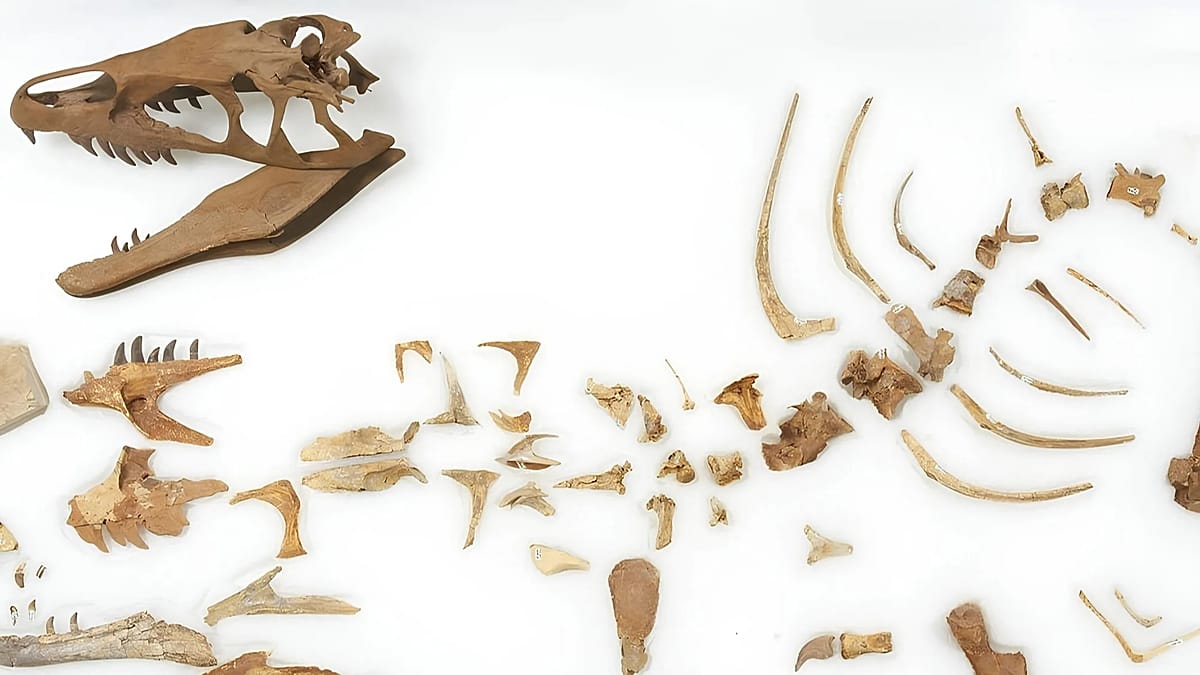
Dubreuillosaurus valesdunensis skeleton enters Paris museum
French authorities secured a rare 167-million-year-old carnivorous dinosaur skeleton for the National Museum of Natural History in Paris, according to euronews.com.
The acquisition prevents a scheduled private sale and keeps the unique specimen within public research collections.
The fossil represents the only known specimen of its species. Palaeontologists classified it as a new theropod related to megalosaurs.
Discovery in Normandy fields
André Dubreuil found the fossil in 1994 while serving as mayor of Conteville in the Eure département of Normandy. Teams from the Centre for Research in Palaeontology, the National Museum of Natural History, CNRS, and Sorbonne University subsequently conducted multiple excavation campaigns.
Researchers named the new species Dubreuillosaurus valesdunensis in honor of its discoverer. The skull is among the most complete and best preserved of any theropod dinosaur discovered in Europe.
This preservation improved scientific knowledge of megalosaur anatomy, which had remained largely unknown. The specimen also stands as one of the last remaining traces of dinosaurs in Normandy, as other regional fossils were destroyed during 1944 bombing raids.

Avoided auction at Hôtel Drouot
The skeleton had been on public display since 2014 at the Paléospace in Villers-sur-Mer, Normandy. Heirs of the owner decided to part with the fossil, leading to a scheduled auction on November 18 at the Hôtel Drouot in Paris.
The scientific community raised concerns over the potential loss of access for researchers. French authorities intervened and reached an agreement for acquisition by mutual consent before the auction could take place.
Jardin des Plantes reopening
The skeleton will be housed in the Gallery of Palaeontology and Comparative Anatomy at the Jardin des Plantes in Paris. The gallery is scheduled to reopen in the summer of 2027.
Research on the specimen will continue as scientists perform scanner analyses to build a new biomechanical reconstruction.