
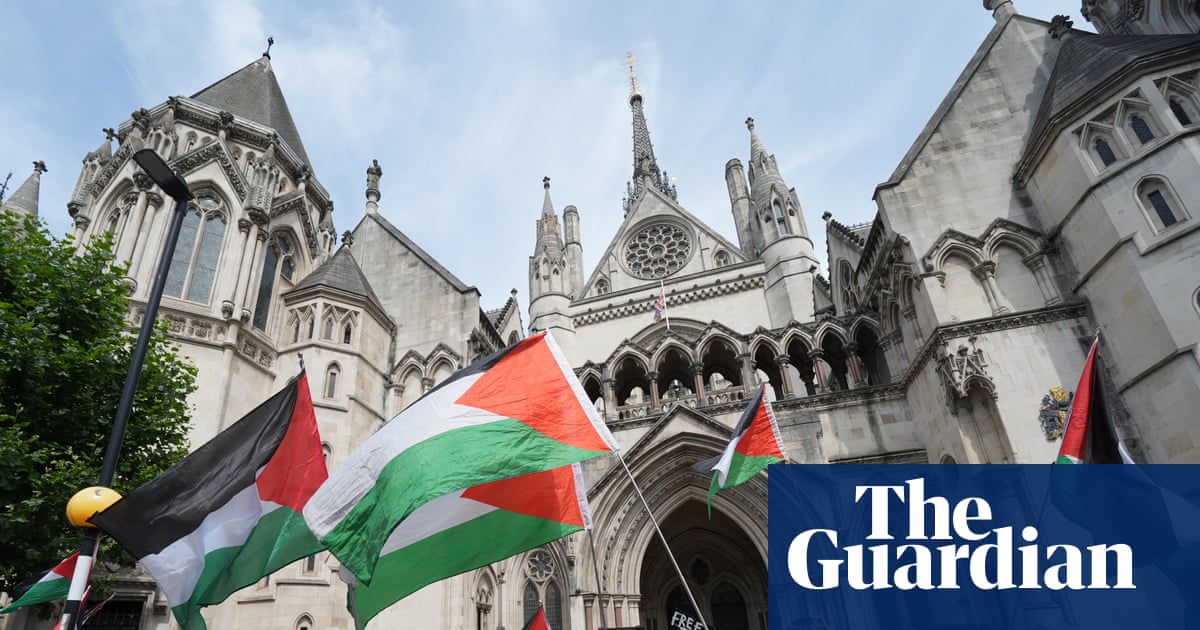
A UK government ban on the Palestine Action protest group was deemed unlawful by the high court in London on Friday, though the prohibition remains in place pending an appeal. The ruling marks the first successful legal challenge to a proscription order issued under anti-terrorism legislation.
The case was brought by Huda Ammori, a co-founder of Palestine Action, against the decision made last year by then-home secretary Yvette Cooper to categorize the group alongside organizations such as Islamic State. From July 5th, 2024, membership or support for Palestine Action became a criminal offense, punishable by up to 14 years in prison.
Dame Victoria Sharp, president of the King’s Bench Division, led the three judges who ruled that Cooper’s decision was “unlawful” on two grounds. The court found there was a “very significant interference” with fundamental rights – freedom of speech, peaceful assembly, and association – and that the decision was inconsistent with the home secretary’s own stated policies. However, the judges allowed the ban to remain in effect to allow time for the government to launch an appeal.
The current home secretary, Shabana Mahmood, confirmed the government’s intention to appeal. “I am disappointed by the court’s decision and disagree with the notion that banning this terrorist organisation is disproportionate,” she said. “The proscription of Palestine Action followed a rigorous and evidence-based decision-making process, endorsed by parliament. The proscription does not prevent peaceful protest in support of the Palestinian cause, another point on which the court agrees.”
Ammori hailed the ruling as a “monumental victory,” stating that Palestine Action was targeted because its disruptive actions against Elbit Systems, an Israeli weapons manufacturer, had cost the company “millions of pounds in profits and multibillion-pound contracts.” She added that the government’s justification for the ban – property damage – was acknowledged in court, and that the action was motivated by lobbying from pro-Israel groups and weapons manufacturers. “Banning Palestine Action was always about appeasing pro-Israel lobby groups and weapons manufacturers, and nothing to do with terrorism,” Ammori said.
The court acknowledged that Palestine Action “promotes its political cause through criminality and encouragement of criminality,” but determined that the scale of its activities meeting the legal definition of terrorism was insufficient to justify proscription. The judgment stated that while some actions constituted terrorism, “the nature and scale of Palestine Action’s activities falling within the definition of terrorism had not yet reached the level, scale and persistence to warrant proscription.”
Since the ban took effect, over 2,700 people have been arrested, according to Defend Our Juries, the majority for holding placards expressing opposition to genocide and support for Palestine Action – offences under section 13 of the Terrorism Act, carrying a potential six-month prison sentence. More than 500 individuals, including clergy, pensioners, and veterans, have been formally charged. The status of these charges remains uncertain pending the outcome of the government’s appeal.
Mahmood emphasized that home secretaries must retain the power to act to protect national security and public safety, stating her intention to vigorously contest the judgment in the court of appeal.
