Pakistan’s Routine Immunisation Coverage Hits 81.3%, Says Dr Mukhtar Bharath
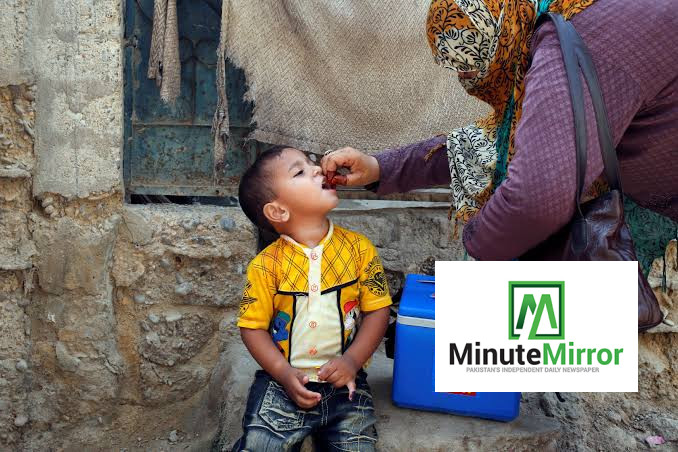
Pakistan’s routine immunisation coverage reached 81.3 percent of children this year while nine poliovirus cases were detected, Minister of State for National Health Services Dr Mukhtar Bharath said at a national event in Islamabad, Dawn reported.
Coverage gains shadowed by persistent transmission
The 81.3 percent figure marks progress for the Expanded Programme on Immunization (EPI), yet the nine wild poliovirus cases confirm that transmission chains remain active. Dr Bharath stressed that preventive measures must be intensified because the virus continues to circulate, particularly in areas where routine services and polio campaigns have not fully overlapped.
“Vaccines must reach every child through the integration of polio and routine immunisation efforts.”
Dr Mukhtar Bharath, Minister of State for National Health Services
He called for a joint strategy between the federal EPI and the Polio Programme to identify and vaccinate children who have missed doses entirely, often referred to as zero-dose children. Registration of these children in the National Electronic Immunization Registry was presented as a priority to close tracking gaps.

Punjab reviews November shortfall ahead of December drive
Provincial data reveal uneven campaign quality. Punjab’s Emergency Operations Centre reviewed the November sub-national immunisation days (SNIDs) and found a decline in performance compared with the September round, Minute Mirror reported. Coordinator Khalid Parvaiz directed district health authorities to address the shortcomings before the next national campaign, scheduled to begin on December 14.
“When it comes to quality, Punjab’s benchmark is Punjab itself.”
Khalid Parvaiz, Coordinator, Punjab Emergency Operations Centre
Parvaiz warned that mobile and migrant populations must not be overlooked. Environmental surveillance offered a counterpoint: all samples collected across Punjab tested negative for poliovirus, suggesting the virus is not widely circulating in the province’s sewage systems at this moment.
Operational integration targets marginalised communities
The federal minister emphasised that vaccine supply must be guaranteed for children in marginalised areas, urban slums, and among migrant and displaced populations. Using the Polio Programme's field network to strengthen routine immunisation was presented as the primary mechanism to reach these groups. The coordination gap between vertical polio campaigns and horizontal EPI services has historically left pockets of under-immunised children, sustaining transmission risk.
Next test arrives December 14
The December 14 national campaign will test whether the November review translates into operational gains. Punjab authorities are expected to apply lessons from the recent decline to ensure no child under five is missed. At the federal level, the push to register zero-dose children in the electronic registry continues alongside efforts to merge polio and routine immunisation micro-plans.
The Expanded Programme on Immunization was launched by the World Health Organization in May 1974, when only 5% of children in low-income countries received basic vaccines. By 1990, DTP3 coverage had risen to 76%, driven by the Child Survival and Development Revolution. The programme’s original focus on six childhood diseases and smallpox helped lay the groundwork for the Global Polio Eradication Initiative in 1988.
Disclaimer: The information provided in this article is for educational and scientific communication purposes only and does not constitute medical advice. Always consult with a qualified healthcare provider regarding any medical condition, diagnosis, or treatment plan.