Pakistani Women Turn to Digital Platforms for Income, But Face ‘Time Tax’ and Control Barriers
“If you see the life cycle of a woman, it is only at a later stage, when her children grow up or her relationship is stable, that she can work,” said Halima Iqbal, co-founder of the fintech company Oraan, according to CNA. While digital platforms are providing new avenues for Pakistani women to earn income, many continue to face significant barriers to financial independence.
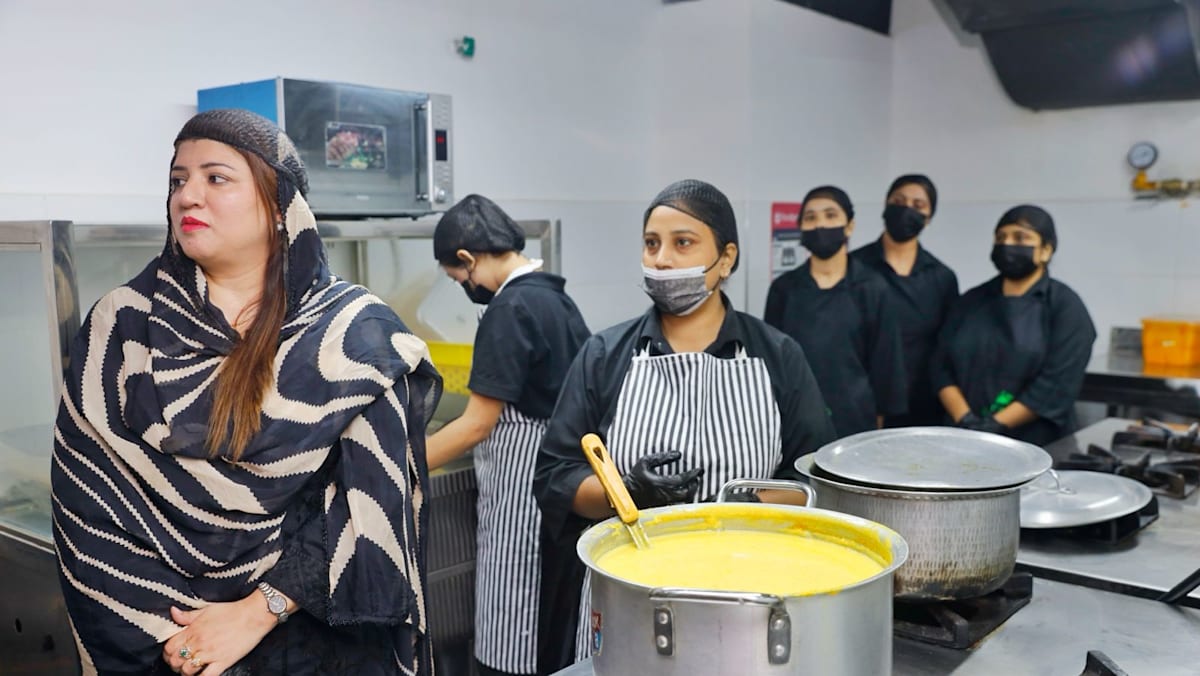
Ayesha Kamil, a 42-year-old with a PhD in environmental science, serves as a primary example of this shift. After leaving her job in Lahore, she began selling home-cooked meals through the delivery platform Foodpanda, luminews.my reported. Kamil started with roughly eight or nine daily orders from her home, but over 18 months, she expanded her operations to three kitchens employing 25 women.
Kamil’s business model has provided employment to women who might otherwise be restricted by family expectations. Among her staff is a young widow whose family permitted her to work specifically because the workplace was restricted to women, khanlist.com reported. In one recent day, Kamil’s business generated 250,000 Pakistani rupees from 300 orders, she told luminews.my.
Broader data indicates that mobile internet adoption among adult women in Pakistan rose from 19 percent in 2020 to 53 percent in 2025, according to the mobile industry body GSMA. Government figures show female labour-force participation increased from 21.4 percent in 2020-21 to 24.4 percent in 2024-25, though this remains well below the nearly 70 percent participation rate for men, khanlist.com noted.

Despite these gains, Iqbal described a “time tax” where childcare and family emergencies frequently disrupt businesses that women have built on their own, CNA reported. Even when businesses are successful, some women generate 2 million to 3 million Pakistani rupees in monthly revenue but feel compelled to hide earnings from their husbands to provide financial support to their own mothers, according to urgent.news.
| Metric | 2020/2021 Data | 2024/2025 Data |
|---|---|---|
| Female Internet Adoption | 19% | 53% |
| Female Labour Participation | 21.4% | 24.4% |
Efforts to bolster inclusion include the government’s Benazir Income Support Programme, which transitioned to disbursing payments to 10 million beneficiaries via mobile wallets this year, CNA reported. Additionally, Foodpanda’s HomeChef programme now includes 4,000 to 5,000 people, with women accounting for about 70 percent of the participants, according to khanlist.com.
Broadening Access Through Digital Initiatives
In 2017, JazzCash collaborated with Unilever and several development organizations to train women from the company’s Guddi Baaji network to serve as mobile banking agents in rural communities.

Approximately 70 percent of these individuals are women, roughly half of whom are launching their first entrepreneurial ventures.
Balancing Business and Domestic Demands
For many women, the ability to engage in digital commerce is heavily dependent on their personal life stages. Saima Rauf, a 48-year-old former schoolteacher and single mother in Islamabad, utilizes Facebook to market her jewellery and artwork, finding that as her children gain independence, she has more capacity for paid work while still tending to her ageing parents.
Despite these opportunities, Rauf primarily relies on pop-up events and exhibitions to secure the bulk of her sales. Experts note that even when women successfully overcome these hurdles, the structural reality often remains rigid.
To address barriers like the “time tax” and systemic exclusion, Oraan formalizes traditional rotating credit and savings associations (ROSCAs).
By allowing users to select specific five-month or ten-month payout plans based on their personal financial needs, the platform bypasses the social gatekeeping women face at traditional banks, where they are often required to provide male guarantors. This digital approach removes the need for physical branch visits, offering a streamlined alternative to informal community committees.
By managing the vetting, collection, and disbursement processes, Oraan aims to capture this existing behavior to foster greater financial inclusion for women.
However, experts caution that access to digital platforms does not guarantee profits or autonomy. “At the grassroots level, there is no control,” Iqbal told CNA.