
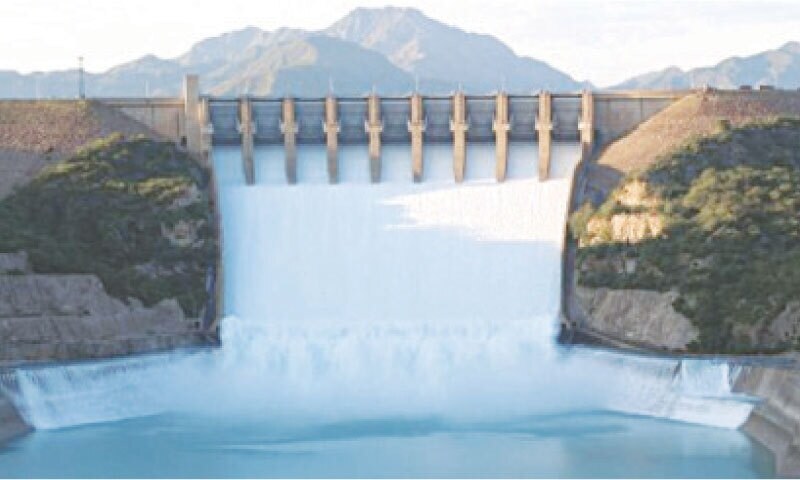
Pakistan Enters Rabi Season with Near-Record Water Storage Levels
ISLAMABAD – September 22, 2025 – Pakistan is poised to begin teh Rabi cropping season with exceptionally high water storage levels, offering a promising outlook for agricultural production despite recent flooding. Total storage across the nation’s major reservoirs has surpassed 13.1 million acre-feet (MAF), nearly 99% of the peak capacity of 13.3 MAF, substantially exceeding last year’s 11.388 MAF.
Mangla Dam was reported at 7.1 MAF on Sunday night, just below its maximum storage capacity of 7.277 MAF. While officials acknowledge filling the dam to capacity is unlikely in the remaining nine days of the season – requiring an additional 100,000 cusecs of inflow with only 18,800 cusecs currently entering – the reservoir has already seen substantial improvement over previous years. Mangla peaked at 1,233.25 feet at the end of Kharif 2023, compared to 1,224 feet in 2024, and currently stands at a higher level than both.
tarbela Dam also demonstrates improved storage, peaking at 1,549 feet this year, compared to 1,548 feet in 2023 and 1,550 feet last year. Chasma Barrage reached its peak capacity of 649 feet, exceeding the 645 and 646 feet recorded in the previous two years.
Currently, all rivers are flowing at normal levels, with the exception of medium floods reported at Kotri Barrage and Ganda Singhwala in the Sutlej River.
The Indus River System Authority (Irsa) has not yet scheduled meetings of its technical and advisory committees, as provincial governments have not requested fresh water allocations. Normally, these committees convene in late September to discuss indents for the first ten days of Rabi. Sindh province, typically a key requester for Rabi crop allocations, has not yet submitted any requests due to ongoing flood recovery efforts.
Despite the positive storage outlook, officials have cautioned about heavy sand deposits left across farmlands in Punjab’s plains by prolonged floodwaters, differing from the usual fertile silt deposits. The full impact on agricultural lands will remain unclear until floodwaters recede.
Approximately 24 MAF of water has flowed into the sea since the start of the Kharif season on April 1 – double the combined storage capacity of Tarbela and Mangla. The total water requirement for Rabi crops, as outlined in the Water Apportionment Accord of 1991, is estimated at 37-38 MAF. With carryover from Kharif and anticipated river flows, water availability is projected to be around 35-36 MAF over the next six months.
The Rabi season, running from October 1 to March 31, is crucial for wheat production, alongside other important crops like gram, lentil, tobacco, rapeseed, barley, and mustard. Irsa, empowered by the 1991 Water Accord, will continue to monitor water availability and allocate provincial shares twice yearly for the Kharif and rabi seasons.
