Pakistan Revives Offshore Exploration; Dar Cites $8-10tr Resources
Finance Minister Ishaq Dar cited $8-10 trillion resources as a Turkish seismic vessel docked at Karachi Port to revive offshore exploration on Friday.
Offshore oil and gas exploration in Pakistan revived on Friday as a Turkish seismic research vessel docked at Karachi Port to map rock formations beneath the Arabian Sea.
The arrival of the Oruç Reis brings Turkish technical expertise together with national energy companies to advance exploration in the country’s maritime territory, Deputy Prime Minister and Foreign Minister Ishaq Dar said during a welcome ceremony on Friday, Dawn reported.
Turkish Energy and Natural Resources Minister Alparslan Bayraktar joined Pakistani officials at the port to receive the ship. The vessel previously conducted operations off the coast of Somalia and in the Blue Homeland, according to Daily Sabah.
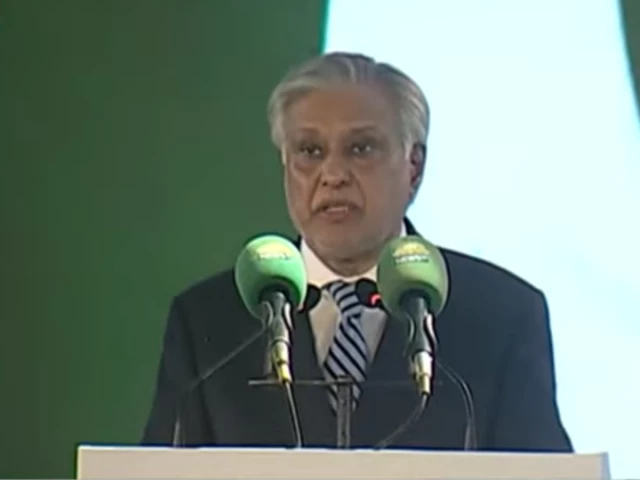
Deputy Prime Minister and Foreign Minister Ishaq Dar addresses the ceremony marking the arrival of Türkiye’s seismic research vessel Oruç Reis at Karachi Port, highlighting the growing Pakistan–Türkiye partnership in energy cooperation and offshore oil and gas exploration.… pic.twitter.com/XFLOg5M6Ry
Pakistan’s offshore zone spans approximately 300,000 square kilometres, but only 18 wells have been drilled there since independence in 1947, Dawn reported. The country launched the Offshore Bid Round in January last year, offering 40 blocks in the Indus and Makran basins after a gap of nearly two decades.
The Oruç Reis will operate in two distinct areas within Pakistani territorial waters. It will first collect three-dimensional seismic data across an area of 670 square kilometres in the Indus-C block, a phase expected to take about 50 days, according to Arab News PK.

Following that assignment, the vessel will gather two-dimensional data along 2,353 kilometres of survey lines in the Makran blocks over a period of 25 days, Arab News PK reported. Turkish Petroleum Offshore Company holds a 25 percent interest and operatorship in the Eastern Offshore Indus-C block alongside local partners including Oil and Gas Development Company Limited, Mari Energies, and Pakistan Petroleum Limited.
“Based on the data that we’re going to collect here, we aim to launch operations in the identified fields in 2027,” Bayraktar said, as reported by Business Recorder.
Petroleum Minister Ali Pervaiz Malik said that the data acquisition and interpretation exercise would take about six months under the watch of Turkish energy officials, potentially leading to drilling operations early next year.
Addressing critics who describe Pakistan as a heavily indebted nation caught in a debt trap, Dar said that the country’s mineral and hydrocarbon wealth far outweighs its financial liabilities, according to The Express Tribune. He said that total foreign exchange liabilities, including private companies and public sector enterprises, reach roughly $130 billion.

“The most conservative estimate of the things I counted — the mines and minerals, natural resources, hydrocarbons, gemstones and other God-gifted natural resources in this country — is anything between $8 trillion and $10 trillion,” Dar told Dawn.
Malik linked the push for domestic oil and gas production to energy security vulnerabilities exposed after the war in Iran began on Feb. 28 and disrupted shipping routes through the Strait of Hormuz, curtailing fuel supplies to power plants and causing electricity outages, Arab News PK reported.
“Every successful journey of exploration begins with knowledge. The data gathered by this vessel may deepen our understanding of the geological structures beneath the seabed and provide a stronger basis for Pakistan's future exploration plan.” Deputy Prime Minister and Foreign Minister Ishaq Dar said.