Pakistan Rearrests Human Rights Lawyers Hours After Supreme Court Grants Bail
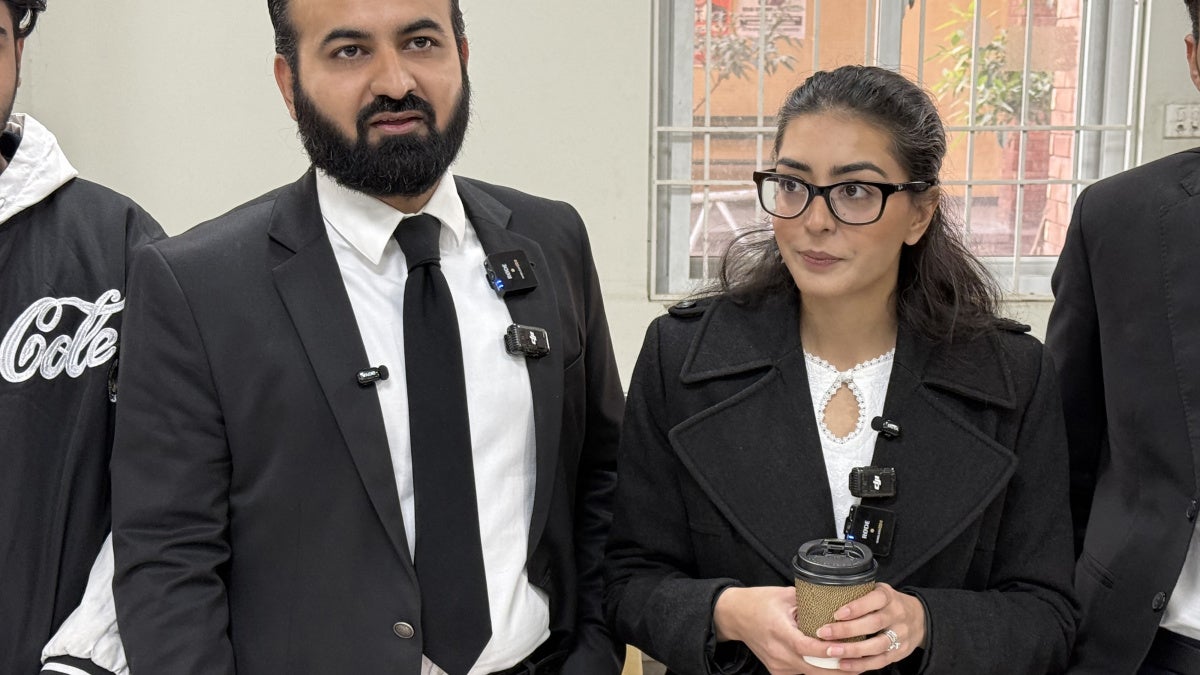
Pakistani authorities rearrested human rights lawyers Imaan Mazari-Hazir and Hadi Ali Chattha on September 17, 2026, just hours after the Supreme Court granted them bail, according to Human Rights Watch. The married couple, previously convicted under electronic crimes legislation for social media activity criticizing state institutions, face new anti-terrorism charges linked to a March 2025 protest, drawing sharp international condemnation over the weaponization of the judicial system.
The Supreme Court Bail Order and Immediate Rearrest at Adiala Jail
The legal developments unfolded rapidly on September 17, 2026. The Supreme Court of Pakistan granted bail and suspended the prison sentences of Imaan Mazari-Hazir and Hadi Ali Chattha after they spent nearly eight months in arbitrary detention, as reported by Amnesty International. The original convictions stemmed from a January trial under sections 9, 10, and 26-A of the Prevention of Electronic Crimes Act (PECA). That prosecution targeted the couple over social media posts supporting local activists and criticizing state institutions, resulting in prison terms ranging from 10 to 17 years.
However, freedom was short-lived. According to reporting corroborated by Amnesty International, at approximately 9:30 p.m. on September 17, police took the lawyers back into custody inside Adiala Jail in Rawalpindi while their release paperwork was actively being processed. Authorities produced them before an anti-terrorism judge, who subsequently remanded them to Adiala Jail for 14 days under an older case registered in March 2025.
Anti-Terrorism Charges Stemming from a March 2025 Protest
The new legal jeopardy centers on a public demonstration in Islamabad that occurred in March 2025. Police allege that during the protest, Mazari and Chattha chanted anti-government slogans and blocked a public road. Prosecutors filed charges under sections 188, 341, 506, 353, and 186 of the Pakistan Penal Code, alongside section 7 of the Anti-Terrorism Act. These provisions cover allegations of disobedience to official orders, wrongful restraint, criminal intimidation, and obstructing public servants.

During the subsequent court hearing, an Islamabad anti-terrorism court rejected a police request for a 30-day custodial interrogation period. Instead, the court authorized officials to keep the couple detained in prison while the proceedings advance. Human Rights Watch noted that invoking an older, dormant case immediately after a Supreme Court bail order raises profound concerns regarding the misuse of pretrial detention as a punitive measure against legal advocates.
International Condemnation and Legal Obligations
Global human rights organizations swiftly denounced the rearrest. Babu Ram Pant, Amnesty International’s Deputy Director for South Asia, stated that the maneuver “dispels any pretence that the charges against the two lawyers are anything other than a politically motivated attempt to punish them for their human rights work,” as cited in syndicated coverage. Pant added that the case highlights the willingness of authorities to weaponize the legal system against critical voices.

Patricia Gossman, senior associate Asia director at Human Rights Watch, emphasized the broader systemic impact of the prosecution. “Pakistani authorities should stop using criminal prosecutions to punish lawyers engaged in peaceful dissent,” Gossman stated. “Rearresting Mazari and Chatta hours after they were granted bail makes a mockery of the courts and safeguards against arbitrary detention.”
The International Covenant on Civil and Political Rights, ratified by Islamabad in 2010, guarantees the right to a fair hearing before an impartial tribunal and the opportunity to mount a proper defense. Furthermore, the United Nations Basic Principles on the Role of Lawyers mandate that governments protect legal professionals from intimidation, harassment, and prosecution while carrying out their legitimate duties.
For civic groups, activists, and practitioners facing complex regulatory hurdles or state-level legal challenges, securing specialized counsel remains paramount. Organizations confronting arbitrary enforcement often rely on vetted legal defense and human rights advocacy to safeguard due process rights.
The Chilling Effect on Free Expression and Legal Advocacy
The Human Rights Commission of Pakistan expressed deep concern that the piling of charges is designed purely to intimidate defenders of civil liberties. Bar councils and lawyers’ associations across the country have previously condemned the use of draconian statutes like PECA—with its vague definitions of cyberterrorism and false information—to suppress dissent.
As the case proceeds through the anti-terrorism court, human rights organizations continue to demand the immediate and unconditional release of both lawyers, urging authorities to drop all charges rooted in protected expression and legitimate legal representation.