
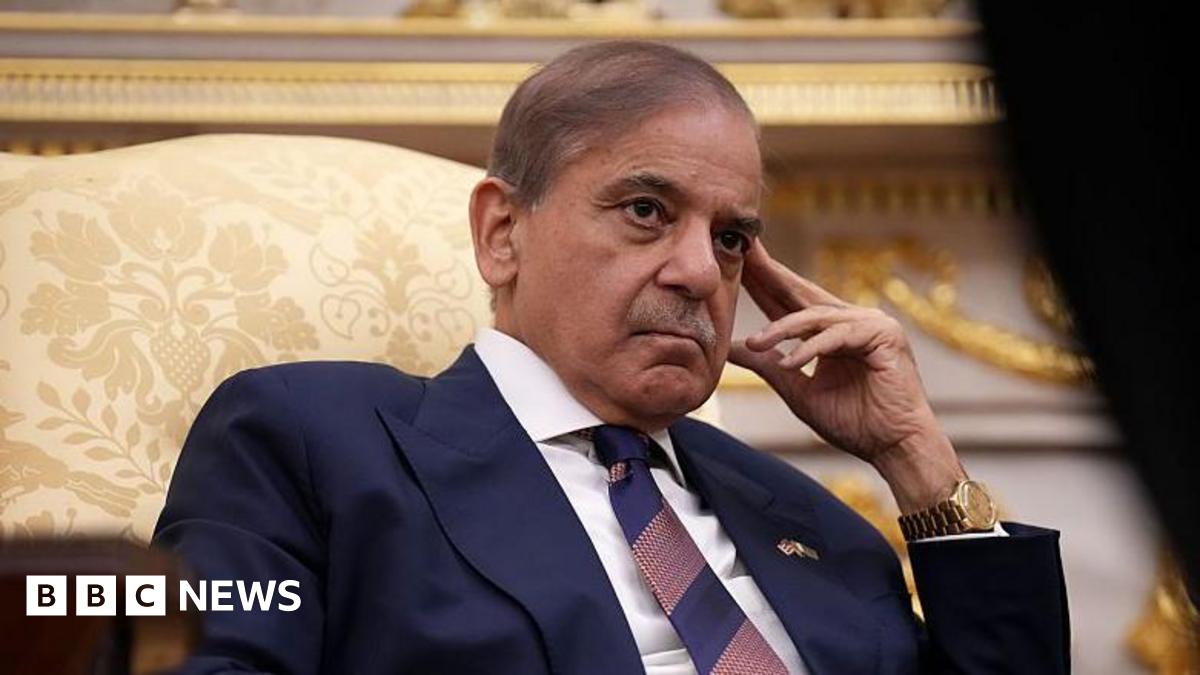
Pakistan Mediates US-Iran Ceasefire and Regional Truce
Pakistan has brokered a fragile, immediate ceasefire between the United States and Iran, effectively halting hostilities and extending the truce to Lebanon. Orchestrated by Prime Minister Shehbaz Sharif and negotiated during high-stakes diplomacy, the agreement aims to stabilize Middle Eastern markets and prevent a full-scale regional escalation as of April 8, 2026.
The relief in the global markets was instantaneous. When the announcement hit, the “risk premium” that had been inflating oil prices vanished almost overnight. But for those of us who have spent decades covering the corridors of power in Islamabad and Tehran, the word “fragile” does the heavy lifting here. We aren’t looking at a peace treaty; we are looking at a tactical pause.
The core problem is a profound deficit of trust. The U.S. Remains skeptical of Iranian compliance regarding nuclear proliferation and regional proxies, while Tehran views American presence in the Gulf as an existential threat. Pakistan, positioned as the unlikely bridge, is gambling its own diplomatic capital to keep the two superpowers from a collision that would shatter the global economy.
The Islamabad Pivot: Why Pakistan?
It seems counterintuitive that Pakistan—a nation grappling with its own internal economic volatility—would emerge as the primary mediator. But, Islamabad possesses a unique “backchannel” capability. They maintain functional, if strained, relationships with both the Trump administration and the Iranian leadership. By positioning itself as the guarantor of the ceasefire, Pakistan is attempting to pivot from a security-centric state to a diplomatic hub.
This isn’t just about goodwill. A regional war would be catastrophic for Pakistan’s fragile recovery. The disruption of trade routes and the potential for spillover instability in Balochistan make peace a matter of national survival for the Sharif government.
“The success of this ceasefire depends less on the signatures in the document and more on the granular verification of troop movements along the Lebanese border and the Persian Gulf. We are seeing a ‘trust-but-verify’ model where Pakistan acts as the third-party auditor.”
The geopolitical ripple effect is immense. By including Lebanon in the scope of the truce, the agreement addresses the immediate danger of a Hezbollah-Israel escalation, which has long been the “tripwire” for a wider US-Iran conflict. For businesses operating in the Levant, this provides a momentary window of predictability, though the legal landscape remains a minefield of sanctions and restrictions.
The Economic Fallout and the Compliance Gap
While the markets are cheering, the actual implementation of this ceasefire creates a logistical nightmare for international commerce. The U.S. Treasury’s Office of Foreign Assets Control (OFAC) has not yet eased the sanctions that make trade with Iran nearly impossible. This creates a “compliance gap” where the political will for peace exists, but the legal framework for trade remains frozen.
Companies attempting to resume operations or secure assets in the region are finding that the ceasefire does not equal a legal amnesty. Navigating these contradictions requires more than just a lawyer; it requires specialized international trade attorneys who can bridge the gap between diplomatic agreements and rigid federal law.
To understand the scale of the tension, consider the historical context of US-Iran relations. From the 1979 hostage crisis to the JCPOA and its subsequent collapse, the relationship has been defined by “maximum pressure” and “strategic patience.” This new Pakistani-led model attempts a “maximum mediation” approach, but it lacks the institutional backing of a formal treaty.
| Key Stakeholder | Primary Objective | Critical Risk |
|---|---|---|
| United States | Containment of Iranian influence | Domestic political backlash if “weakness” is perceived |
| Iran | Lifting of economic sanctions | Internal instability if concessions are too high |
| Pakistan | Regional stability & diplomatic prestige | Being caught in the crossfire of a failed agreement |
| Lebanon | Cessation of border hostilities | Internal political vacuum and militia influence |
The “X-Factor”: Digital Diplomacy and Perception
There is an ongoing debate regarding the authenticity of the communication surrounding this deal. Reports have surfaced questioning whether the specific language used in Prime Minister Sharif’s social media announcements was authored by Pakistani officials or vetted by U.S. Partners to ensure a specific market reaction. This “manufactured diplomacy” suggests that the ceasefire is as much about perception management as It’s about military reality.
For the average citizen in Beirut or Tehran, the ceasefire is a breath of air. For the investor in New York or London, it is a signal to re-enter the market. But for the logistics firms and infrastructure developers in the region, the uncertainty persists. The physical damage to infrastructure in border zones remains, and the necessitate for certified engineering firms to assess and rebuild critical transit hubs is now an urgent priority.
We must also look at the role of the Associated Press and other global wires in disseminating these updates. The speed of information in 2026 means that a single tweet can shift billions in currency value before the diplomats have even left the room. This volatility necessitates a new kind of risk management.
The Long-Term Outlook: Stability or Stagnation?
If this ceasefire holds for the promised two weeks, the pressure will shift toward a more permanent arrangement. However, the “Iranian Advantage”—the ability to exert pressure via regional proxies—remains a potent tool for Tehran. The U.S. Will likely continue to use the threat of renewed sanctions to force deeper concessions on nuclear capabilities.
The real victory here isn’t the absence of fighting, but the creation of a channel. For the first time in years, there is a recognized, neutral party in Pakistan that both sides are willing to listen to. This opens the door for a broader regional security architecture that could eventually include Saudi Arabia and the UAE.
However, the fragility cannot be overstated. A single miscalculation in the South China Sea or a sudden shift in U.S. Domestic policy could render this agreement void within hours. The world is currently operating on a “borrowed peace.”
As we navigate this era of volatile diplomacy, the only constant is the need for verified, expert guidance. Whether you are a corporation shielding assets from geopolitical shifts or a diplomatic envoy seeking local intelligence, the ability to find vetted geopolitical risk consultants is no longer a luxury—it is a requirement for survival. The World Today News Directory remains the definitive resource for connecting global entities with the professionals capable of navigating this precarious new world order.