
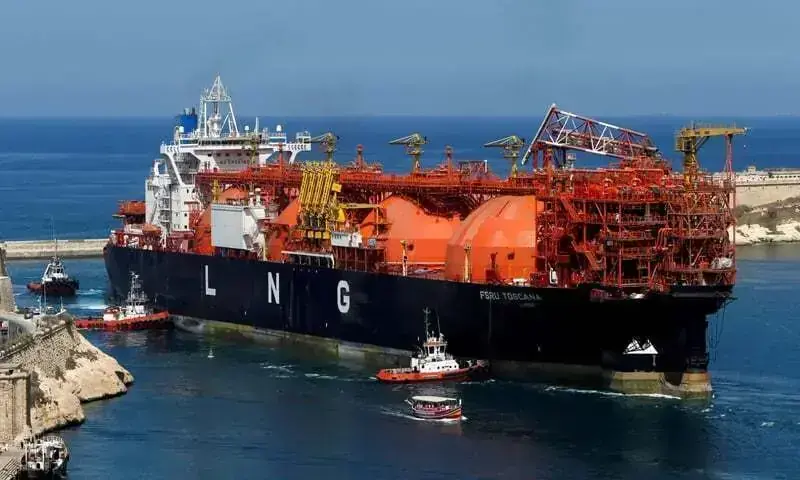
Pakistan LNG Supply Disrupted: Power Generation & Fuel Costs Impacted by Global Conflicts
Government officials in Islamabad confirmed Tuesday that critical LNG supplies are under force majeure, jeopardizing power generation capacity exceeding 4,500 megawatts amid escalating geopolitical tensions in the Middle East. The disruption, stemming from the US-Israeli war on Iran and subsequent attacks on Qatari LNG facilities, threatens energy security and necessitates immediate risk mitigation strategies for businesses reliant on stable power supplies. This situation highlights the critical need for robust energy procurement strategies and supply chain diversification, areas where specialized energy risk management consultants can provide invaluable support.
The Geopolitical Fuse and the LNG Shock
The current crisis isn’t simply a regional conflict; it’s a systemic shock to global energy markets. The Strait of Hormuz, a vital artery for 20% of global LNG and 25% of seaborne oil, is experiencing significant disruptions. Qatar’s complete halt of LNG operations on March 2nd, invoking force majeure, is particularly damaging, given the nation’s contribution of roughly 20% to global LNG supply. This isn’t a localized issue; it’s a cascading failure impacting energy security across multiple continents. The immediate consequence is a scramble for alternative sources, driving up prices and exposing vulnerabilities in existing supply chains.
The Central Power Purchasing Agency (CPPA) CEO, Rehan Akhtar, acknowledged the force majeure situation but attempted to reassure stakeholders regarding coal supplies from South Africa, and Indonesia. However, reliance on a single alternative isn’t a long-term solution. Diversification is paramount, and the current situation underscores the importance of proactive supply chain resilience planning.
Navigating the Force Majeure Clause: A Legal Minefield
Force majeure clauses, while standard in international contracts, are rarely straightforward. Successfully invoking such a clause requires meticulous documentation of the unforeseen event, its direct impact on contractual obligations, and demonstrable efforts to mitigate the damage. Companies facing disruptions need expert legal counsel to navigate these complexities.

“The invocation of force majeure isn’t a get-out-of-jail-free card. It triggers a rigorous legal review, and the party claiming force majeure must prove a direct causal link between the event and their inability to perform. We’re seeing a surge in demand for specialized legal expertise in this area.” – Dr. Anya Sharma, Partner, Global Energy Law Associates.
This legal uncertainty adds another layer of risk for businesses. International trade law firms specializing in energy contracts are experiencing a significant uptick in inquiries as companies seek to understand their rights and obligations.
The Pakistani Power Grid: A Case Study in Vulnerability
Pakistan’s reliance on LNG-based power plants – boasting a capacity of over 4,500 megawatts – makes it particularly vulnerable to this supply disruption. While officials are attempting to manage the situation by encouraging daytime electricity usage and assuring consumers of limited fuel cost adjustments (estimated at no more than Rs8-10 per unit), these are short-term fixes. The Power Planning and Monitoring Company (PPMC) CFO, Naveed Qaiser, emphasized efforts to maintain stable tariffs and minimize consumer impact, but the underlying problem remains: a constrained energy supply. The government’s attempt to absorb cost pressures, resulting in a cumulative relief of Rs46.56 billion during the first eight months of FY2025-26, is commendable, but unsustainable in the long run.
Coal as a Stopgap: Transportation Bottlenecks Emerge
While coal supplies from South Africa and Indonesia are currently unaffected, transportation challenges for power plants in Sahiwal and Jamshoro are beginning to surface. This highlights a critical vulnerability in the alternative supply chain. Efficient logistics and robust transportation infrastructure are essential to prevent a secondary crisis.
Financial Implications and the Circular Debt Challenge
The disruption also impacts Pakistan’s ongoing efforts to manage its circular debt, which stood at Rs1.7 trillion in January (down from Rs2.4 trillion the previous year). While the government projects the debt won’t exceed Rs1.69 trillion by the end of the fiscal year, the LNG crisis introduces fresh uncertainties. Increased reliance on more expensive alternative fuels will inevitably strain the system. The CPPA’s assurance of unchanged electricity rates for April, achieved through a minor fuel cost adjustment swap, is a temporary reprieve.
Industrial Demand and the Call for a Fixed Tariff
Industrial consumers are understandably concerned. Representatives are urging Nepra to establish a fixed, all-inclusive industrial tariff regime, capped at nine cents per unit for at least five years, to ensure international competitiveness. This demand underscores the need for policy stability and predictability in a volatile market. The current pre-tax tariffs, which fell from Rs49.19/unit (18 cents) in March 2024 to Rs34.75/unit (12 cents) in March 2026, demonstrate some improvement, but long-term certainty is crucial for attracting investment and fostering growth. The 25% growth in electricity consumption in the industrial sector and 7% in agriculture, driven by the incremental tariff package, are positive signs, but these gains could be reversed without a stable tariff structure.
The Macroeconomic Outlook: A Looming Energy Crisis?
The situation demands a fundamental reassessment of energy security strategies. Here are three key shifts we anticipate:
- Accelerated Diversification: Companies will aggressively pursue alternative energy sources, including renewables and potentially nuclear power, to reduce reliance on volatile fossil fuel markets.
- Supply Chain Resilience: Investments in robust supply chain infrastructure, including storage facilities and diversified transportation routes, will develop into a priority.
- Strategic Partnerships: Collaboration between governments and private sector entities will be essential to secure long-term energy supplies and mitigate geopolitical risks.
The current LNG supply disruption is a stark reminder of the interconnectedness of global energy markets and the vulnerability of economies reliant on a single source. The need for proactive risk management, legal expertise, and strategic partnerships has never been greater.
Navigating this complex landscape requires access to vetted, reliable B2B partners. The World Today News Directory provides a comprehensive platform to connect with leading supply chain risk assessment firms, energy procurement specialists, and international legal counsel. Don’t leave your energy future to chance – explore our directory today and build a resilient, sustainable energy strategy.