Pakistan, India Remain in Armed Suspicion; Military Spending Widens
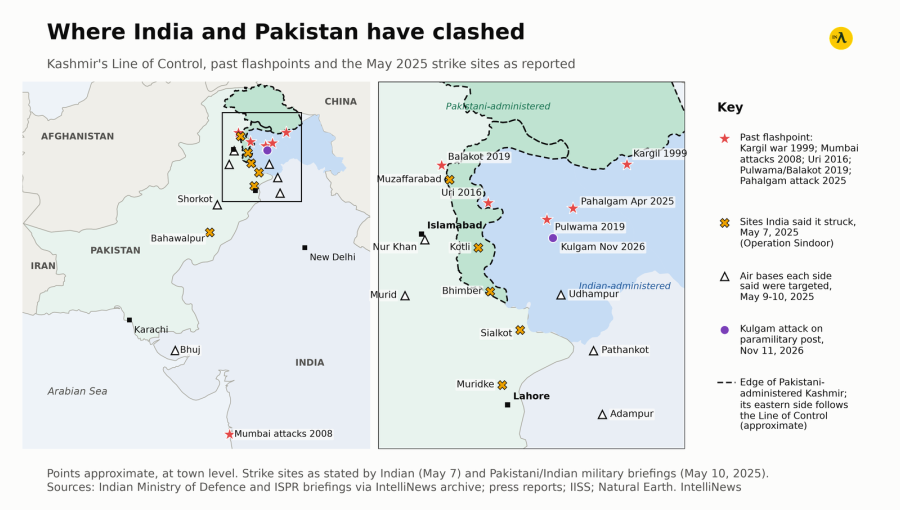
Pakistan and India remain locked in a state of armed suspicion. Despite a ceasefire that has held since May 10, 2025, both nations maintain hardened military postures and continue to trade threats of escalation, IntelliNews reported.
A widening gap in defense expenditure highlights the divide. India spent $92.1bn on its military in 2025, an increase of 8.9%, while Pakistan’s spending grew 11% to $11.9bn, according to a fact sheet from the Stockholm International Peace Research Institute (SIPRI). IntelliNews said that Pakistan’s budget increase is largely attributed to new orders for Chinese aircraft and missiles, while India’s capital outlays for military aircraft exceeded budget projections by 50%.
Both governments have established new red lines that elevate the risk of future conflict. New Delhi has declared it will treat any further Pakistan-linked terror attack as an act of war, while Islamabad has issued a similar warning regarding any attempt by India to disrupt the flow of rivers under the Indus Waters Treaty.
The Indus Waters dispute
The legal status of the 1960 water-sharing agreement remains a point of contention. After the April 2025 Pahalgam massacre, which India blames on Pakistan and Islamabad denies, New Delhi placed the treaty in abeyance, according to IntelliNews.
Although a Court of Arbitration in The Hague ruled unanimously on August 31 that the treaty “remains fully in force,” India has rejected the award and labeled the court as illegally constituted, IntelliNews reported.

Diplomatic channels remain narrow. During a visit to New Delhi for a multilateral forum on November 20, Pakistani climate change minister Musadik Malik said that India had never invited him to bilateral talks.
“I have not been called for bilateral talks even once,” Malik told reporters, as reported by IntelliNews.
“Without a mechanism, how can we discuss bilateral issues?” Malik said.
Rhetoric of readiness
The war of words has persisted since the fighting in May 2025, which Indian army chief General Upendra Dwivedi described as an “88-hour trailer.” In an interview in November 2025, Pakistan’s defense minister Khawaja Asif warned that his country could not rule out the possibility of an all-out war due to India’s “unpredictable strategy.”

“Our army is at maximum combat readiness,” Asif said, according to TASS.
In a separate interview with Geo News, Asif said, “If India attempts any misadventure against Pakistan, it would be relegated to history and its geography would be changed.”
While high-level rhetoric remains aggressive, the ground reality has been quieter. An IISS assessment published on November 16 confirmed that the ceasefire agreed upon on May 10, 2025, has held with no serious casualties reported along the Line of Control. The next major test for diplomatic engagement is scheduled for August 2027, when Pakistan is slated to host leaders of the Shanghai Cooperation Organisation in Islamabad.