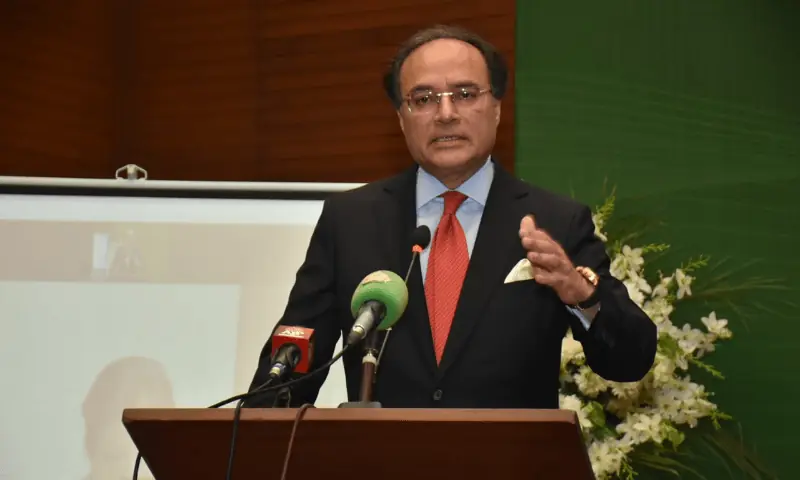
Pakistan Finance Minister Visits Washington to Discuss Trade and Investment
Pakistan’s Finance Minister Muhammad Aurangzeb arrived in Washington on Saturday for a three-day diplomatic mission aimed at recalibrating bilateral economic ties. The visit centers on negotiating a broader trade and investment framework while addressing ongoing regulatory hurdles, including USTR Section 301 investigations and the expiration of temporary US global tariff measures.
The Fiscal Pressure of Tariff Volatility
Following the US Supreme Court’s invalidation of tariffs previously enacted under the International Emergency Economic Powers Act (IEEPA), the Trump administration shifted its strategy to Section 122 of the Trade Act. This current 10pc global tariff, which impacts a wide range of international exporters, is slated to sunset on July 24.
For Islamabad, the stakes are high. Previous negotiations in July 2025 successfully mitigated the initial 29pc tariff threat down to 19pc.
Institutional Financing and Infrastructure Development
Beyond tariff mitigation, Aurangzeb’s agenda prioritizes long-term capital inflows. Meetings with the US Export-Import Bank and the US International Development Finance Corporation (DFC) signal a shift toward project-based financing. The objective is to stabilize Pakistan’s macroeconomic position by attracting private-sector investment in energy and infrastructure, sectors that have faced significant volatility due to regional geopolitical friction and energy market fluctuations.
The minister’s strategy mirrors his outreach during the IMF and World Bank Spring Meetings in April, where he socialized the prospect of Pakistan returning to international capital markets. His roadmap includes the potential issuance of Panda Bonds and Eurobonds, a move designed to diversify the country’s debt profile.
Navigating Section 301 and Market Access
Pakistan faces a proposed 10pc additional tariff, a figure that remains lower than the 12.5pc proposed for India and over 50 other nations.
The Path to Macroeconomic Stability
The focus remains on fiscal consolidation and the restoration of investor confidence.