
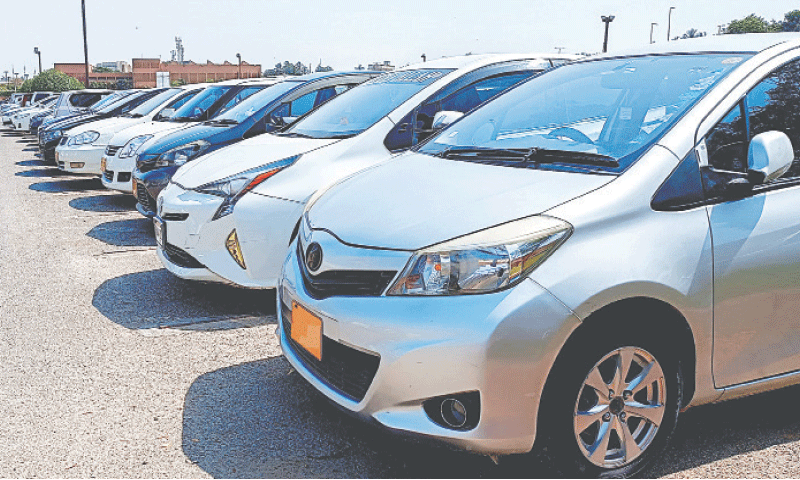
Karachi, Pakistan – January 22, 2026 – In a significant shift too Pakistan’s automotive import policies, teh Ministry of Commerce has amended the Import Policy Order 2022, effectively ending the long-standing practice of importing used cars under the “personal baggage scheme.” The move, formalized through statutory Regulatory Order (SRO) 61(I)/2006, restricts imports to the “transfer of residence” and “gift” schemes, sparking debate among overseas Pakistanis, car dealers, and industry stakeholders.
new Regulations and Restrictions
Under the revised regulations, individuals can only import used vehicles through the transfer of residence or gift schemes. Vehicles imported via these routes will be subject to a non-transferability period of one year from the date of importation. Moreover, vehicles imported under the transfer of residence scheme must originate from the country where the overseas Pakistani currently resides. The timeframe for importing vehicles under this scheme has been extended to 850 days, up from the previous 700 days, calculated from the date of the last Goods Declaration.
The Ministry of Industries and Production and the Engineering Advancement Board (EDB) will enforce minimum safety and environmental standards, mirroring those applied to commercial imports. This ensures that vehicles brought in under the new schemes meet the same regulatory requirements as those purchased through official channels.
A Phased Approach to Import Duties
While the personal baggage scheme has been abolished, the Federal Cabinet, in January, approved a decision by the Economic Coordination Committee (ECC) allowing overseas Pakistanis to import used vehicles up to three years old under the revised schemes. Though, commercial imports of used cars now face a 40% regulatory duty, in addition to existing taxes, until June 30, 2026. This duty is slated to decrease by 10% annually, reaching zero by fiscal year 2030.
Industry Reaction and Concerns
The changes have drawn mixed reactions. H.M.Shahzad, Chairman of the All Pakistan Motor Dealers Association (APMDA), expressed concerns about the impact on used car arrivals in 2026. He noted a significant influx of 40,000 used cars in FY25 and 18,000 units in the first six months of FY26, a trend expected to decline sharply. Shahzad argues that the abolition of the personal baggage scheme, which previously accounted for 99% of used car imports, will lead to revenue losses for the government, estimating a loss of $500 million in duties and taxes based on FY25 import figures. Dawn reported on these concerns earlier this month.
Shahzad also highlighted the dominance of small cars (660cc), primarily sourced from Japan, in the used car market, and criticized the “unreasonable terms” imposed on commercial imports.
However, the Pakistan Association of Automotive Parts and Accessories Manufacturers (PAAPAM) offered a more optimistic view. Chairman Usman Aslam malik and Senior Vice Chairman Shehyar Qadir stated that the government’s decision to regulate the schemes is a positive step towards ensuring they benefit genuine overseas Pakistanis while protecting the local automotive industry and its supply chain.
the Impact of the Personal Baggage Scheme abolishment
the personal baggage scheme was a popular route for overseas Pakistanis to import vehicles, frequently enough offering a more affordable option compared to purchasing new cars locally. Its abolishment is expected to significantly impact the availability and affordability of used cars in Pakistan. The shift towards the gift and transfer of residence schemes introduces stricter requirements and limitations, potentially reducing the number of vehicles imported and increasing costs for those eligible.
Looking Ahead
The coming months will be crucial in assessing the full impact of these policy changes. The government’s ability to balance the interests of overseas Pakistanis, the automotive industry, and revenue generation will be key. The implementation of clear Standard Operating Procedures (SOPs) for commercial imports, as mentioned by the APMDA, will also be vital for ensuring a smooth transition and minimizing disruption to the market. The phased reduction of the regulatory duty on commercial imports offers a potential pathway for stabilizing the market and encouraging legitimate trade in used vehicles.
This evolving situation requires close monitoring to understand its long-term effects on the Pakistani automotive landscape and the financial implications for both the government and its citizens abroad.
