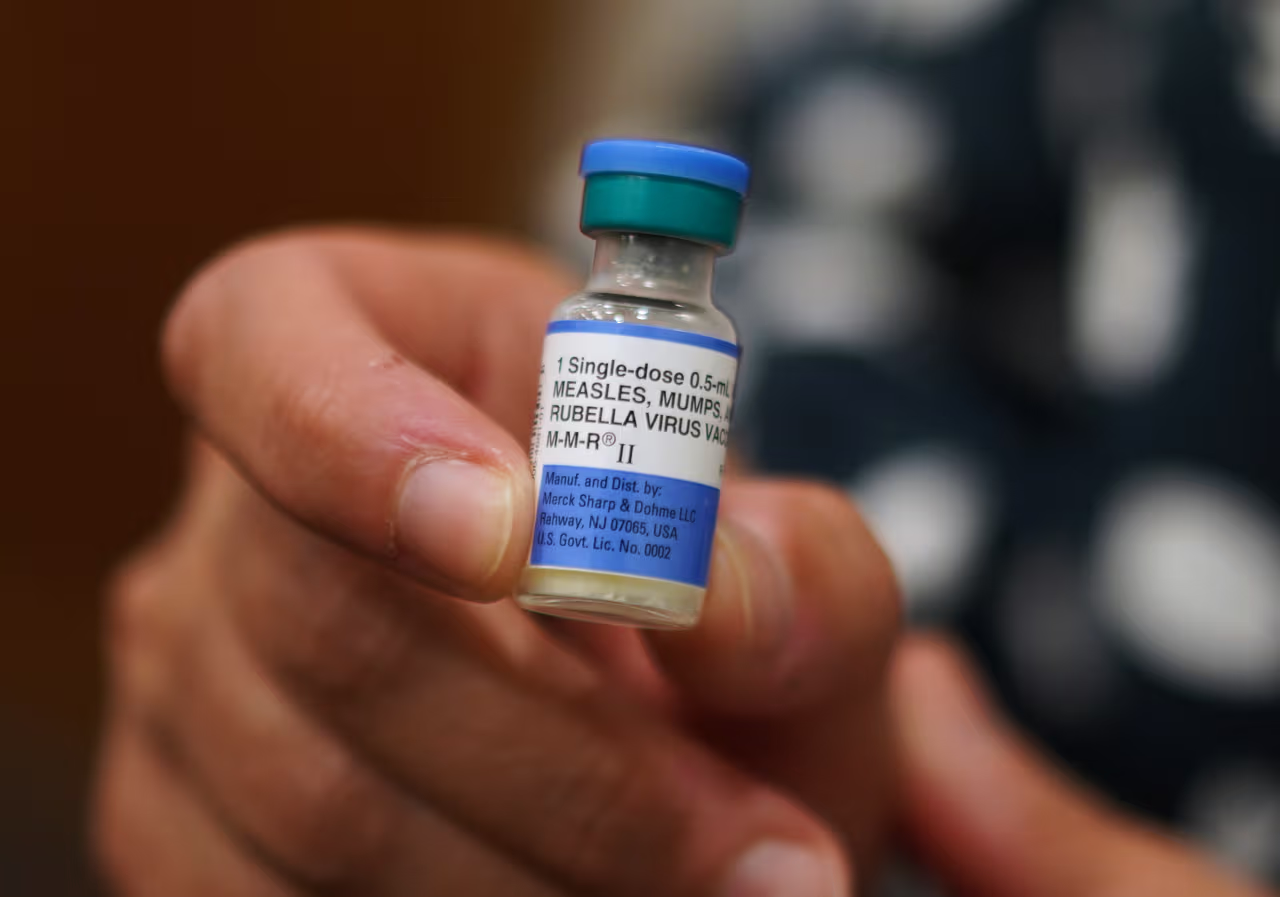
PAHO Announces US Lost Measles-Free Status After Sustained Transmission
The United States has officially lost its status as a measles-free country after holding the designation since 2000.
The Pan American Health Organization (PAHO) announced the decision on Tuesday citing more than 12 months of sustained virus transmission across the nation. An independent commission of experts that reports to the PAHO director determined the United States no longer met the requirements for elimination, a source close to the process told CNN on Friday. The news was first reported by The Wall Street Journal.
This shift in epidemiological classification follows a period of rising infection rates that health authorities had monitored for months. According to data from the Centers for Disease Control and Prevention (CDC), the country recorded more than 7,700 cases of measles, hundreds of hospitalizations, and at least 9 deaths between 2025 and 2026, as reported by Infobae.
The United States has registered 5,739 cases so far in 2026, compared with 2,286 cases in 2025, according to a Johns Hopkins University tracker. Almost all cases have occurred in unvaccinated people or those with unknown vaccination status. State health departments have reported 10 deaths linked to measles in 2026.
🔴 PAHO called on countries across the Americas to intensify efforts to stop measles transmission. 🇧🇴 Bolivia, 🇲🇽 Mexico, and the 🇺🇸 United States have lost their #measles elimination status. 🔗 https://t.co/6JOfvJf5po pic.twitter.com/W7CmV5DB9L
The criteria for the loss of status involve the identification of sustained chains of transmission. An independent commission of experts determined that the same strains of the virus were circulating from person to person for at least a year, according to CNN. Scientists confirmed these links by analyzing the genetic code of virus samples taken from patients.
In August, scientists at the Utah public health laboratory published a preliminary study showing the same measles strain had circulated in the state for more than a year, accounting for more than 95% of cases.
It spread from southwestern Utah to central Utah, causing more than 600 cases between June 2025 and June 2026, according to Cnn. Sustained outbreaks have also occurred in South Carolina, Pennsylvania, Wisconsin and New York, as well as other states. Reportedly, the loss coincides with an outbreak that began in Texas in early 2025 and spread nationwide.
“Perder el estatus de eliminación significa que, como nación, estamos menos preparados para afrontar los desafíos de las enfermedades infecciosas y no infecciosas,” said Dr. Demetre Daskalakis, former director of the National Center for Immunization and Respiratory Diseases at the CDC, as reported by CNN.
“La pérdida del estatus de país libre de sarampión significa que décadas de avances en salud pública se han invertido oficialmente,” said Wendy Armstrong, a physician and president of the Infectious Diseases Society of America.
Declining Vaccination Coverage
Public health experts point to a decline in vaccination rates as the primary driver of the current outbreaks. Data from the CDC indicates that pre-kindergarten vaccination coverage fell to approximately 92% during the school year ending in June 2026, falling short of the 95% threshold required to maintain herd immunity, Infobae reported. The decrease in coverage coincides with growing skepticism toward vaccines, a trend that intensified following the COVID-19 pandemic.
While the federal government reduced the promotion of vaccination programs under the administration of Secretary of Health Robert F. Kennedy Jr., Kennedy has acknowledged that the measles vaccine remains the most effective way to prevent the disease, according to The Wall Street Journal, as cited by Infobae. Specialists warn that infections occurred mainly due to opposition from groups refusing the vaccine.
“Se tiene que promover intensamente la necesidad de que todas las personas estén vacunadas. Se tiene que asegurar sobre todo en los niños una cobertura cercana al 100%,” said Alejandro Macías Hernández, an infectious disease specialist and professor at the University of Guanajuato, in an interview with Univision.

Regional Transmission Trends
The loss of status reflects a broader challenge in North America. Canada lost its measles-free status in 2025 during an outbreak that resulted in more than 6,400 cases across 10 provinces and territories, Euronews reported.
In the United States, researchers linked a large share of domestic cases to a strain that originated in southwestern Utah and circulated for over a year, according to CNN. The dominant type of contagion was detected in Canada and gradually spread through the United States and Mexico, causing all three countries to lose their certification as measles-free territories.
| Location | Status Change Year | Reported Cases |
|---|---|---|
| United States | 2026 | 7,700+ (2025-2026) |
| Canada | 2025 | 6,400+ |
Authorities are now tasked with implementing a concrete plan to contain the virus and restore the country’s health certification. Mauricio Rodríguez Álvarez, a spokesperson for the epidemiological risks program at the National Autonomous University of Mexico (UNAM), suggested that returning to a measles-free status will require a comprehensive vaccination effort, including adults who have not received two doses of the vaccine, Univision reported.
The recommended age for vaccination in older adults is up to 50 years. Lo recomendable es tener dos suministros en la vida,” said Rodríguez Álvarez.
“Probablemente el certificado de país libre de sarampión podamos tenerlo hasta 2028,” said Rodríguez Álvarez to Univision. He estimated that achieving control will take at least until mid-2027.
More on United States
The United States has lost its measles elimination status, the Pan American Health Organization formally announced on Tuesday. PAHO, a part of the World Health Organization, made the decision after reviewing evidence and determining that the measles virus has been continuously… pic.twitter.com/f1s6VHkRzz