
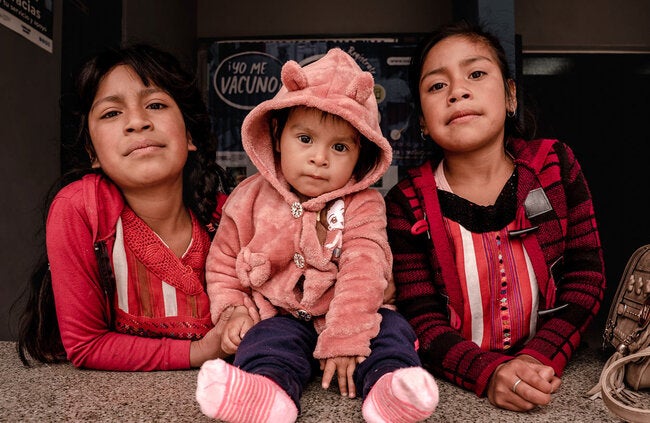
PAHO and EU Launch Nutrition Program in Four Departments
In the highlands of Guatemala, where chronic malnutrition affects nearly half of all children under five, a renewed public health initiative is targeting the silent crisis of child stunting through integrated nutrition and primary care strengthening. The program, led by the Pan American Health Organization (PAHO) with funding from the European Union, operates across four departments—Huehuetenango, Quiché, San Marcos and Totonicapán—regions where indigenous communities face compounded barriers to healthcare access, food insecurity, and limited dietary diversity. As of 2026, the initiative has expanded its reach to over 120 primary care clinics, training community health workers in growth monitoring, micronutrient supplementation, and culturally adapted counseling on infant and young child feeding practices. This effort aligns with Guatemala’s National Strategy for the Prevention of Chronic Malnutrition 2021–2030 and responds to persistent gaps identified in the 2023 National Survey of Maternal and Child Health (ENSMI), which reported a national stunting prevalence of 46.5% among children aged 24–59 months, peaking at 58% in rural indigenous populations.
Key Clinical Takeaways:
- Chronic malnutrition in Guatemalan children under five remains a critical public health challenge, with stunting affecting nearly one in two children nationally and exceeding 50% in indigenous highland communities.
- The PAHO-EU supported initiative integrates nutrition screening into primary care, leveraging community health workers to deliver growth monitoring, vitamin A and zinc supplementation, and breastfeeding support at the village level.
- Early evidence links such integrated approaches to measurable reductions in morbidity and improved developmental outcomes, though long-term impact depends on sustained funding, local ownership, and integration with social protection programs.
The pathogenesis of stunting extends beyond caloric deficiency, involving a complex interplay of recurrent infections, poor gut health, micronutrient deficiencies (particularly zinc, iron, and vitamin A), and inadequate caregiving practices during the first 1,000 days of life. These factors trigger chronic inflammation and dysregulation of the insulin-like growth factor 1 (IGF-1) axis, impairing linear growth and neurodevelopment. A 2024 longitudinal study published in The Lancet Global Health followed 2,100 children across rural Guatemala and found that those receiving combined nutrition and hygiene interventions had a 32% lower risk of severe stunting by age three compared to controls, with notable improvements in hemoglobin levels and reduced incidence of diarrheal disease. The study, funded by the Bill & Melinda Gates Foundation and conducted in collaboration with Universidad del Valle de Guatemala, underscores the importance of multi-sectoral delivery models that bridge clinical care with water, sanitation, and hygiene (WASH) interventions.
“We’re not just treating malnutrition—we’re preventing its intergenerational transmission by empowering mothers with knowledge and linking them to consistent care. When a child gains access to regular growth monitoring and timely supplementation, we spot cascading benefits in immunity, school readiness, and resilience.”
Operational challenges persist, including supply chain disruptions for ready-to-use therapeutic foods (RUTFs), seasonal migration of agricultural laborers disrupting continuity of care, and limited diagnostic capacity for identifying micronutrient deficiencies at the primary care level. To address these, the initiative has partnered with local NGOs to establish mobile health brigades that traverse remote villages during planting and harvest seasons, ensuring no child is lost to follow-up. PAHO has supported the integration of mid-upper arm circumference (MUAC) tapes and hemoglobinometers into standard clinic kits, enabling frontline workers to detect acute wasting and anemia during routine visits.
“The strength of this model lies in its simplicity and scalability. By training existing community health workers—many of whom are indigenous women—to use simple tools and deliver clear messages, we build trust and sustainability from the ground up.”
From a clinical triage perspective, children identified with moderate acute malnutrition (MUAC between 115–125 mm) or failing to gain weight over two consecutive months should be referred for specialized nutritional rehabilitation. board-certified pediatricians with expertise in global child health play a vital role in overseeing recovery protocols, managing complications like hypoglycemia or hypothermia, and coordinating with social workers to address underlying household food insecurity. For communities requiring structured intervention programs, specialized nutrition rehabilitation centers offer supervised feeding, caregiver education, and discharge planning linked to local food security initiatives.
Beyond immediate treatment, long-term prevention hinges on aligning clinical outreach with broader social determinants. Programs that combine nutrition support with conditional cash transfers—such as Guatemala’s Bono de Desarrollo Humano—have demonstrated synergistic effects in reducing stunting rates by improving household purchasing power and enabling consistent access to nutrient-dense foods. Healthcare administrators and policymakers seeking to replicate or scale such models may benefit from consulting healthcare compliance attorneys experienced in international public health funding mechanisms to ensure adherence to EU grant requirements, data privacy standards, and local procurement regulations.
As Guatemala advances toward its 2030 malnutrition reduction targets, the integration of nutrition screening into routine pediatric care represents a scalable, evidence-based strategy with potential for adaptation across similar low-resource settings. Sustained success will depend not only on technical efficacy but on community engagement, cultural humility, and the political will to prioritize child health as a cornerstone of national development. The next phase of this work must focus on implementation research—measuring cost-effectiveness, tracking developmental outcomes beyond age five, and refining tools for early detection of growth faltering in the first six months of life.
*Disclaimer: The information provided in this article is for educational and scientific communication purposes only and does not constitute medical advice. Always consult with a qualified healthcare provider regarding any medical condition, diagnosis, or treatment plan.*