Oshawa Family Seeks Return of Chevrolet Bolt After Severe Charging Cable Shock
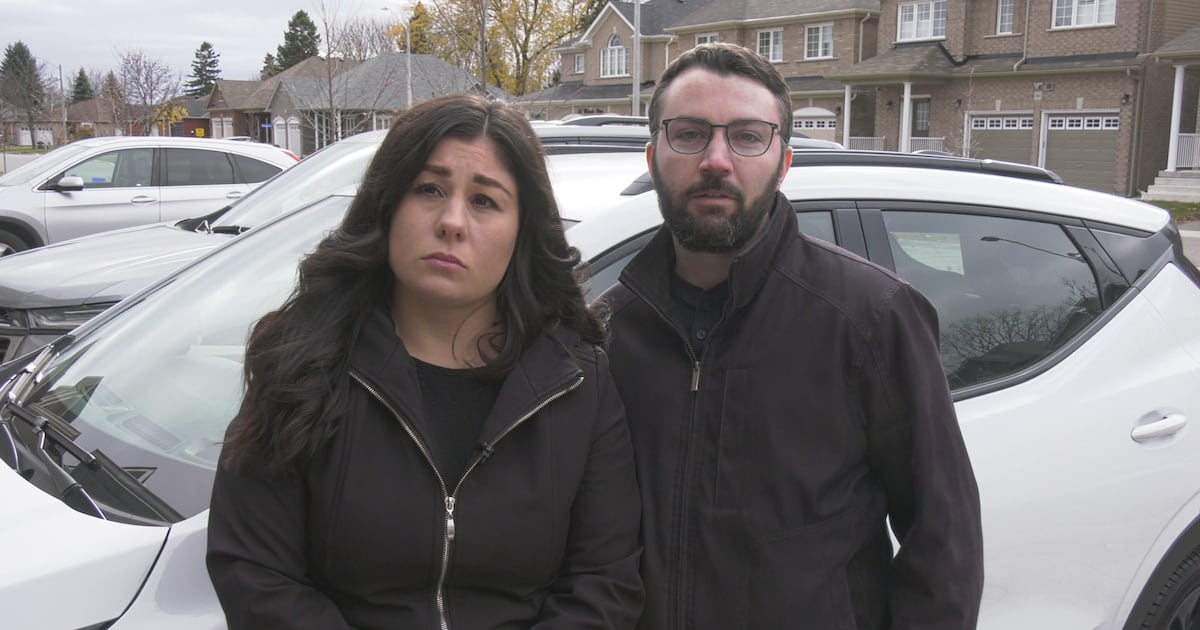
An Oshawa family wants to return their 2027 Chevrolet Bolt after an electric vehicle charging cable allegedly delivered a severe electric shock in September. Brooke and Will Hepburn purchased the car in June, but the incident has left them seeking a return to a gas-powered vehicle over safety fears.
Shock Incident in Oshawa
Brooke Hepburn felt a sudden shock while moving the charging cable on the ground after returning home from work in September, CTV News reported.
“I just wanted to straighten it before I closed the door, so I came over and moved it, and that’s where I got the shock,” she told CTV News.
The sensation started as a sharp sting before escalating intensely.
“That pain immensely changed. It felt almost like a flame on my finger, and it turned into a shock going up my arm,” she said.
She collapsed on the floor inside her home.
“She was on the ground rolling around, holding her finger, screaming, and gasping,” said Will Hepburn.
The family visited a hospital where Brooke underwent an EKG heart checkup.
Although doctors cleared her to go home, she experienced a tingling sensation and nerve pain for about a week.
“The immense pain wore off in 24 hours, but the nerve pain lasted for about a week,” Brooke said.
Upgraded Equipment and Inspections
The home was built within the past few years and came equipped with a standard charger, which the couple upgraded to a unit specially made for the Chevrolet Bolt. A licensed electrician installed the equipment, and the family obtained certification verifying the installation was done correctly.
Following the incident, General Motors sent an engineer to inspect the household charging system.
“GM Canada takes every report of a potential safety concern seriously. We investigated this customer’s report, including an inspection of the charging equipment, and found no evidence of a malfunction, defect, or broader issue with the charging system. We remain in contact with the customer and will continue to work with her directly,” a GM spokesman told CTV News.
Electrical Safety Authority Findings
The Electrical Safety Authority reported that such incidents are not common.
“ESA is not aware of EV charger shocks being a common or pervasive issue, and we do not have data indicating that this is a broader trend,” an ESA spokesperson told CTV News.
The agency emphasized proper installation practices.
“As with any electrical equipment, proper installation and use are important. Homeowners installing EV charging equipment should ensure the equipment is approved for use in Ontario and compatible with the vehicle and electrical system, hire a Licensed Electrical Contractor (LEC) to complete the installation, and ensure a notification (permit) is filed with ESA for the electrical work. In addition, the device should be maintained in good working order, and cords should be checked regularly for wear and tear,” the spokesperson added.
Refusal of Vehicle Return
The Hepburns attempted to return the EV, but were informed that a return was not an option. GM offered to replace the charging cable with a new one.
The family remains unconvinced and wants to switch back to a traditional vehicle.
“Switching to a gas vehicle, which we know doesn’t have the ability to shock us or shock our children, is the only thing that will make my wife feel safe,” said Will Hepburn.