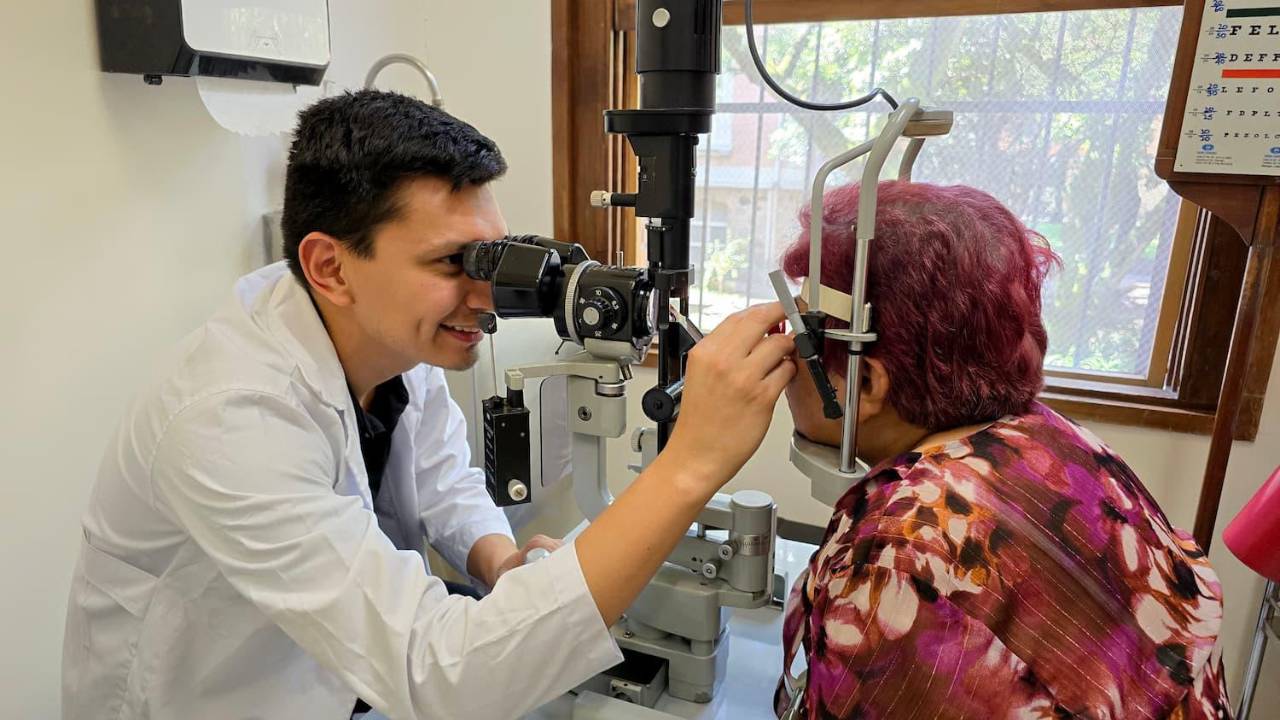
Optometrists, Nurses, Students in Medellín Hold Free Diabetes Screening Event
Optometrists, nurses, and students in Medellín set aside their regular schedules each year to gather at Hospital San Vicente Fundación in the Sevilla neighborhood for a free screening event known as No más ciegos por diabetes (No More Blind People from Diabetes). The initiative, which reaches its three-decade mark in 2026, brings together medical professionals who donate a day of work to detect conditions that can cause irreversible vision loss in diabetic patients from the city and nearby municipalities.
The program was established in 1996 by Juan David Bravo, an ophthalmologist and then-specialty professor at the University of Antioquia, to address the risks that diabetes poses to the local population, according to El Colombiano. According to the International Diabetes Federation’s 2025 Diabetes Atlas, approximately 23% of people with diabetes globally have some degree of diabetic retinopathy, and 11% have a vision-threatening form.
“The hospital really liked the initiative and, since then, we have had their support. Every year, with the help of Dr. Juan David and the hospital’s backing, many ophthalmologists and retinologists in the city donate a day of their work to support the program”
Mabel Cristina Ospina, an ophthalmologist participating in the event, said this to El Colombiano. Ospina has participated in the initiative for 20 years and said that organizers have observed an increase in diabetes over time in Medellín and globally.
Uncontrolled high glucose levels can damage blood vessels in the eyes, leading to diabetic retinopathy—a condition that progressively deteriorates retinal blood vessels and can cause intraocular hemorrhages, retinal detachment, and vision loss in advanced stages. In its early phases, retinopathy can be completely silent without pain or visual impairment, while symptoms like blurred vision, flashes, spots, or sudden vision loss appear only in advanced stages.

Facing Hurdles in Patient Care
Medical professionals working with the annual screening initiative in Medellín still encounter persistent obstacles regarding patient access to healthcare services through health promotion entities known as EPS. According to reporting by El Colombiano, organizers say they must increase public awareness of diabetes and its related eye complications.
Participants clear their personal schedules completely for the event, clearing their calendars of appointments and postponing social obligations while they gather in the Sevilla neighborhood health district.
Serving as the capital of the department of Antioquia, Medellín is the second-largest city in Colombia after Bogotá. At the 2018 census, the city’s population was 2,427,129 people, while its broader metro area forms the second-largest urban agglomeration in the country with more than 4 million people.
Over its 30 years, the program has conducted approximately 15,000 evaluations. In recent editions, about 18% of evaluated patients had diabetic retinopathy, many of them without symptoms at the time of consultation. The event also involves medical students from the Universidad Pontificia Bolivariana, CES University, the University of Antioquia, and EIA, who assist patients while learning about the pathology, according to El Colombiano.