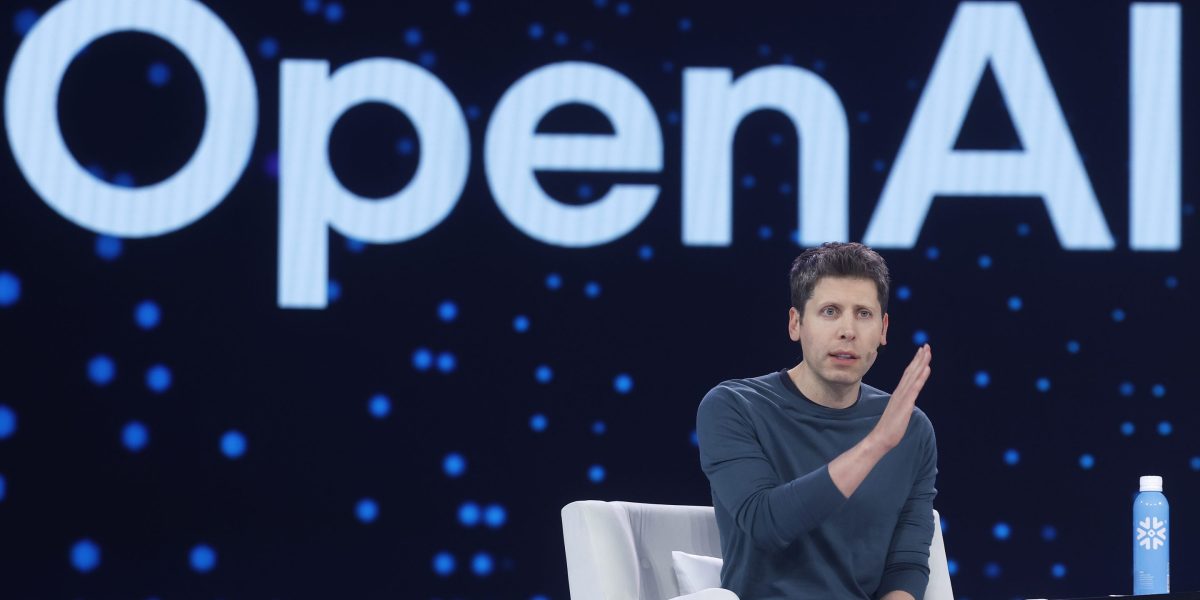
OpenAI Plans Superapp Pivot Ahead of Planned IPO
OpenAI is restructuring its core product architecture to transform ChatGPT from a conversational chatbot into an integrated “superapp,” a move designed to capture autonomous task execution market share ahead of a planned IPO. The San Francisco-based firm aims to unify its Codex and ChatGPT interfaces to compete directly with Anthropic.
The pivot reflects a strategic shift toward autonomous agents capable of managing complex, multi-step workflows like travel booking and calendar orchestration. By moving beyond simple query-response models, OpenAI intends to capture higher-value enterprise contracts, a segment that already accounts for roughly 40% of its revenue. According to financial reporting, this dependency on business customers could scale to 50% by the end of the current fiscal year.
Capitalizing on the Autonomous Agent Shift
The technical roadmap prioritizes a complete redesign of both the mobile and web interface to accommodate deep-linking with third-party partners, including Canva and Booking.com. This ecosystem expansion is critical for maintaining market share in an increasingly crowded generative AI space. As OpenAI pivots, the internal reallocation of resources has already resulted in the sidelining of earlier consumer-focused video generation initiatives launched less than a year ago.

The success of this transition depends on the stability of the company’s underlying software-writing engine. Codex has seen its active user base surge six-fold to over 5 million weekly users since inception. Maintaining this momentum requires robust cloud infrastructure management to ensure that the increased complexity of a superapp does not degrade latency or overall system throughput.
The future of AI belongs to autonomous agents capable of executing complex, multi-step tasks rather than simply answering queries.
Financial Performance and Market Positioning
The company’s path to an IPO is paved with aggressive enterprise growth targets. With 2 million business customers currently on the platform, the transition to a superapp model is a defensive play against institutional rivals. Investors are monitoring the company’s ability to maintain high margins while pivoting away from pure consumer-facing search toward utility-driven enterprise software.
The following table outlines the current performance metrics driving the company’s valuation narrative:
| Metric | Status/Value |
|---|---|
| Codex Weekly Active Users | 5 million+ (6x growth) |
| Enterprise Revenue Contribution | 40% (Current) |
| Projected Revenue Contribution (YE) | 50% |
| Business Customer Base | 2 million |
Managing Enterprise Transition Risks
The complexity of integrating third-party applications into a unified interface introduces significant data privacy and compliance challenges. As OpenAI prepares for its public offering, the scrutiny regarding technical debt and system reliability will intensify. Firms navigating similar rapid shifts in their product architecture often engage specialized corporate legal counsel to manage the evolving regulatory landscape of AI-driven data processing.
The shift toward “agentic” AI—systems that act rather than just talk—represents the next phase of the capital allocation cycle in technology. Institutional investors are shifting their focus from simple Large Language Model (LLM) providers to companies that can demonstrate tangible, high-frequency utility in business environments.
As the IPO window approaches, the company must prove that its superapp pivot is more than just a surface-level redesign. The ability to integrate external service layers without compromising the core integrity of its models will determine if OpenAI remains the preferred vendor for high-stakes enterprise applications. Organizations looking to audit their own AI integration strategies or secure reliable infrastructure partners should consult the directory for vetted enterprise AI consulting firms to ensure their technical stack is prepared for this level of market volatility.