
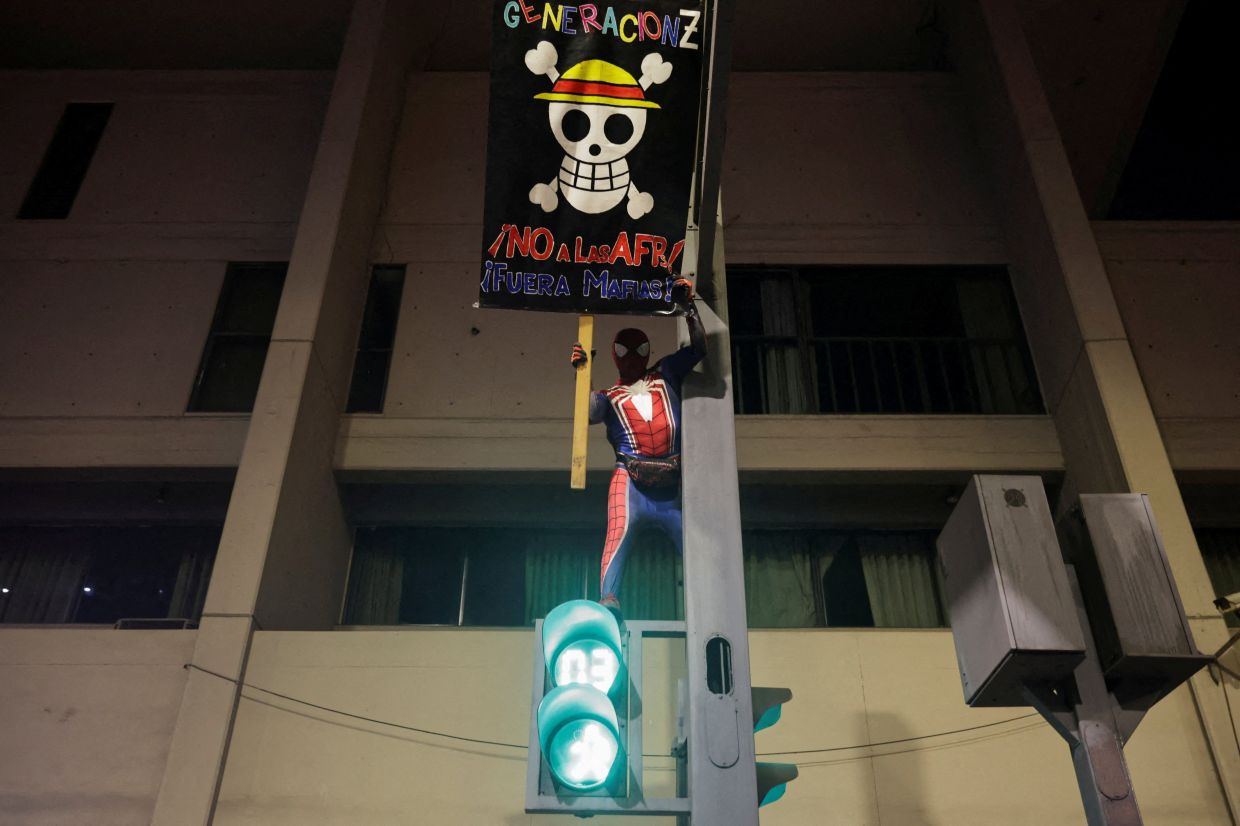
Hoist the Jolly Manga: Gen Z Protesters Rally to ‘One Piece‘ Pirate Flag
A symbol from the popular manga series One Piece – the skull and crossbones featuring a straw hat – is unexpectedly emerging as a banner of protest for youth movements worldwide. Demonstrations in countries including Madagascar,Indonesia,Nepal,the Philippines,France,and Peru have seen the flag flown,signaling a new form of political expression driven by Generation Z.
The trend began gaining visibility during recent rallies in Indonesia, where the government even considered a ban on the flag.In Madagascar, organizers of protests against power and water failures promoted the symbol through the Instagram account ”Gen Z madagascar.”
“I grew up with One Piece, like the vast majority of Gen Z, so it has become a symbol for us,” explained Kai, a 26-year-old protester in Madagascar who requested anonymity. He believes the series embodies a struggle against “oppressive governments.”
The One Piece series, created by Japanese artist Eiichiro Oda, follows Monkey D. Luffy‘s quest to become the Pirate King. Comprising over 100 volumes,the epic has sold hundreds of millions of copies globally and champions themes of dreams and freedom. Luffy’s journey involves fighting against the oppressive “World Government” across islands inspired by real-world locations like Egypt,Spain,and Japan,and also incorporates ecological messaging.
Phedra Derycke, author of One Piece: Lessons Of Power, describes the series as a “global” quest. She notes that Oda “develops many political themes: a ruling caste that exploits the people, slavery, discrimination, racism,” within the adventure narrative. Derycke observed parallels between these themes and the recent youth protests. She also suggests the skull and crossbones is a “depoliticised” symbol, easily adapted for diverse protest contexts.
In France, the flag appeared during recent demonstrations alongside traditional union banners. Julien Dubon, a 45-year-old teacher carrying the luffy banner in Lyon, stated he was continuing a movement “the youth of Asia… started,” believing it woudl resonate with a wider audience than conventional protest flags.
Anthropologist Elisabeth Soulie,who studies generation Z,views the flag as an ”emotional” emblem and a “unifier” for young people who often organize collectively online,lacking traditional leadership structures.
Manga specialist Derycke believes the flag’s reach will continue to expand through social networks,potentially becoming an even more prominent symbol of global protest.
