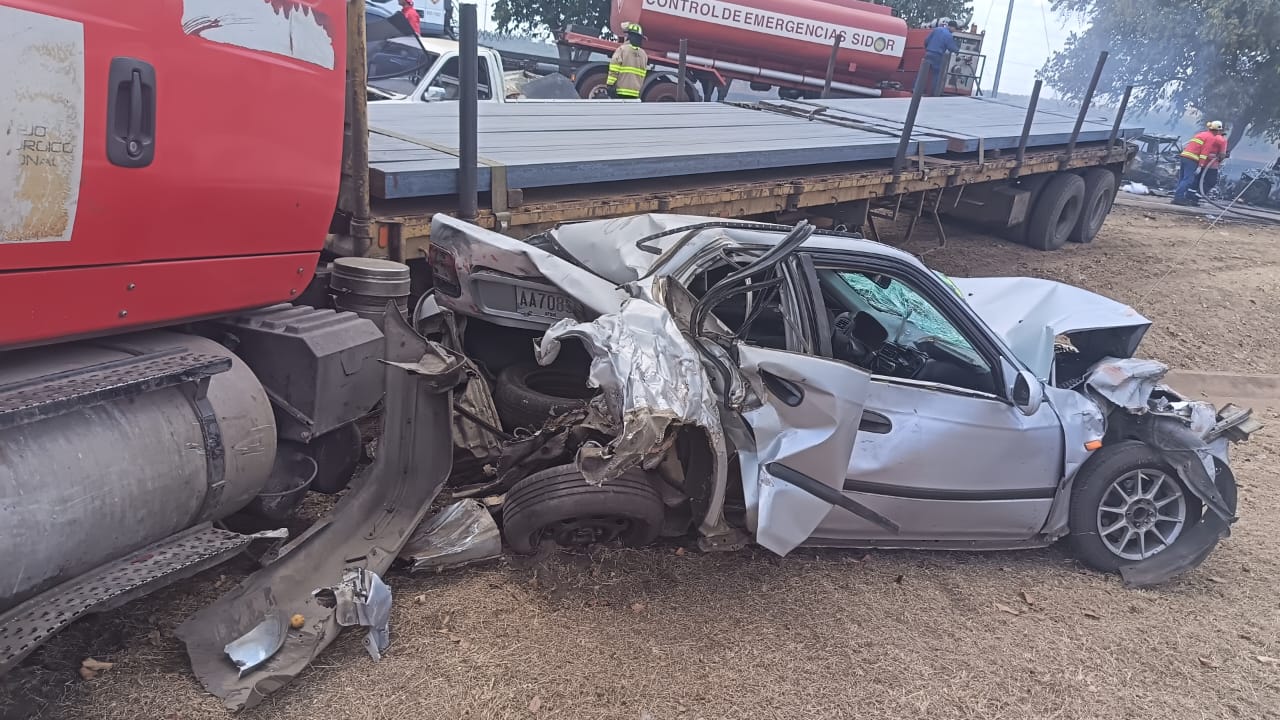
One Dead, 11 Injured in Puerto Ordaz Multi-Vehicle Collision
A fatal multi-vehicle collision on Avenida Los Trabajadores in Puerto Ordaz, Bolívar, left one person dead and 11 others injured. The crash, involving heavy trucks and passenger cars, occurred specifically in front of Sidor’s Gate I, causing significant disruption to one of the region’s primary industrial arteries.
The intersection of heavy industry and urban commuting is a volatile one. In Puerto Ordaz, this tension manifests daily on Avenida Los Trabajadores, a road designed to facilitate the movement of labor and materials to the heart of the city’s industrial zone. When that system fails, as it did in this instance, the results are catastrophic.
One life was lost. Eleven others were left to grapple with the immediate trauma of a high-impact collision. The scene was dominated by the wreckage of “gandolas”—the massive heavy-duty trucks that serve as the lifeblood of the regional economy—and smaller passenger vehicles that stood little chance in the momentum of the crash.
The Industrial Bottleneck at Sidor’s Gate I
The location of the accident is not incidental. Sidor (Siderúrgica del Orinoco), the massive steel plant, is the gravitational center of Puerto Ordaz. Gate I is a critical entry and exit point, meaning the surrounding road is under constant pressure from heavy freight traffic and workers shifting in and out of the facility.
When heavy trucks collide with smaller cars in these zones, the disparity in mass creates a “crush zone” that often leaves victims with non-survivable injuries. This specific corridor has long been a point of contention regarding safety and traffic management.
The sheer scale of the wreckage suggests a chain reaction. In multi-vehicle collisions involving freight, a single braking failure or a momentary lapse in attention can trigger a domino effect, trapping smaller vehicles between steel behemoths.
The logistical paralysis following the crash was immediate. With the road blocked in front of Sidor’s main entrance, the ripple effect hit not just the commuters, but the operational flow of the plant itself.
The Critical Window of Trauma Care
For the 11 injured survivors, the first sixty minutes—the “Golden Hour”—were decisive. In an industrial hub like Bolívar, the ability to move critically injured patients through traffic congestion to a facility capable of handling polytrauma is the difference between recovery and permanent disability.
Industrial accidents of this magnitude often result in complex injuries: crush syndrome, internal hemorrhaging, and severe traumatic brain injuries. The immediate demand for specialized intervention is paramount.
Securing immediate access to emergency trauma specialists is the only way to mitigate the long-term morbidity associated with these crashes. When the regional infrastructure is strained, the reliance on vetted, high-capacity medical facilities becomes a matter of survival.
Road safety remains a systemic crisis. According to global data from the World Health Organization, road traffic injuries are a leading cause of death globally, with industrial corridors often presenting the highest risks due to mixed-vehicle traffic.
The Legal Labyrinth of Freight Liability
Once the wreckage is cleared and the injured are stabilized, a different kind of battle begins. Multi-vehicle collisions involving corporate freight trucks are legal minefields.

Determining liability in a “pile-up” is rarely straightforward. Investigators must determine if the accident was caused by mechanical failure of the heavy trucks, driver fatigue, or a failure in the road’s signage and safety barriers. In the case of Sidor’s Gate I, the question of whether industrial traffic management contributed to the congestion and subsequent crash will likely be central to any litigation.
Victims and their families are often left navigating a complex web of insurance claims and corporate denials. What we have is where the expertise of personal injury lawyers becomes indispensable. Without professional representation, individuals often settle for fractions of the compensation required for lifelong medical care.
The complexity is heightened when multiple transport companies are involved. Each entity will attempt to shift the blame to the other, leaving the victims in a state of legal limbo.
To truly understand the mechanics of the crash, many are now turning to accident reconstruction experts. These professionals use telemetry data and physical evidence to recreate the collision, providing the empirical evidence needed to hold negligent parties accountable.
A Systemic Warning for Bolívar
This tragedy is a symptom of a larger problem: the outdated integration of heavy industrial logistics within civilian corridors. Puerto Ordaz continues to grow, but the infrastructure supporting the movement of steel and raw materials has not evolved at the same pace.
The reliance on a few primary arteries like Avenida Los Trabajadores creates a single point of failure. When an accident occurs, the entire regional economy feels the shudder.
The human cost—one dead, eleven injured—is a stark reminder that efficiency cannot reach at the expense of safety. Until there is a concerted effort to separate heavy freight from commuter traffic, the streets of Bolívar will remain dangerous.
Reports on regional instability and infrastructure decay are frequent in Reuters and BBC News, often highlighting how the lack of maintenance in industrial zones leads to increased accident rates.
The wreckage at Sidor’s Gate I will eventually be cleared. The road will reopen. But for the families of the deceased and the injured, the impact is permanent.
The question remains: how many more “multiple collisions” must occur before the industrial arteries of Puerto Ordaz are redesigned for safety rather than just throughput? For those currently caught in the aftermath, finding verified, professional support is the only way to navigate the road to recovery. The World Today News Directory remains the definitive resource for connecting affected parties with the legal and medical experts equipped to handle the fallout of this tragedy.