
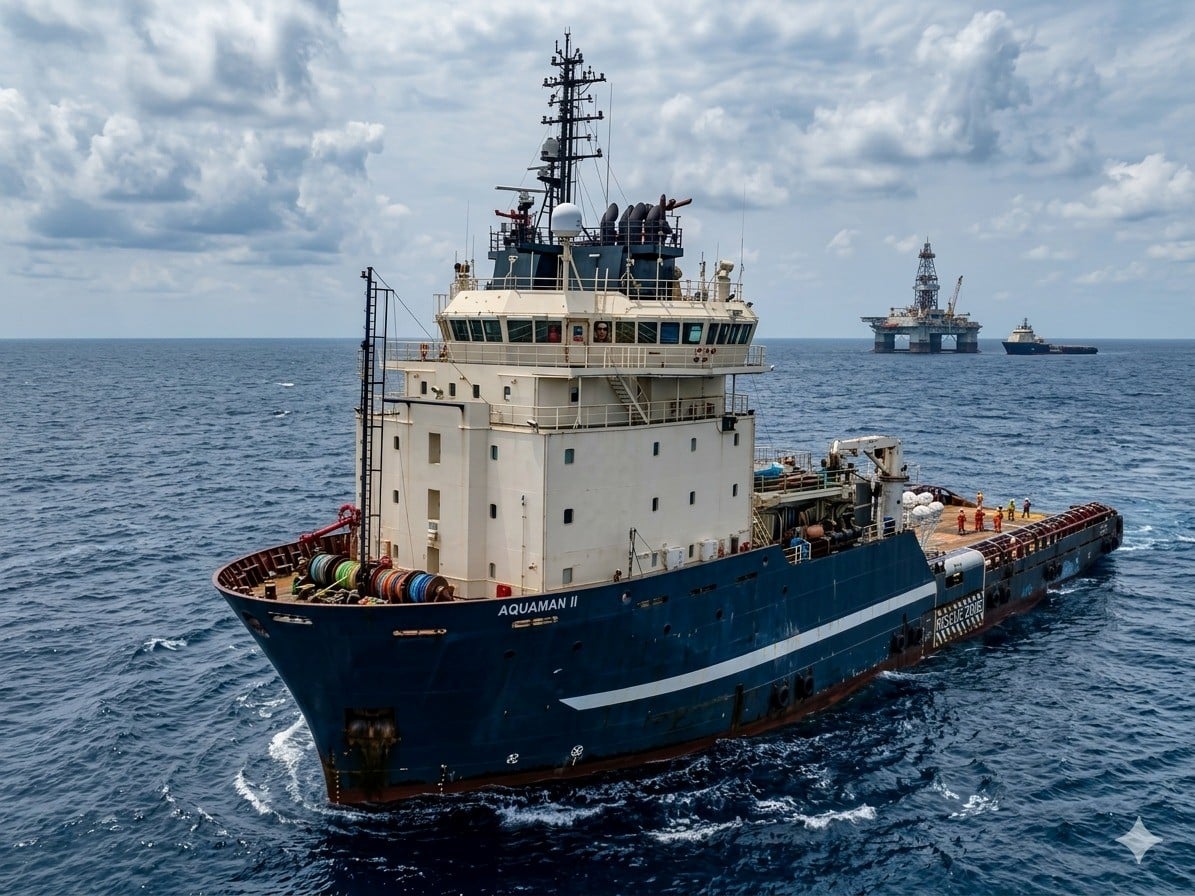
Omega Subsea and AGR Partner for North Sea ROV and Survey Services
Subsea Operational Latency: The Omega-AGR Integration
The recent collaborative venture between Omega Subsea and AGR to standardize Remotely Operated Vehicle (ROV) and survey operations in the North Sea is less about corporate synergy and more about solving the massive data-throughput bottlenecks inherent in subsea robotics. As we move toward 2026, the reliance on high-bandwidth, low-latency telemetry for autonomous subsea surveying has reached an inflection point where legacy serial-to-ethernet bridges are failing to keep pace with modern sensor arrays. By consolidating survey workflows, these firms are essentially attempting to standardize the edge-computing stack required for deep-water deployment.
The Tech TL;DR:
- Operational Efficiency: The partnership creates a shared infrastructure layer designed to reduce the overhead of independent ROV mobilization, effectively optimizing resource allocation for complex survey missions.
- Data Integrity & Latency: Standardizing the survey stack allows for better integration of real-time point-cloud processing, critical for avoiding collision and ensuring high-fidelity data acquisition in extreme environments.
- Cybersecurity Exposure: Increased inter-firm data sharing necessitates a robust Zero Trust architecture to prevent lateral movement during data exfiltration from remote survey nodes.
The Infrastructure Gap: Why Standardization Matters
In the offshore sector, the “last mile” of data transmission—from the ROV’s onboard sensors to the surface vessel’s command center—is notoriously fragile. When dealing with high-resolution sonar, 4K video feeds, and inertial navigation systems (INS), even a 50ms jitter can lead to a desynchronization of the digital twin model. The Omega-AGR collaboration attempts to address this by formalizing the software-defined survey stack. This is a classic case of mitigating the “tower of babel” effect in proprietary hardware, where different vendors use incompatible APIs to output survey data.
According to IEEE standards on underwater acoustic communications, the primary limiting factor remains the bandwidth-distance product. By aligning their ROV fleets, Omega and AGR are likely aiming for a standardized containerized deployment model. Using Docker or Kubernetes-based edge nodes on the support vessels allows for consistent deployment of data-processing pipelines, ensuring that whether a survey is conducted by an Omega or AGR asset, the resulting data conforms to the same schema and security protocols.
“The shift towards collaborative subsea operations isn’t just about resource pooling; it’s about establishing a common data plane. If you cannot guarantee the integrity of your telemetry stream before it hits the cloud-based processing engine, you are essentially flying blind at 500 meters depth.” — Lead Systems Engineer, Offshore Robotics Consortium
Comparative Matrix: The Survey Stack Evolution
When evaluating the technical shift from bespoke, vendor-locked ROV systems to this collaborative, open-standard approach, we must look at how legacy systems compare to the new, integrated architecture.
| Feature | Legacy Proprietary ROV | Integrated Collaborative Stack | Delta/Benefit |
|---|---|---|---|
| Data Protocol | Proprietary Serial/CAN | Ethernet/IP over Fiber | 100x Bandwidth Increase |
| Latency (Avg) | 150ms – 200ms | <20ms (Edge-Proximate) | Real-time Decisioning |
| Security | Air-gapped (Limited) | SOC 2 / AES-256 Encrypted | Audit-ready Compliance |
The Implementation Mandate: Securing the Data Stream
For CTOs overseeing these deployments, the primary concern is the transport layer. When data moves from the ROV to the surface vessel, it must be encrypted in transit to comply with modern Managed Service Provider (MSP) security standards. Below is a conceptual implementation of a secure tunnel for incoming survey telemetry, utilizing a standard WireGuard interface to ensure that even if the vessel’s local network is compromised, the ROV sensor data remains isolated.

# Initialize secure tunnel for ROV telemetry stream # Ensures data transit is encrypted via WireGuard wg genkey | tee privatekey | wg pubkey > publickey cat < /etc/wireguard/rov-tunnel.conf [Interface] Address = 10.0.0.1/24 ListenPort = 51820 PrivateKey = [ROV_PRIVATE_KEY] [Peer] PublicKey = [SURFACE_VESSEL_PUBLIC_KEY] AllowedIPs = 10.0.0.2/32 Endpoint = 192.168.1.50:51820 EOF wg-quick up rov-tunnel As these firms scale, the risk of misconfiguration in these tunnels increases. Enterprises should engage specialized IT security auditors to perform regular penetration testing on the ROV-to-Surface communication links. The integration of Omega and AGR serves as a blueprint for the industry, provided they prioritize the hardening of their CI/CD pipelines against potential supply-chain vulnerabilities.
The Trajectory of Subsea Innovation
The Omega-AGR move signals the end of the “siloed subsea” era. As compute power moves closer to the seabed (via underwater data centers and edge-compute modules), the need for high-level orchestration will only grow. Organizations that fail to adopt these standardized, secure, and high-throughput communication frameworks will find themselves unable to compete with the data-fidelity of their peers. We are moving toward a future where a subsea ROV is effectively a drone in the sky—a node in a massive, interconnected, and highly monitored network. Those who ignore the security architecture underlying this transition do so at their own peril.
Disclaimer: The technical analyses and security protocols detailed in this article are for informational purposes only. Always consult with certified IT and cybersecurity professionals before altering enterprise networks or handling sensitive data.