
Oil Shock Warning: ‘Dr. Doom’ Predicts Global Recession as Iran Deal Falters – Korea at Risk
Geopolitical tensions escalating in the Middle East are driving a dramatic surge in oil prices – up 87% since February 28th – sparking fears of a 1970s-style stagflationary shock. With a critical deadline of April 6th looming for potential military action, South Korea, heavily reliant on Hormuz Strait oil imports, faces an immediate economic threat. This crisis demands proactive risk mitigation strategies, and businesses are turning to specialized risk management consulting firms to navigate the uncertainty.
The Looming Threat: A Perfect Storm for Global Recession
The specter of a full-scale conflict between the U.S. And Iran is no longer a distant possibility, but a rapidly approaching inflection point. President Trump’s extension of the attack deadline to April 6th, initially framed as a response to Iranian requests, is widely interpreted as a calculated maneuver to maintain negotiating leverage while simultaneously signaling a willingness to escalate. This “double strategy,” as analysts describe it, introduces a dangerous level of unpredictability into an already volatile situation. The potential for a complete disruption of oil flows through the Hormuz Strait – a chokepoint for roughly 20% of global oil supply – is now significantly heightened.
Korea’s Vulnerability: A 70% Reliance on a Fragile Supply Line
South Korea’s economic exposure is particularly acute. The nation imports 70% of its crude oil through the Hormuz Strait, making it exceptionally vulnerable to supply disruptions. The Korean won has already depreciated sharply, breaching the 1509 won per dollar mark on March 28th – a level not seen since the 2008 financial crisis. This currency devaluation, coupled with soaring oil prices, is creating a potent inflationary cocktail. According to data from the Korea Petroleum Corporation, gasoline prices have risen by over 20% in the last month alone, impacting both consumer spending and business operating costs.
“Dr. Doom” Warns of Stagflation: Echoes of the 1970s
Renowned economist Nouriel Roubini, often dubbed “Dr. Doom” for his prescient warnings, has drawn direct parallels between the current crisis and the oil shocks of 1973 and 1979. In a recent interview with CNBC, Roubini estimated the probability of a full-scale conflict exceeding 50%, predicting a resurgence of stagflation – a debilitating combination of high inflation and stagnant economic growth. “We are facing a situation eerily similar to the 1970s,” Roubini stated. “A supply shock of this magnitude, combined with already elevated inflation, will force central banks into a hard position.”
“The risk of a significant oil price spike is highly real, and the consequences for the global economy could be severe. We’re looking at a potential scenario where central banks are forced to choose between fighting inflation and supporting growth – a lose-lose situation.”
– Michael Kelly, Portfolio Manager, PineBridge Investments (March 27, 2026)
The Price Spiral: From Crude Oil to Food Inflation
The impact extends far beyond energy prices. The surge in crude oil is rippling through the entire supply chain, driving up transportation costs and impacting the production of essential goods. Fertilizer prices, heavily reliant on natural gas as a feedstock, have experienced a dramatic spike. CNBC reported that Egyptian urea prices have surged by as much as 75% since the conflict began, reaching $700 per ton. This increase threatens global food security, particularly in countries heavily dependent on imported fertilizers. The potential for “agflation” – rising food prices driven by supply chain disruptions – is now a major concern.
Financial Institutions Sound the Alarm
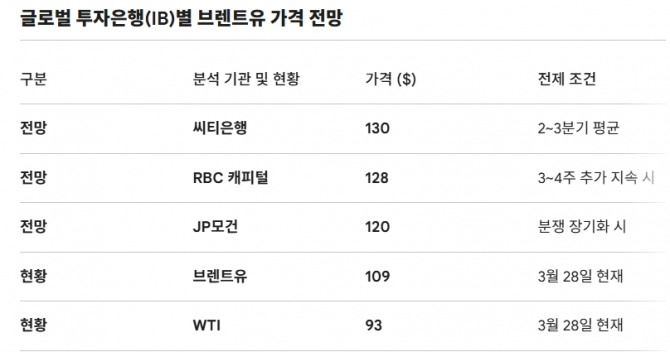
Major financial institutions are revising their economic forecasts downward. JPMorgan Chase warns that a prolonged conflict could push Brent crude oil prices to $120 per barrel, while RBC Capital Markets projects a potential surge to $128 per barrel if the conflict extends for another 3-4 weeks. Citigroup isn’t ruling out a scenario where Brent crude reaches $130 per barrel. These projections are based on detailed modeling of supply disruptions and geopolitical risk premiums. You can find the latest Brent Crude oil price data on the U.S. Energy Information Administration website.
Korean Economic Indicators: A Deep Dive
The Korean economy is already showing signs of strain. The won’s depreciation is exacerbating inflationary pressures, and consumer confidence is waning. The Bank of Korea is facing increasing pressure to raise interest rates, but a rate hike could further dampen economic growth. According to the latest data from the Korea National Statistical Office, consumer price inflation rose to 3.5% in February, the highest level in over a decade. The government has implemented emergency measures, including expanding the fuel tax reduction and releasing strategic oil reserves, but these measures are unlikely to fully offset the impact of rising oil prices.
Navigating the Crisis: The Role of Specialized Legal Counsel
Businesses operating in South Korea, and those with significant exposure to the region, are facing a complex web of legal and regulatory challenges. Contractual obligations, force majeure clauses, and potential sanctions risks require careful consideration. Companies are increasingly seeking guidance from specialized international trade law firms to navigate these complexities and mitigate potential liabilities.
The April 6th Deadline: A Critical Juncture
The next few days are crucial. If a diplomatic resolution is reached, the immediate threat to oil supplies will subside, and the global economy may avoid a major shock. However, if negotiations fail and military action escalates, the consequences could be severe. The potential for a protracted conflict, coupled with the risk of wider regional instability, is a nightmare scenario for global markets. The situation demands a proactive and strategic response.
Supply Chain Resilience: A Priority for 2026
The current crisis underscores the importance of supply chain resilience. Companies are reassessing their sourcing strategies, diversifying their supplier base, and investing in risk management technologies. Those who proactively address these vulnerabilities will be best positioned to weather the storm. The need for robust supply chain visibility and real-time risk assessment is driving demand for advanced supply chain management software solutions.
The world stands at a precarious crossroads. The events unfolding in the Middle East have the potential to reshape the global economic landscape. For businesses seeking to navigate this uncertainty and protect their bottom line, partnering with vetted and experienced B2B providers is no longer a luxury, but a necessity. Explore the World Today News Directory today to find the expert partners you need to thrive in this challenging environment.