
OECD Advises Targeted Energy Support as Korea Considers Fuel Price Measures
The OECD warns that broad energy price caps following the US-Iran conflict risk inflating fiscal deficits and dampening conservation incentives. Even as governments rush to shield consumers from supply shocks, the Paris-based think tank advocates for targeted liquidity injections over market-distorting subsidies. This shift signals a critical pivot for corporate treasuries: the era of state-subsidized energy stability is ending, replaced by volatile market pricing that demands aggressive hedging and operational efficiency.
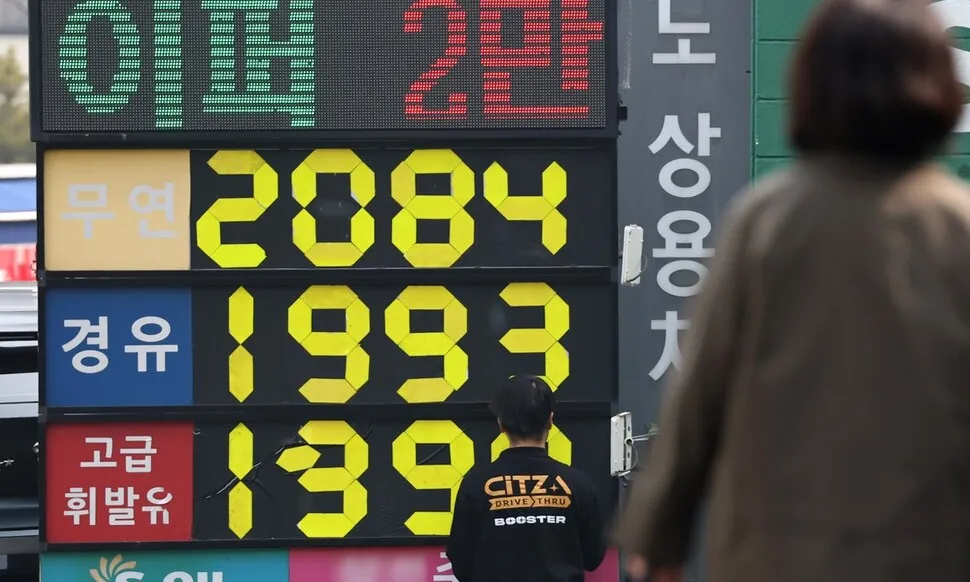
March 2026 has brought a stark reality check to global energy markets. In the immediate aftermath of the geopolitical friction in the Strait of Hormuz, governments worldwide scrambled to implement “Second Phase” price caps on petroleum products. Seoul, for instance, recently adjusted its supply price ceilings, pushing gasoline benchmarks toward 2,000 KRW per liter. However, the Organisation for Economic Co-operation and Development (OECD) has issued a blistering critique of these broad-stroke interventions. Their latest interim economic outlook suggests that while price caps offer immediate political relief, they function as a fiscal poison pill for the medium term.
The core friction lies in the distortion of market signals. When a government artificially suppresses the price of a commodity, it severs the link between cost and consumption. The OECD’s analysis highlights that blanket subsidies and tax breaks, while straightforward to deploy, create a “moral hazard” where energy conservation incentives evaporate. For the corporate sector, this is not merely a macroeconomic talking point; It’s a balance sheet risk. Broad subsidies often lead to sudden fiscal cliffs where governments, strapped for cash after funding war supplemental budgets, abruptly withdraw support, leaving industries exposed to raw volatility.
The Fiscal Efficiency Trap: Lessons from Berlin and Ottawa
To understand the trajectory of 2026’s policy landscape, one must appear at the post-2022 data from the Russia-Ukraine conflict. The OECD points to a divergent strategy between Canada and Germany as a case study in fiscal efficiency versus market distortion.
- The Canadian Model (Targeted Liquidity): Ottawa focused on one-off cash transfers and VAT rebates for vulnerable demographics. While this preserved the price signal—keeping fuel expensive enough to discourage waste—it required sophisticated administrative targeting to avoid leakage.
- The German Model (The Price Brake): Berlin implemented an “Energy Price Brake,” capping 80% of historical consumption at a subsidized rate while charging market rates for the excess. While this successfully drove conservation behavior among heavy users, it resulted in massive fiscal bleed, subsidizing high-income households and corporations that did not require aid.
The lesson for CFOs and strategy officers is clear: broad subsidies are unsustainable. As the OECD notes, “In environments with limited fiscal space, such widespread support is likely to necessitate cuts in other critical expenditure areas.” This creates a volatile regulatory environment where tax incentives can vanish overnight. Corporations relying on state-mandated price stability are building their P&L on sand.
“We are seeing a decoupling of political expediency from fiscal reality. The market is pricing in a higher risk premium for jurisdictions that rely on price caps rather than structural efficiency. Smart capital is moving toward assets that can withstand un-subsidized volatility.”
— Elena Rostova, Chief Investment Officer at Meridian Global Macro
Operational Hedging Over Political Reliance
The immediate implication for the B2B sector is a shift from passive reliance on government caps to active risk management. With the OECD explicitly warning against “broad-based transfers,” the burden of energy cost management returns squarely to the private sector. This creates a surge in demand for specialized energy management consulting firms capable of auditing supply chains for efficiency leaks.
Consider the data: In Q4 2025, industrial energy costs in OECD nations rose by an average of 14% year-over-year, excluding subsidies. For manufacturing firms operating on thin EBITDA margins, a sudden removal of a price cap could wipe out quarterly profitability. The solution is no longer lobbying for subsidies; it is engineering resilience. This requires a partnership with fiscal advisory groups that can navigate the complex transition from subsidized regimes to market-based pricing, ensuring that tax liabilities are optimized as government support structures dissolve.
the volatility introduced by the US-Iran tension suggests that traditional hedging instruments may be insufficient. The OECD Economic Outlook database indicates that supply chain bottlenecks are likely to persist through Q3 2026. Companies must therefore diversify their energy procurement strategies, potentially looking toward long-term power purchase agreements (PPAs) that lock in rates independent of spot market geopolitical shocks.
The Road Ahead: Fiscal Consolidation and Market Correction
The OECD’s stance serves as a leading indicator for global fiscal policy. We are entering a period of “fiscal consolidation,” where governments will be forced to retract emergency spending to manage debt sustainability. The organization explicitly stated that “new fiscal measures to mitigate energy price impacts will further exacerbate the fiscal burden faced by most governments.”
For the investor and the business leader, this signals a correction. The artificial floor under energy prices is being pulled away. Markets that previously relied on state intervention to maintain competitiveness will face a harsh reckoning. The winners in this cycle will not be those who wait for the next government bailout, but those who have proactively engaged supply chain logistics experts to reduce energy intensity and insulated their balance sheets against raw commodity swings.
As we move through the second quarter of 2026, the divergence between policy and market reality will widen. The “war supplemental budget” mentioned by Seoul is a temporary fix, not a strategy. The prudent path forward involves treating energy not as a utility to be capped, but as a strategic variable to be managed. Those who align their operational frameworks with this new, unsubsidized reality will secure a distinct competitive advantage as the global economy normalizes.