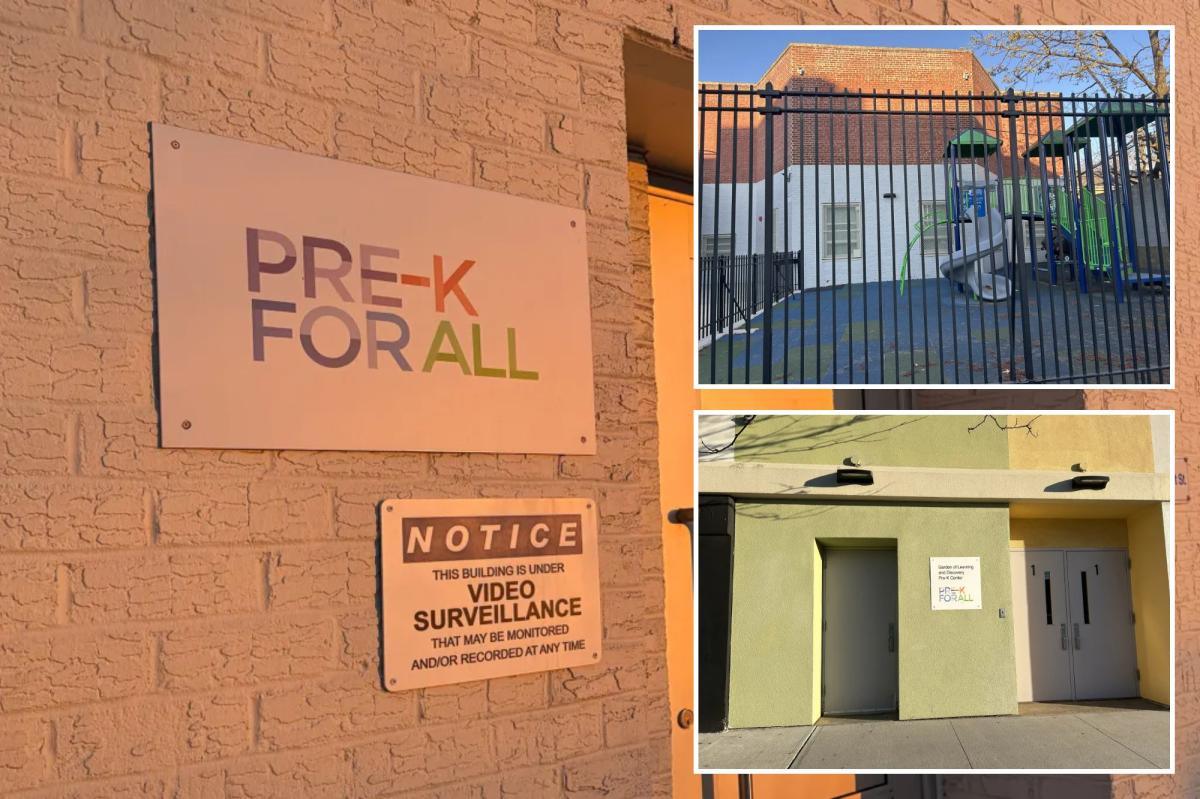
NYC Preschools Waste $100 Million on Unused Space Rent
New York City has spent nearly $100 million in taxpayer funds to lease unused preschool spaces across the five boroughs, a costly inefficiency exposed by a recent audit as families continue to face shortages in accessible early childhood education while city-owned classrooms sit vacant, draining public resources that could instead support teacher hiring, facility upgrades, or expanded enrollment in high-need neighborhoods.
The Hidden Cost of Empty Classrooms
As of April 2026, the New York City Department of Education (DOE) maintains leases on over 1.2 million square feet of underutilized or vacant space originally designated for pre-K and 3-K programs, according to internal facility utilization reports obtained through a Freedom of Information Law request. This represents approximately 18% of all leased instructional space in the city’s early education portfolio, despite a persistent waitlist of over 8,000 children seeking placement in publicly funded preschool programs, particularly in the Bronx, central Brooklyn, and parts of Queens where demand outstrips supply by nearly 40%.
The financial burden stems from long-term lease agreements signed during the rapid expansion of universal pre-K under Mayor Bill de Blasio’s administration, many of which include fixed annual escalation clauses and minimal provisions for early termination. In neighborhoods like Bedford-Stuyvesant and the South Bronx, landlords have benefited from guaranteed income streams while the DOE struggles to match supply with fluctuating demographic shifts and enrollment trends exacerbated by post-pandemic migration patterns and declining birth rates in certain districts.
A System Misaligned with Community Needs
Critics argue the situation reflects a deeper misalignment between centralized real estate planning and localized educational demand. “We’re paying premium rents for buildings that sit half-empty while parents in the same district drive their children across boroughs to locate a spot,” said Maria Gonzalez, director of the Bronx Early Learning Alliance, a coalition of community-based providers.
“The city owns the responsibility to educate, but not always the flexibility to adapt its real estate strategy to where families actually live and need services.”
Her organization has documented cases where leased DOE spaces remain vacant for over 18 months despite active waitlists within a two-mile radius.
Meanwhile, the city’s own property portfolio includes dozens of underused municipal buildings—former schoolyards, administrative offices, and retrofitted storefronts—that could be repurposed for early education at a fraction of the current leasing cost. A 2024 report by the Independent Budget Office estimated that converting just 25% of suitable vacant city-owned properties into preschool classrooms could save taxpayers upwards of $60 million annually in avoided lease expenditures.
The Human Impact Behind the Ledger
For families, the consequences extend beyond fiscal waste. In Harlem, where average waitlist times for 3-K exceed 14 weeks, parents like James Carter describe a daily juggling act that affects work stability and child development. “I’ve turned down job offers because I couldn’t guarantee pickup and dropoff logistics,” he shared. “Meanwhile, I pass two empty DOE-leased storefronts on my way to the subway—one’s been dark for over a year.”
This disconnect has as well strained relationships with community-based organizations (CBOs), which contract with the DOE to deliver 60% of the city’s universal pre-K seats. Many report receiving delayed or reduced payments due to budget reallocations aimed at covering lease obligations, despite meeting or exceeding enrollment targets. “We’re being penalized for the city’s real estate missteps,” said Linda Cho, executive director of Brooklyn Kindergarten Society.
“When funds get diverted to pay for empty seats, it’s our teachers and our classrooms that experience the squeeze.”
Where Solutions Meet Accountability
Addressing this inefficiency requires coordinated action between city agencies, real estate stakeholders, and community advocates. The DOE has launched a pilot space optimization initiative in three districts, aiming to sublet underused leased spaces to compatible tenants such as nonprofit after-school programs or health clinics, though progress remains slow due to contractual limitations and zoning restrictions.
For stakeholders seeking to understand or influence the path forward, expertise in municipal land use, public finance, and educational equity is essential. Navigating lease renegotiations or advocating for adaptive reuse of public assets often requires consultation with municipal law attorneys specializing in government contracts and land use regulation. Simultaneously, organizations focused on early childhood advocacy play a vital role in amplifying family voices and ensuring equity remains central to any real estate reform.
firms experienced in public sector space planning can help model optimal facility utilization based on demographic forecasts, enrollment trends, and accessibility metrics—turning underused square footage into responsive, community-driven educational infrastructure.
The Path Forward
As New York City grapples with a projected $4.3 billion budget gap over the next two fiscal years, the nearly $100 million tied up in unused preschool leases represents not just a fiscal oversight, but a moral one. Every dollar spent on vacant space is a dollar not spent on reducing class sizes, increasing teacher pay, or expanding access to the very children the universal pre-K promise was designed to serve.
The solution lies not in new construction, but in smarter stewardship—of existing leases, of public assets, and of the trust families place in their city to educate their youngest learners. Until that alignment is achieved, the empty classrooms will remain, a quiet testament to the cost of inertia in a city that demands better.
Worth a look
- NYC Mayor Zohran Mamdani Faces Backlash for Mourning Inmate Accused of Murdering Special Needs Man
- The Heartbreaking Final Words of NBC4 Journalist Eliana Moreno Before LA Helicopter Crash
- The Space Station Is Always Falling. Here's What Keeps It Up. (daybreakwire.com)
- Severe Drought in Slovakia Dries Up Reservoirs and Exposes Massive Waste (time.news)