NVWA Investigates Four Beter Leven Pig Farms Over Abuse Footage
Undercover footage broadcast by research group Ongehoord on the BNNVARA program BOOS revealed severe animal abuse at four Dutch pig farms operating under the Beter Leven quality label, prompting immediate regulatory scrutiny.
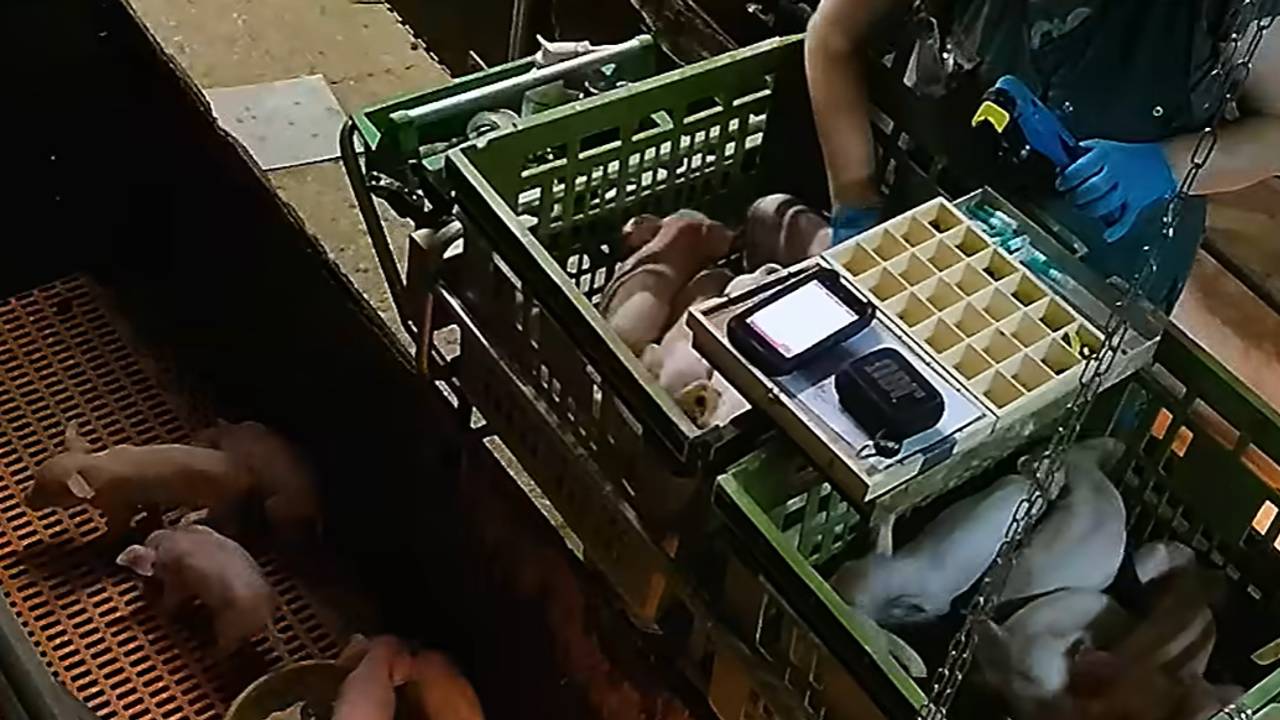
The Dutch Food and Consumer Product Safety Authority (NVWA) launched an investigation into the four farms following the broadcast. Footage from a farm in Bergeijk showed the owner, identified by Omroep Brabant as Loes, killing piglets by striking them against a metal gate and docking tails.
The program checked and verified the footage made by research group Ongehoord. According to the program, both legal rules and the conditions of the Beter Leven quality label were violated at the investigated farms. Footage from the farm in Bergeijk showed veehouder Loes throwing a piglet into a bin after striking it against a gate, with the animal still alive after the blow and some piglets reportedly requiring multiple strikes before dying.
In addition, Loes was seen docking the tails of piglets, a practice permitted only in specific situations such as the risk of tails being bitten off.
The NVWA stated that the footage prompted an investigation into the four involved pig farms, including the one belonging to Loes in Bergeijk, who stated in a conversation that she did not want to respond to the footage in detail for the time being. Footage also showed pigs being poked with an electric cattle prod while being driven for transport, a method that has been prohibited for some time.
Veterinarian Kees Scheepens watched the footage on Kassa and explained that striking piglets against a gate violates permitted euthanasia protocols. “This is not the correct method,” Scheepens said, noting that a percussive blow to the head with a heavy object is only allowed for non-viable animals in exceptional cases, rather than as a routine action.
The Dierenbescherming, which created the Beter Leven label in 2007 to help consumers choose meat from animals kept under better conditions where higher stars mean higher demands and independent inspectors check compliance, expressed shock and announced plans to tighten criteria. The Beter Leven quality label has existed since 2007.
Linda Verriet of the Producentenorganisatie Varkenshouderij defended the sector in studio remarks, calling the footage a snapshot rather than a systemic representation. However, Scheepens countered that the behaviour reflects widespread efficiency pressures in intensive livestock production that erode animal empathy.
Verriet said that the impact on the lives of the involved farmers is large because they receive threats following the footage, while Scheepens said that the severe footage is unfortunately not an incident.
The Beter Leven label sets tiered requirements for space, enrichment, and transport times compared to standard baseline regulations:
| Tier | Living Space per Pig | Enrichment Material | Maximum Transport Duration |
|---|---|---|---|
| Standard (Gangbaar) | 0.8 m² | Basic rooting material | 29 hours |
| 1 Star | 1.0 m² | Mandatory woodchips, ropes, or straw | 8 hours |
| 3 Stars | 1.3 m² with outdoor run | Straw bedding | 6 hours |
For standard and 1-star pigs, material for rooting is mandatory for distraction, such as sawdust, ropes, branches, or hay, along with edible material, while 3-star pigs have at least straw as bedding for their enclosure.
The Dierenbescherming updated its website to state that the label ensures animal welfare is monitored rather than guaranteeing superior living conditions.