
NVIDIA, Telecom Leaders Build AI Grids to Optimize Inference on Distributed Networks
The Death of the Centralized Data Center: Why Telcos Are Weaponizing the Edge for AI Inference
By Rachel Kim, Principal Solutions Architect & Technology Editor
March 17, 2026
Forget the hype cycles surrounding AGI training clusters. The real architectural shift happening this week at GTC 2026 isn’t about making models smarter; it’s about making them physically closer. NVIDIA and major telecom operators are finally admitting what edge computing advocates have argued for a decade: shipping tokens across continents is a latency bottleneck we can no longer afford. The “AI Grid” isn’t just marketing fluff; it’s a distributed inference topology designed to slash round-trip time (RTT) and tokenize the telco’s existing fiber footprint.
- The Tech TL;DR:
- Latency Collapse: Moving inference from centralized clouds to telco edge sites (like AT&T and Comcast hubs) reduces end-to-end latency to sub-500ms for conversational AI and sub-12ms for media rendering.
- Hardware Shift: Deployment relies on the NVIDIA RTX PRO 6000 Blackwell Server Edition, prioritizing throughput-per-watt over raw FLOPs for training.
- Security Surface: Distributing compute across 4,400+ edge locations exponentially increases the attack surface, requiring immediate SOC 2 re-evaluation for enterprise adopters.
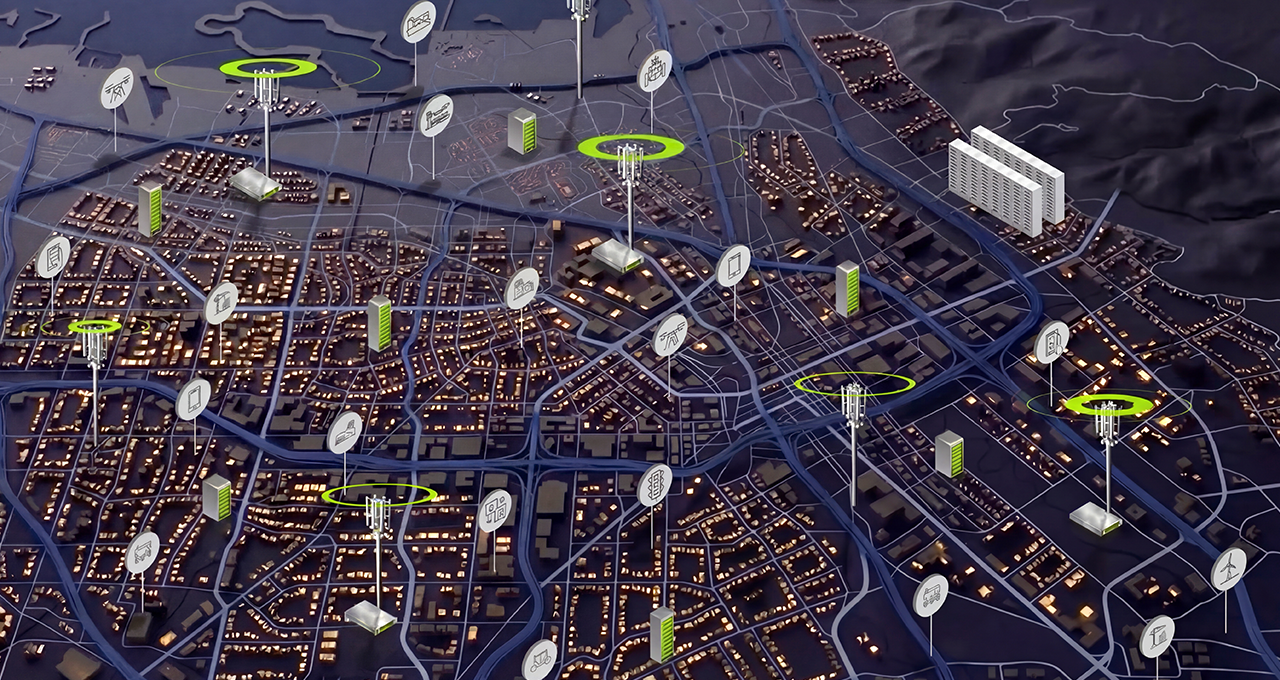
The fundamental problem with the current LLM deployment model is the “tyranny of distance.” When a user in Jakarta queries a model hosted in Northern Virginia, physics dictates a minimum latency that no amount of software optimization can fix. NVIDIA’s new AI Grid Reference Design attempts to solve this by treating the telecommunications network not as a pipe, but as a computer. By leveraging the 100,000 distributed network data centers already owned by operators like Indosat Ooredoo Hutchison and T-Mobile, the industry is pivoting from centralized training to distributed inference.
Hardware Reality Check: Blackwell at the Edge
Marketing materials love to talk about “intelligence everywhere,” but engineers care about thermal design power (TDP) and rack density. The core of this grid is the NVIDIA RTX PRO 6000 Blackwell Server Edition. Unlike the H100 clusters designed for massive batch processing in hyperscalers, these units are optimized for low-latency inference in space-constrained mobile switching offices.
The architectural trade-off is clear. You lose the massive VRAM capacity required for training trillion-parameter models, but you gain the ability to run quantized, specialized models (like Personal AI’s conversational agents or Linker Vision’s security feeds) with drastically reduced token costs. This is a move from general-purpose compute to workload-specific acceleration.
| Architecture Metric | Centralized Hyperscaler (e.g., AWS/Azure) | Distributed AI Grid (Telco Edge) |
|---|---|---|
| Primary Use Case | Model Training & Fine-Tuning | Real-time Inference & Rendering |
| Latency (Avg) | 40ms – 150ms (Network dependent) | <12ms (Local Edge) |
| Hardware Focus | H100/H200 Clusters (High VRAM) | RTX PRO 6000 Blackwell (High Throughput) |
| Cost Model | High Cost/Token (Data Egress) | Optimized Cost/Token (Local Processing) |
| Security Posture | Centralized Perimeter | Zero-Trust Distributed Mesh |
According to the official NVIDIA AI Grid whitepaper released this morning, the orchestration layer is critical. Partners like Rafay and Spectro Cloud are building the control plane to manage Kubernetes clusters across these disparate sites. This isn’t just spinning up a pod; it’s managing stateful workloads across a fragmented network topology where connectivity can be intermittent.
The Implementation Gap: Orchestration Complexity
For the senior developer looking to deploy on this grid, the abstraction layer is still maturing. You aren’t just deploying to a region; you are deploying to a specific topology zone. The complexity of managing node affinity across thousands of edge sites introduces significant DevOps overhead. A standard Kubernetes manifest won’t suffice without strict topology constraints.
Consider the following Kubernetes snippet required to pin a vision AI workload to a specific telco edge node to ensure sub-10ms latency for a safety application:
apiVersion: v1 kind: Pod metadata: name: edge-vision-inference labels: app: linker-vision-agent spec: affinity: nodeAffinity: requiredDuringSchedulingIgnoredDuringExecution: nodeSelectorTerms: - matchExpressions: - key: topology.kubernetes.io/zone operator: In values: - "telco-edge-us-west-2a" - key: nvidia.com/gpu operator: Exists containers: - name: inference-engine image: nvcr.io/nvidia/linker-vision:v2.6 resources: limits: nvidia.com/gpu: 1 env: - name: INFERENCE_MODE value: "LOW_LATENCY"This level of granular control is powerful but dangerous. Misconfigured affinity rules can lead to workload sprawl, where inference tasks accidentally route back to centralized clouds, negating the latency benefits and inflating egress costs. This is where the “IT Triage” reality sets in. Most enterprise IT departments lack the specific expertise to manage a hybrid edge-cloud topology of this scale securely.
we are seeing a surge in demand for specialized Managed Service Providers (MSPs) who understand both telco infrastructure and Kubernetes orchestration. The security implications of distributing AI workloads to physical locations like cell towers and central offices cannot be overstated. Organizations adopting this stack should immediately engage cybersecurity auditors to reassess their physical security and zero-trust policies, as the perimeter has effectively dissolved.
Vendor Lock-in and The Sovereignty Play
While AT&T and Comcast are touting “open” grids, the reliance on the NVIDIA software stack (CUDA, Triton Inference Server) creates a deep vendor lock-in. There is no easy migration path to AMD or Intel silicon once your inference pipelines are optimized for Blackwell architecture. However, for sovereign nations like Indonesia, where Indosat Ooredoo Hutchison is deploying the “Sahabat-AI” grid, the trade-off is acceptable. Keeping data within national borders via local edge nodes satisfies data residency laws that centralized US-based clouds cannot.

“The shift to distributed AI isn’t just about speed; it’s about blast radius. If an adversary compromises a centralized model, they own the brain. If they compromise an edge node, they only blind one eye. But securing 4,000 eyes is a logistical nightmare.” — Dr. Elena Rostova, Lead Researcher at the Open Infrastructure Foundation (OIF)
Developers should also note the funding transparency of the software layer. While NVIDIA provides the hardware, the orchestration tools from Rafay and Spectro Cloud are venture-backed (Series C and D respectively), meaning long-term support contracts will be a significant line item in your OpEx. This isn’t a hobbyist project; it’s enterprise-grade infrastructure with enterprise-grade pricing.
The Verdict: Structural Change, Not Magic
The AI Grid is a necessary evolution. As AI agents turn into concurrent and real-time, the centralized cloud model breaks down under the weight of its own latency. Telcos have the real estate and the power; NVIDIA has the silicon. The marriage makes architectural sense. However, for the CTO, this introduces a new class of distributed systems problems. You are trading the simplicity of a managed API for the complexity of a distributed mesh.
Expect the next 18 months to be defined by the tooling that emerges to manage this chaos. If you are planning a deployment, do not treat this as a simple API integration. Treat it as a network architecture overhaul. And if your team isn’t ready to manage edge nodes physically and logically, stick to the centralized cloud until the abstraction layers mature.
Disclaimer: The technical analyses and security protocols detailed in this article are for informational purposes only. Always consult with certified IT and cybersecurity professionals before altering enterprise networks or handling sensitive data.