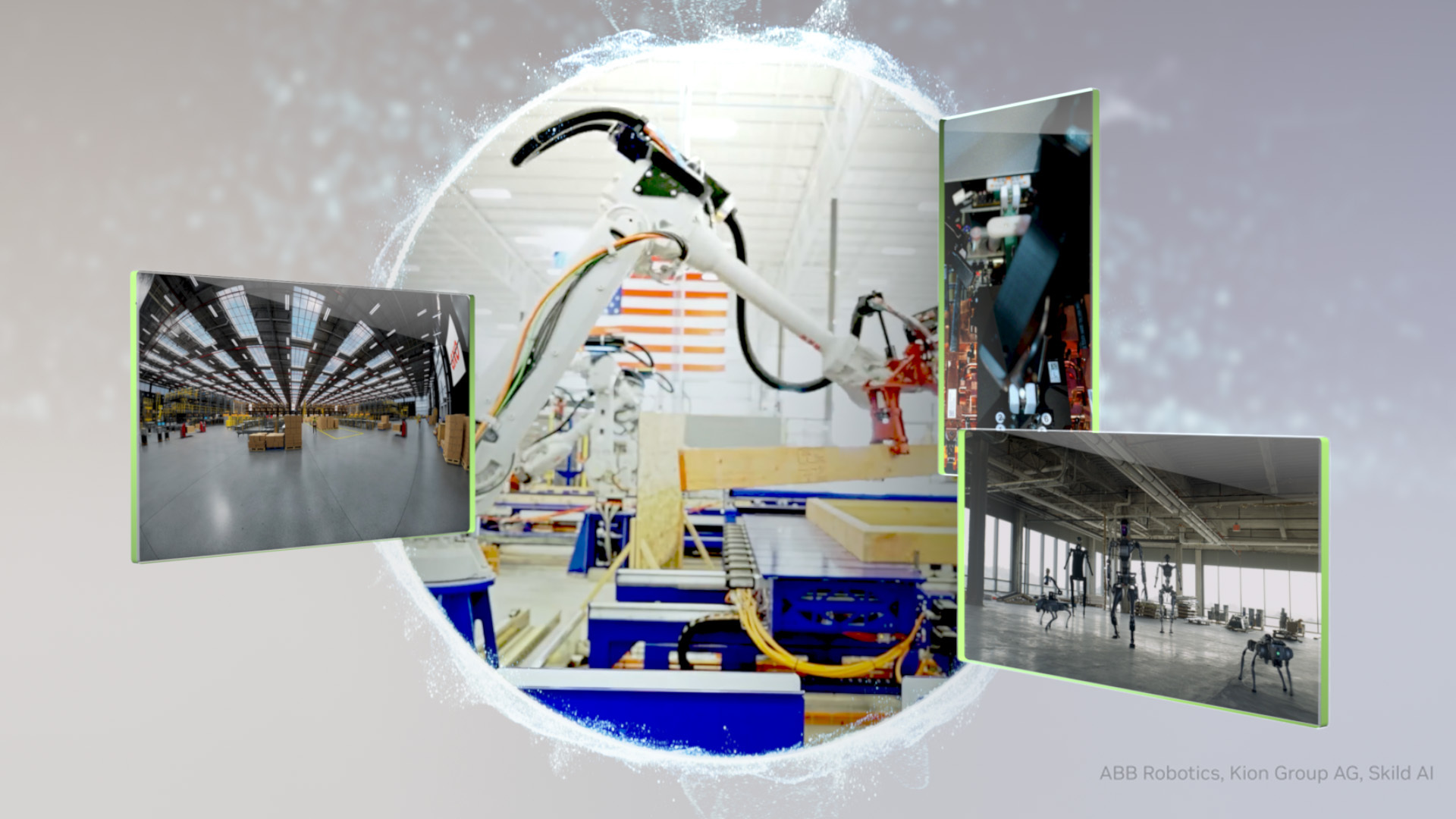
NVIDIA Scales Physical AI with New Omniverse Blueprints and OpenUSD
The “Physical AI” Moat Has Shifted From Data to Data Factories
NVIDIA’s GTC 2026 keynote didn’t just announce recent chips; it declared the complete of the “collect data, train model” era for robotics. The new narrative is “Physical AI,” but let’s strip the marketing veneer. The bottleneck isn’t the robot anymore; it’s the simulation pipeline required to train it without breaking physical hardware. With the release of the NVIDIA Omniverse DSX Blueprint and Cosmos 3, the industry is pivoting from manual data collection to synthetic data generation at scale. For CTOs, the question is no longer “Can we train this?” but “Can our infrastructure handle the thermal and latency load of a digital twin that runs 24/7?”
- The Tech TL;DR:
- Synthetic Data Supremacy: Real-world data is now considered a bottleneck; NVIDIA’s new “Data Factory” blueprint prioritizes generating long-tail edge cases via Cosmos 3 world models.
- Infrastructure Shift: The Omniverse DSX Blueprint unifies thermals, power, and network simulation, requiring enterprise-grade GPU clusters rather than standard cloud instances.
- Agentic Orchestration: Open source frameworks like OpenClaw are bridging the gap between LLM reasoning and low-level robotic control loops.
The fundamental problem with deploying autonomous systems in 2026 is the “Sim-to-Real” gap. Traditional reinforcement learning pipelines suffer from domain randomization issues—what works in a perfect Unity environment fails when a warehouse floor is wet or lighting changes. NVIDIA’s answer is the Physical AI Data Factory Blueprint. This isn’t just a software update; it’s an architectural shift that treats compute as the primary raw material. By leveraging NVIDIA OSMO, operators can curate and augment datasets programmatically, effectively turning GPU cycles into training validity.
Framework Analysis: The New Stack vs. Legacy Pipelines
To understand the architectural impact, we need to compare this new “Data Factory” approach against the legacy manual collection methods still prevalent in mid-market robotics. The shift is from reactive data gathering to proactive simulation.
| Feature | Legacy Manual Collection | NVIDIA Physical AI Data Factory (2026) |
|---|---|---|
| Data Source | Real-world sensors (LiDAR, Cameras) | Synthetic generation via Cosmos 3 World Models |
| Edge Case Handling | Reactive (Wait for failure) | Proactive (Generate rare scenarios on demand) |
| Latency | High (Physical deployment required) | Low (In-simulation validation at 1000x speed) |
| Scalability | Linear (Limited by fleet size) | Exponential (Limited only by GPU cluster size) |
The introduction of NVIDIA Isaac GR00T N1.7 further cements this by providing a foundation model specifically tuned for humanoid manipulation tasks. However, the raw power of these models introduces a significant security surface area. When you connect an agentic framework like OpenClaw to physical actuators, you aren’t just risking data leakage; you risk kinetic damage. Peter Steinberger, creator of OpenClaw, noted in a recent technical briefing, “We are building guardrails that let anyone create powerful AI assistants, but the definition of ‘powerful’ now includes the ability to move heavy machinery. The security model must be zero-trust by default.”
Implementation: Orchestrating the Simulation Loop
For developers looking to integrate this stack, the workflow moves away from standard Python scripts toward containerized simulation environments. The following snippet demonstrates how to initialize an Isaac Sim environment using the new Omniverse Kit SDK, a prerequisite for leveraging the DSX Blueprint.
import omni.kit.app from omni.isaac.kit import SimulationApp # Initialize the simulation app with headless rendering for CI/CD pipelines simulation_app = SimulationApp({"headless": True, "renderer": "Raytraced"}) from omni.isaac.core import World from omni.isaac.core.objects import DynamicCuboid # Create the world with physics enabled (critical for Physical AI validation) my_world = World(stage_units_in_meters=1.0) # Add a ground plane and a dynamic object for collision testing my_world.scene.add_default_ground_plane() my_world.scene.add(DynamicCuboid( prim_path="/World/random_cube", name="cube", position=[0, 0, 1], scale=[0.5, 0.5, 0.5], color=[1, 0, 0] )) my_world.reset() # Run the simulation step my_world.step(render=True) simulation_app.close()This level of abstraction allows for continuous integration pipelines where code is validated against physics before it ever touches a robot. However, managing the underlying infrastructure for these simulations is non-trivial. The thermal density of running multiple Omniverse instances requires specialized cooling and power management that standard colocation facilities often lack. This is where the gap between software development and physical operations widens. Enterprises attempting to deploy these blueprints without dedicated infrastructure support often face throttling issues that degrade simulation fidelity.
we are seeing a surge in demand for specialized Managed Service Providers (MSPs) who understand high-performance computing (HPC) clusters. It is no longer sufficient to have a generic IT team; you need partners who can architect the network topology to handle the massive throughput of OpenUSD telemetry data. The integration of physical AI into legacy manufacturing lines introduces significant operational technology (OT) risks. Companies are increasingly engaging cybersecurity auditors specifically trained in industrial control systems to ensure that the “agentic” nature of these new robots doesn’t introduce vulnerabilities into the broader factory network.
The Verdict: Compute Is the New Data Moat
Rev Lebaredian’s assertion that “compute is data” is technically accurate but operationally expensive. The NVIDIA Mega Omniverse Blueprint offers a compelling reference architecture for digital twins, as seen in deployments by KION, and Siemens. Yet, for the average enterprise, the barrier to entry remains the complexity of the stack. Converting legacy CAD files to OpenUSD formats is a friction point that often requires custom software development agencies with specific 3D pipeline expertise.
As we move through Q2 2026, the winners in the Physical AI space won’t be those with the best robot hardware, but those with the most efficient data factories. The ability to synthesize a million hours of training data overnight is the new competitive advantage. However, this speed demands rigorous validation. Without the proper IT consulting to bridge the gap between simulation and reality, companies risk deploying “smart” systems that fail catastrophically in the messy, unstructured real world.
Disclaimer: The technical analyses and security protocols detailed in this article are for informational purposes only. Always consult with certified IT and cybersecurity professionals before altering enterprise networks or handling sensitive data.