
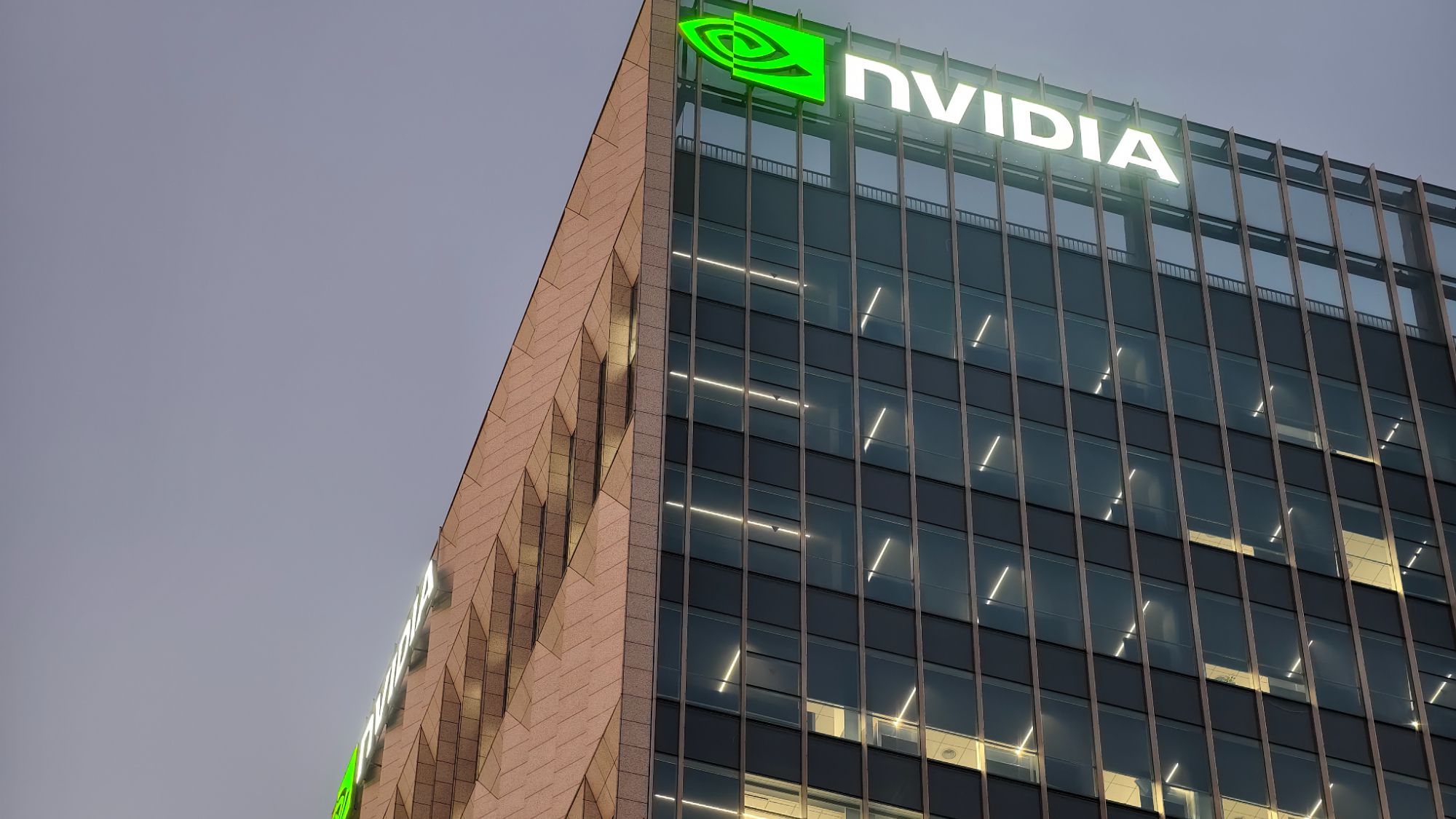
Nvidia invests $2 billion in Marvell to deepen NVLink Fusion partnership — signs deal with one of its biggest competitors
Nvidia Buys Marvell’s Loyalty: The $2 Billion Moat Against Custom Silicon
Nvidia didn’t just write a check to Marvell Technology this morning; they purchased a strategic choke point in the AI supply chain. By injecting $2 billion into Marvell and locking them into the NVLink Fusion ecosystem, Jensen Huang is effectively neutralizing the biggest threat to his GPU dominance: the hyperscaler custom ASIC. In a market where AWS, Google, and Microsoft are desperate to decouple from Nvidia’s pricing power, this deal forces the remarkably companies building those alternatives to remain tethered to Nvidia’s proprietary interconnect fabric.
The Tech TL;DR:
- Vendor Lock-in 2.0: NVLink Fusion mandates at least one Nvidia component per cluster, preventing pure non-Nvidia AI factories.
- Photonics Integration: Marvell’s Celestial AI acquisition brings coherent optical DSPs to the rack scale, targeting sub-microsecond latency for distributed training.
- Competitor Isolation: Broadcom, AMD, and Intel remain outside the Fusion loop, doubling down on the open UALink standard as a counter-measure.
The architecture of modern AI training is shifting from single-node performance to rack-scale efficiency. The bottleneck is no longer FLOPS; it’s memory bandwidth and interconnect latency. When Marvell announced their fiscal 2026 revenue hitting $8.2 billion, driven largely by data center custom silicon, it signaled that the “Bring Your Own Chip” (BYOC) movement was gaining traction. Nvidia’s response is not to lower prices, but to raise the technical barrier to exit. By integrating Marvell’s custom XPUs directly into the NVLink domain, Nvidia ensures that even if a hyperscaler designs their own accelerator, they must still buy Nvidia switches, NICs, or CPUs to make it talk to the rest of the cluster at line rate.
The Physics of the Walled Garden
From a systems engineering perspective, NVLink Fusion is a brilliant, if monopolistic, solution to the heterogeneity problem. Traditionally, connecting a custom ASIC to an Nvidia GPU required PCIe switching, introducing significant latency overhead and limiting bandwidth to roughly 64 GB/s per lane (PCIe 6.0). NVLink Fusion bypasses the PCIe root complex entirely, allowing third-party silicon to plug directly into the GPU memory space.

However, this comes with a steep infrastructure tax. The deal leverages Marvell’s recent acquisition of Celestial AI, integrating their photonic fabric technology directly into Nvidia’s Spectrum-X switches. This moves the optical DSP closer to the compute die, reducing the power-per-bit cost of data movement. For the CTOs reading this, the implication is clear: you can build a custom chip, but you cannot build a custom network if you want Nvidia-grade performance.
This creates a specific triage scenario for enterprise IT. Organizations attempting to deploy hybrid clusters (mixing Nvidia GPUs with Marvell-designed ASICs) face complex integration challenges regarding thermal management and firmware compatibility. This is not a plug-and-play upgrade; it requires specialized data center architects who understand the nuances of coherent optical interconnects and proprietary NVLink handshakes. Standard MSPs often lack the clearance to tune these specific fabric configurations, leading to sub-optimal utilization rates during the initial rollout.
“Nvidia is essentially saying, ‘You can build the engine, but you have to buy our transmission.’ It secures their revenue stream even as the compute landscape fragments.” — Elena Rostova, Principal Hardware Analyst at Silicon Insights
Benchmarking the Fusion Fabric
To understand the performance delta, we have to look at the raw throughput specifications released in the technical whitepaper. The integration of Marvell’s 112G PAM4 DSPs with Nvidia’s latest NVLink protocol pushes the effective bidirectional bandwidth significantly higher than standard Ethernet-based clusters (RoCEv2).
Below is a breakdown of the interconnect specifications relevant to the 2026 deployment cycle. Note the latency differential; in large language model training, that 200ns difference per hop compounds across thousands of nodes, directly impacting time-to-train.
| Interconnect Standard | Max Bandwidth (Per Link) | Typical Latency | Topology Support | Vendor Ecosystem |
|---|---|---|---|---|
| NVLink Fusion (2026) | 900 GB/s (Aggregate) | ~400 ns | Full Mesh / Torus | Nvidia + Partners (Marvell) |
| UALink 1.0 (Open) | 800 GB/s (Target) | ~650 ns | Pod-based | AMD, Intel, Broadcom |
| InfiniBand NDR | 400 Gb/s | ~500 ns | Fat Tree | Nvidia (Exclusive) |
| Ethernet 800G | 800 Gb/s | ~800 ns+ | Leaf-Spine | Multi-Vendor |
The table highlights why the Marvell deal is critical. UALink, backed by AMD and Intel, is the open-source rebellion attempting to break Nvidia’s interconnect monopoly. However, until UALink reaches maturity and widespread silicon availability, NVLink Fusion remains the only path to sub-millisecond scale-up networking for the largest models. For developers, this means checking the official NVLink documentation for compatibility matrices before committing to a hybrid architecture.
Implementation: Verifying the Fusion Link
For systems engineers deploying these hybrid racks, verifying that the Marvell XPU is correctly negotiating the NVLink Fusion protocol is the first step in the production push. You cannot rely on standard lspci output. Instead, you must query the NVSwitch topology directly.
Assuming the deployment of the new nvidia-fusion-utils package (available in the 2026.1 driver branch), the following CLI command validates the link status and bandwidth utilization between the host CPU and the attached Marvell accelerator:
# Verify NVLink Fusion topology and link health sudo nvlink-fusion-status --topology --check-bandwidth # Expected Output Snippet: # Node ID: 0 (Nvidia Vera CPU) # -> Link 0: Marvell OCP XPU (Status: ACTIVE, Width: x16, Speed: 95.5 GB/s) # -> Link 1: Nvidia H200 GPU (Status: ACTIVE, Width: x18, Speed: 130.0 GB/s) # Warning: Link 0 ECC errors detected (Threshold: 0.01%) If you see ECC errors or the link negotiating at PCIe speeds instead of NVLink speeds, it indicates a firmware mismatch between the Marvell DSP and the Nvidia Switch. This is a common deployment friction point that often requires engaging hardware integration specialists to flash the correct VBIOS versions across the heterogeneous cluster.
The Security and Compliance Vector
Mixing silicon from different vendors in a tightly coupled fabric introduces new attack surfaces. The shared memory space enabled by NVLink Fusion means that a vulnerability in the Marvell XPU firmware could theoretically allow DMA attacks against the Nvidia GPU memory.
According to the NIST cybersecurity framework updates for AI infrastructure, heterogeneous clusters require strict isolation policies. Enterprise security teams must treat the interconnect fabric as a trusted boundary that needs rigorous auditing. We are already seeing a surge in demand for AI infrastructure auditors who can validate that the NVLink encryption keys are properly rotated and that the side-channel risks of shared memory pools are mitigated via software-defined isolation.
The Verdict: Efficiency vs. Autonomy
Nvidia’s $2 billion investment is a defensive masterstroke. It acknowledges that custom silicon is inevitable but ensures that custom silicon remains a tributary to Nvidia’s river, not a separate ocean. For the CTO, the choice is now binary: accept the “Nvidia Tax” for guaranteed performance and ecosystem compatibility, or gamble on the maturing UALink standard and risk integration headaches.
As we move deeper into 2026, the companies that win will not be those with the biggest GPUs, but those with the most efficient data movement. Nvidia knows this. By locking Marvell’s photonics into their fabric, they have raised the drawbridge. The rest of the industry is now left building boats.
Disclaimer: The technical analyses and security protocols detailed in this article are for informational purposes only. Always consult with certified IT and cybersecurity professionals before altering enterprise networks or handling sensitive data.