
Nvidia DLSS 5: AI Graphics Leap Faces Backlash & Control Concerns
Nvidia’s unveiling of DLSS 5, its next-generation graphics upscaling technology, has ignited a debate over the future of artistic control in video games. The technology, presented Monday at the company’s GTC conference, promises to infuse games with “photoreal” lighting and materials using generative AI, but the demonstration sparked immediate criticism from gamers and developers alike.
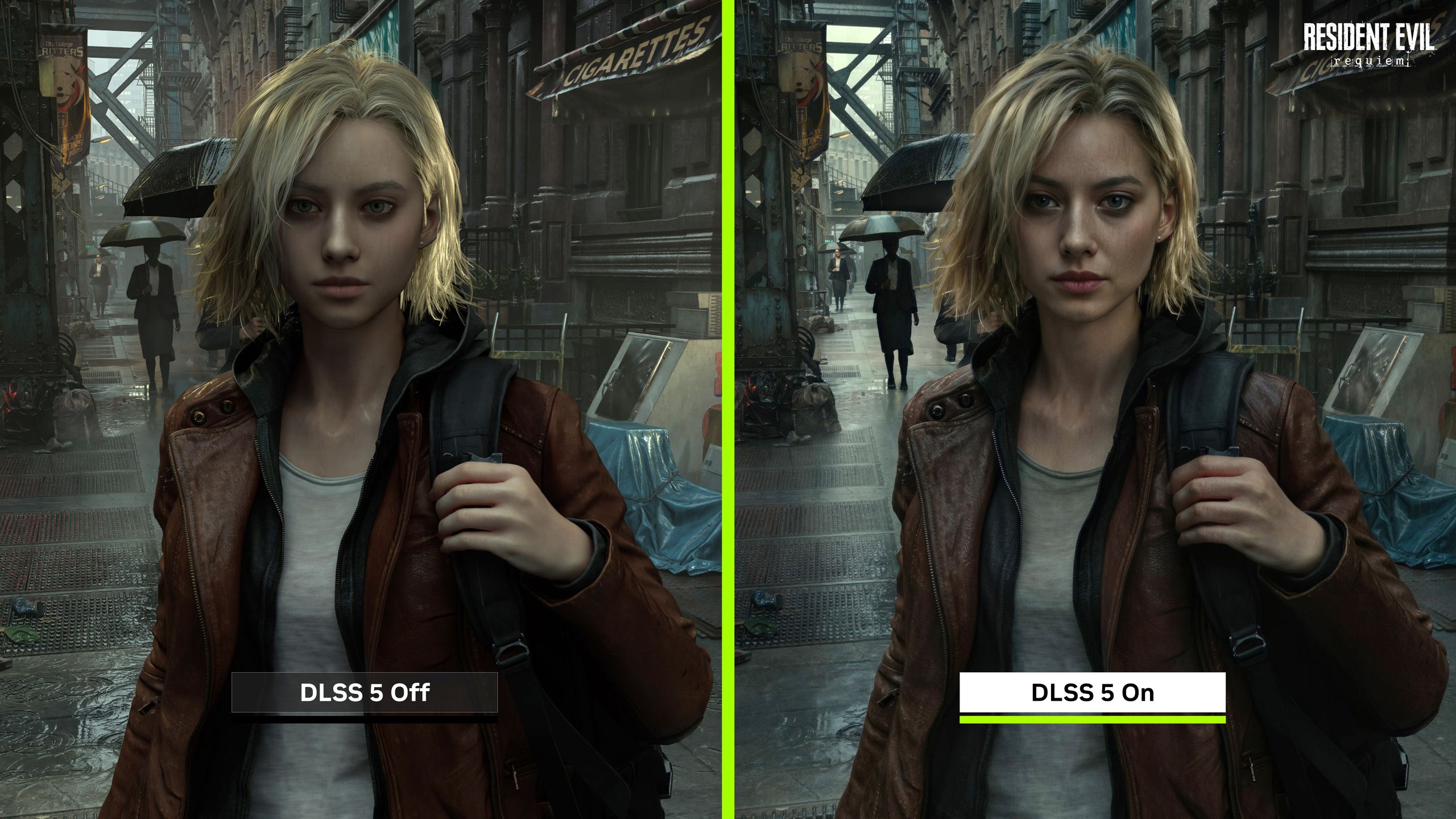
Nvidia showcased DLSS 5 with examples from Capcom’s Resident Evil Requiem and Bethesda’s Starfield. The application of the technology to Resident Evil Requiem’s Grace Ashcroft quickly became a focal point of controversy, with online reactions highlighting significant alterations to the character’s appearance. Memes circulated widely, mocking what many perceived as an AI-driven “yassification” of the character, altering her features to conform to perceived AI beauty standards.
Even as Bethesda publicly affirmed its artists would retain control over the final appear of Starfield with DLSS 5, the rollout appeared to catch Capcom off guard. According to a report from Insider Gaming, developers at Capcom were “taken aback” by Nvidia’s announcement, given the publisher’s historical opposition to the apply of artificial intelligence in game development. The report suggests concerns within Capcom that the DLSS 5 announcement could prompt a reevaluation of the company’s stance on generative AI.
An unnamed Ubisoft developer reportedly told Insider Gaming, “We found out at the same time as the public.”
Nvidia CEO Jensen Huang dismissed the criticism during his GTC presentation, stating that critics were “completely wrong.” He explained that DLSS 5 “fuses the controllability of geometry and textures and everything about the game with generative AI,” and emphasized that developers would have the ability to “fine-tune the generative AI.” Huang clarified that the technology operates at the “geometry level” and represents “content-control generative AI,” or “neural rendering.”
The core of DLSS 5 lies in its use of a real-time neural rendering model, which processes scene geometry, color data, and motion vectors from the game engine using AI models to calculate lighting, shadows, reflections, and materials. This differs from DLSS 4.5, which primarily focused on boosting frame rates. According to Nvidia, DLSS 5 is the company’s most significant breakthrough in computer graphics since the introduction of real-time ray tracing in 2018.
However, concerns remain about the potential for the technology to override artistic intent. Notebookcheck reported that the demo of DLSS 5 required two Nvidia GeForce RTX 5090 graphics cards, suggesting the technology will be resource-intensive and potentially limited to high-end hardware. Digital Foundry noted technical issues in the beta version, including problems with reflections. The publication also highlighted that while textures appeared sharper and more detailed, the AI-generated lighting could drastically alter the intended mood and aesthetic of a game.
Some gamers have expressed a desire for more granular control over DLSS 5, wanting the upscaling benefits without the AI-driven alterations to character appearances. Currently, the technology is presented as an on/off switch, lacking the customization options that would allow players to selectively apply its features.
As of March 19, 2026, Nvidia has not announced a specific release date beyond “Fall 2026,” and the company has not responded to requests for comment regarding Capcom’s concerns or the potential for increased customization options.