Nvidia Backs Span’s Plan for Home-Based AI Data Centers
The current AI arms race has hit a physical wall. It isn’t a shortage of H100s or a lack of venture capital; it is the electrical grid. As hyperscalers struggle to retrofit aging infrastructure to support massive power draws, the strategy is shifting from centralized monoliths to a fragmented, distributed edge. Enter the proposal to turn the American suburb into a server farm.
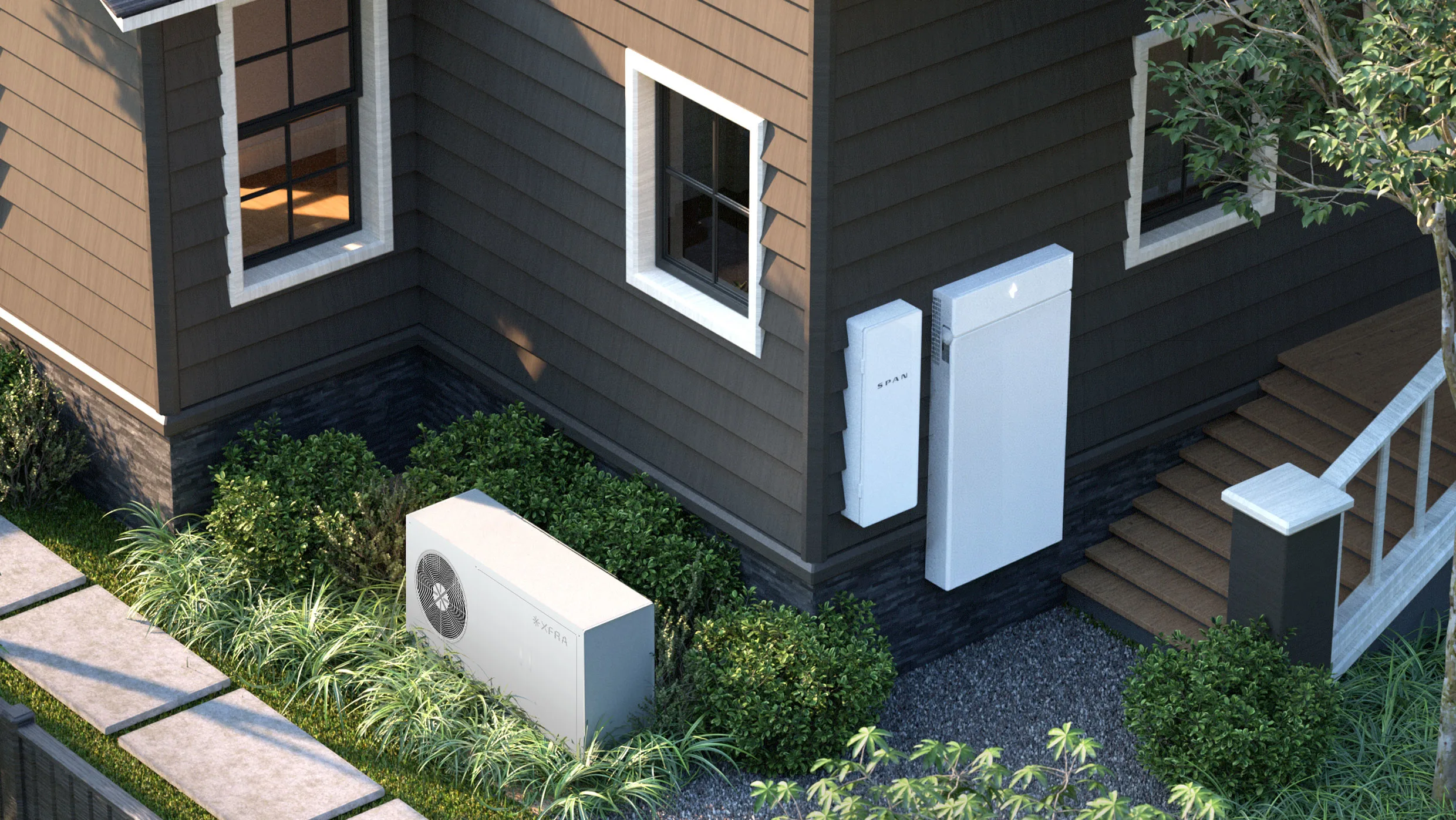
- The Hardware: Span is deploying “XFRA” nodes—outdoor units containing 16 Nvidia GPUs, 4 AMD CPUs and 4TB of memory—to be installed at residential homes.
- The Arbitrage: The system leverages the fact that average households utilize only about 42% of their allotted electrical capacity, steering the surplus to AI workloads.
- The Incentive: Homeowners host these $500,000+ hardware stacks in exchange for Span covering a significant portion of their electricity and broadband bills.
From an architectural standpoint, this is a classic “power play.” The bottleneck for AI scaling is the time and political friction required to build new data centers and upgrade utility transformers. By placing the compute where the power is already provisioned—the residential meter—Span is effectively crowdsourcing the electrical grid. However, moving the GPU to the edge introduces a host of systemic risks regarding latency, physical security, and thermal degradation of local infrastructure.
The XFRA Spec Sheet: Enterprise Power in a Residential Shell
To understand the scale of this deployment, one must look at the bill of materials. We aren’t talking about a glorified NAS or a home server; these are high-density compute nodes. Based on available pricing for the specified components, the hardware inside a single XFRA unit is estimated to be worth $500,000 or more. This creates an immediate physical security vulnerability: placing a half-million-dollar asset in an unsecured backyard is a liability nightmare that would make any SOC 2 auditor sweat.

| Component | XFRA Node Specification | Enterprise Equivalent |
|---|---|---|
| GPU Count | 16 Nvidia GPUs | Standard AI Accelerator Node |
| Compute | 4 AMD CPUs | Multi-socket Server Grade |
| Memory | 4 Terabytes (TB) | High-Memory Compute Instance |
| Power Source | Residential Grid Surplus | Dedicated Industrial Feed |
| Cooling | Integrated Cooling System | HVAC/Liquid Cooling Loop |
While the specs are impressive, the deployment reality is currently minimal. Span VP Chris Lander has noted that the company has conducted internal technical studies and modeling for various workloads. Yet, the actual footprint is nearly non-existent. To date, the collaboration with Atlanta-based homebuilder Pulte Homes has resulted in exactly one unit being installed. The plan to scale to “upwards of 100” nodes in a pilot project later this year remains the critical proof-of-concept phase.
The Latency Trap and Distributed Workload Realities
The primary technical hurdle for any distributed computing project is the interconnect. AI workloads, particularly LLM training and high-inference tasks, require massive bandwidth and ultra-low latency between GPUs. In a traditional data center, this is handled by InfiniBand or NVLink. In a residential model, you are relying on consumer-grade broadband. Even with the promise of “low-latency” by being closer to the end-user, the jitter and packet loss inherent in residential ISP routing could cripple synchronous workloads.
To manage a cluster of these nodes, a sophisticated orchestration layer—likely leveraging Kubernetes for containerization and workload scheduling—would be mandatory. Developers would need to implement asynchronous processing or federated learning models to ensure that a single homeowner’s router rebooting doesn’t crash a global compute job.
# Hypothetical Node Heartbeat & Latency Monitor for Distributed XFRA Cluster import time import requests NODES = ["node_01.span.local", "node_02.span.local", "node_03.span.local"] LATENCY_THRESHOLD_MS = 50 def check_node_health(node_url): try: start_time = time.time() response = requests.get(f"http://{node_url}/health", timeout=2) latency = (time.time() - start_time) * 1000 if response.status_code == 200 and latency < LATENCY_THRESHOLD_MS: return True, latency return False, latency except requests.exceptions.RequestException: return False, float('inf') for node in NODES: healthy, lat = check_node_health(node) status = "ONLINE" if healthy else "OFFLINE/LAGGING" print(f"Node {node}: {status} | Latency: {lat:.2f}ms") Grid Degradation: The Hidden Cost of “Free” Electricity
Span’s core thesis is that because the average home uses only 42% of its allotted power, this capacity is “free.” This is a dangerous simplification. Electrical infrastructure is not just about the total capacity of the wire; it is about thermal limits. Constant high-load GPU cycles generate heat not just in the server, but in the transformers and distribution lines.
There is a legitimate concern that this distributed load could accelerate the degradation of neighborhood transformers, leading to higher long-term costs for the entire community. While Chris Lander argues that this will actually provide relief by reducing the CAPEX utilities spend on new data centers, the physics of transformer heat remains a constant. For enterprises looking to integrate such edge solutions, auditing the local power quality is non-negotiable. This is where [Electrical Grid Auditors] and specialized [Managed Infrastructure Providers] become essential to prevent localized brownouts.
The “Thought Partner” Paradox
The most telling detail of this initiative is Nvidia’s role. While their brand is prominently featured in the press, Nvidia is not an investor, nor have they donated hardware. They are a “thought partner,” helping Span connect with “offtakers” like hyperscalers, and neoclouds. In Silicon Valley terms, Nvidia is providing the blueprint and the brand validation without taking the financial risk of a residential hardware rollout.
This suggests that while the industry is desperate for compute, the “Uber for data centers” model—as one Reddit user described it—is still highly speculative. The risk of theft, the instability of residential power, and the latency of the open web make this a high-friction deployment. For companies attempting to scale AI without the overhead of a traditional data center, the alternative remains hybrid-cloud strategies or dedicated edge-compute rentals from vetted [Software Development Agencies] who manage the hardware lifecycle.
Span is betting that the desperation for AI capacity will outweigh the logistical nightmare of managing thousands of $500k boxes in suburban backyards. If it works, it solves the grid bottleneck. If it fails, it leaves a trail of blown transformers and stolen GPUs in its wake.
Disclaimer: The technical analyses and security protocols detailed in this article are for informational purposes only. Always consult with certified IT and cybersecurity professionals before altering enterprise networks or handling sensitive data.