
NUS Scientists Use Magnetic Pulses to Reprogram Immune Cells Against Breast Cancer
<>
Researchers from the National University of Singapore (NUS) have demonstrated that intermittent, low-intensity magnetic pulses can transform corrupted, cancer-promoting immune cells into active cancer destroyers. Appearing in the June 4 issue of the academic journal Smart Medicine, the preclinical study demonstrates that pulsed electromagnetic fields (PEMFs) completely eradicated tumours in 75 per cent of tested pre-clinical models after just four 30-minute sessions, offering a potential targeted therapy without traditional chemotherapy.
- NUS researchers utilized pulsed electromagnetic fields (PEMFs) to target TRPC1 calcium channels on breast cancer cells.
- The 30-minute intermittent magnetic therapy eradicated tumours in 75 per cent of tested pre-clinical models across four sessions.
- The treatment halves the effective dosage required for chemotherapeutic drugs like doxorubicin.
Biological Mechanics of Pulsed Electromagnetic Fields
The discovery builds upon earlier findings from the research team showing that brief PEMF exposure enhances the cellular uptake of doxorubicin (DOX). According to Alfredo Franco-Obregon, principal investigator at the NUS Institute for Health Innovation and Technology who led the research, the gentle magnetic waves pass safely through the body without generating heat or damaging tissue by acting like a biological tuning fork.
When these waves pass through cellular structures, they interact with specialised microscopic gates on the cell surface called TRPC1 channels, which function as biological antennae for weak magnetic fields. Opening these gates triggers a small, controlled wave of calcium into the cell that activates the mitochondria. In healthy tissues, this cellular workout stimulates repair and boosts energy production. In cancer cells, however, the excess stimulation overloads an unstable system.
As Franco-Obregon, a research associate professor from the Department of Surgery at the NUS Yong Loo Lin School of Medicine, pointed out, breast cancers overexpress this calcium channel protein to drive rapid proliferation and fast dissemination.
Addressing Global Epidemiological Burdens and Drug Resistance
Worldwide breast cancer diagnoses are anticipated to grow by a third, moving from 2.3 million in 2023 to over 3.5 million by 2050, while yearly fatalities could nearly double from 764,000 to close to 1.4 million. Locally, breast cancer remains the most common cancer among women in Singapore, accounting for approximately 30 per cent of all female cancer diagnoses. Data from the Singapore Cancer Registry Annual Report of 2023 indicates that one in 12 women will develop breast cancer in their lifetime.
Current standard-of-care regimens frequently encounter clinical roadblocks, including drug resistance, treatment-related toxicities, and tumour heterogeneity, which means cancer cells display distinct genetic, molecular, and physical differences. To counteract these hurdles, the NUS team deployed a two-pronged precision approach using targeted PEMFs.
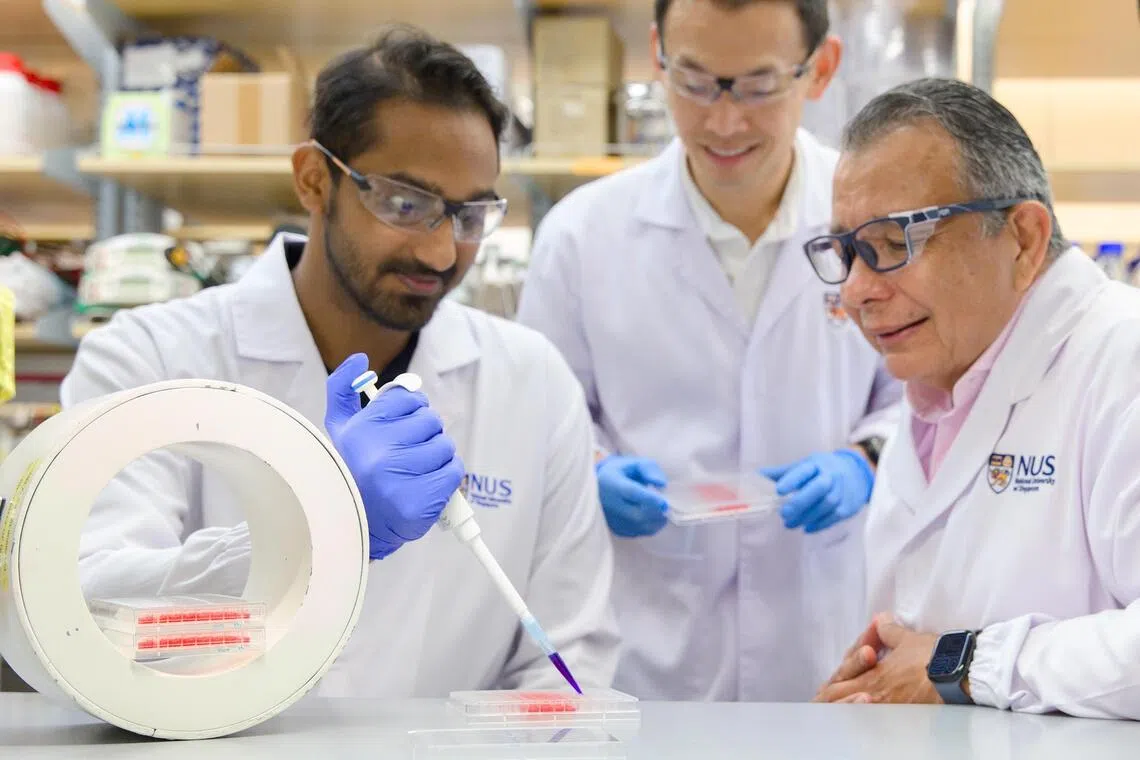
First, the treatment induces acute calcium and metabolic stress inside cancer cells without harming healthy tissue, directly slashing the required dosages of chemotherapeutic agents and reducing debilitating side effects. Second, the magnetic pulses reprogramme corrupted immune cells that typically promote tumour growth, compelling them to consume breast cancer cells instead and restoring the immune system’s native ability to detect malignancy.
In published findings, PEMF exposure halved the effective dosage required for drugs like doxorubicin to suppress cancer cells. Rather than projecting an unrealistic leap to total eradication in human patients, the primary clinical objective remains maximising therapeutic efficacy while sharply reducing systemic toxicity.