Nuclear Pores Regulate DNA Organization to Form UV Shield in Roundworm Embryos
Researchers have discovered that nuclear pores in developing roundworm embryos act as a biological gatekeeper, regulating the timing of DNA organization to form a protective shield against ultraviolet radiation.
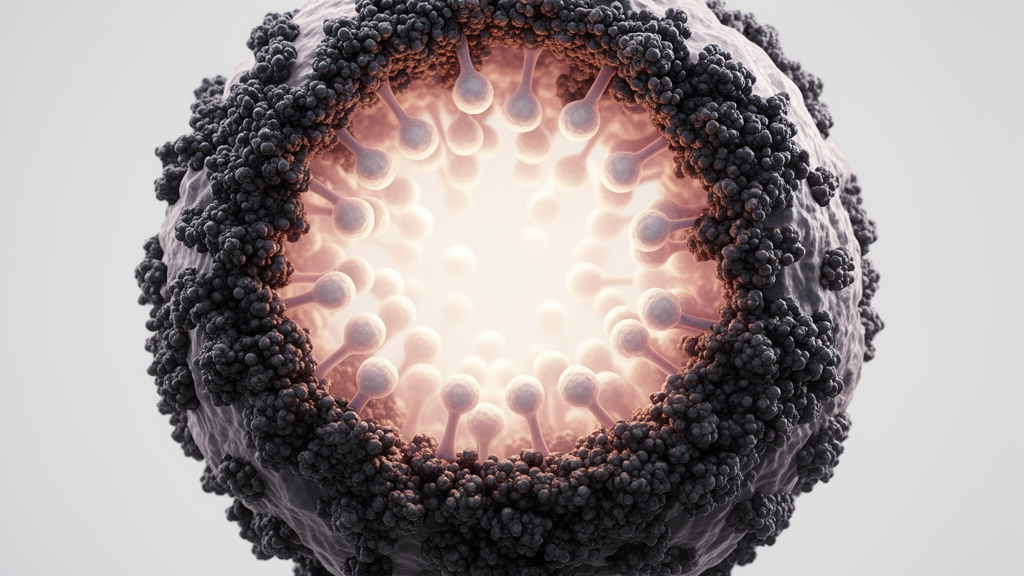
Inside the cell nucleus, DNA is arranged into neighborhoods, with tightly packed, inactive heterochromatin typically associating with the nuclear lamina, a protein meshwork lining the inside of the nuclear envelope. The study found that in the earliest stages of embryonic development, the nuclear membrane is densely populated with nuclear pores.
These transport channels, which normally manage the movement of proteins and messenger RNA, occupy the available space along the inner membrane, physically preventing heterochromatin from accumulating at the nuclear periphery, according to Bioengineer.
As embryonic development progresses, the density of these nuclear pores decreases. This reduction exposes surfaces along the nuclear lamina, allowing the heterochromatin to dock at the edge of the nucleus. The researchers confirmed this process by experimentally reducing the levels of specific nuclear pore components, which caused heterochromatin to associate with the lamina prematurely, Phys.org reports.
This peripheral arrangement serves a vital protective function. While early embryos lack this shield and are highly sensitive to UVB radiation—resulting in DNA damage that spreads throughout the nucleus—older embryos concentrate such damage within the peripheral heterochromatin, which helps them survive. The researchers said that in the embryo, damage is concentrated in upper, ultraviolet-facing cells, while underlying cells remain shielded, suggesting a “Bodyguard effect” at the organismal level.

To analyze how these structural changes emerge, the research team led by Fei Xu and Adrián Fragoso-Luna utilized DamID and single-cell imaging techniques. Their findings indicate that the formation of lamina-associated domains—regions where heterochromatin tethers to the nuclear periphery—is governed by the gradual dissipation of nuclear pore components during Caenorhabditis elegans development.
The study further distinguished this embryonic process from the mechanisms observed in differentiated cells. Specifically, the authors determined that the nuclear basket component npp-21, also known as the Translocated Promoter Region, is not required for the establishment of these early-stage protective domains.
The researchers observed that this spatial reorganization of DNA generates a “Bodyguard effect” across the developing embryo. By concentrating potential damage within the peripheral heterochromatin, the cells protect their internal genetic material from the harmful effects of ultraviolet radiation.
This protective strategy is highly localized, with DNA damage accumulating primarily in the upper cells that face the radiation source. Underlying cells remain shielded by this configuration, a vital adaptation that allows older embryos to withstand environmental stressors that would otherwise be lethal to earlier developmental stages.
The timing of this internal defense is synchronized with the worm’s reproductive cycle. Early embryos develop inside the mother’s body, where they are protected from radiation until they can build their own heterochromatin shield.
“We were surprised by how dramatically the nuclear envelope changes during early embryonic development,” said Dr. Fei Xu, the study’s first author. “Initially, the envelope is densely covered with nuclear pores. Only later does space gradually become available for the tightly packed DNA.”
“What is remarkable is that genome organization is apparently important not only for gene regulation,” said Mango. “The densely packed heterochromatin at the nuclear periphery also serves a protective function, helping to limit damage caused by UV radiation.”
“Just like human mothers, mother worms protect their offspring,” Mango said. “They shield their young embryos from UV radiation until the embryos have developed their own protection.”