
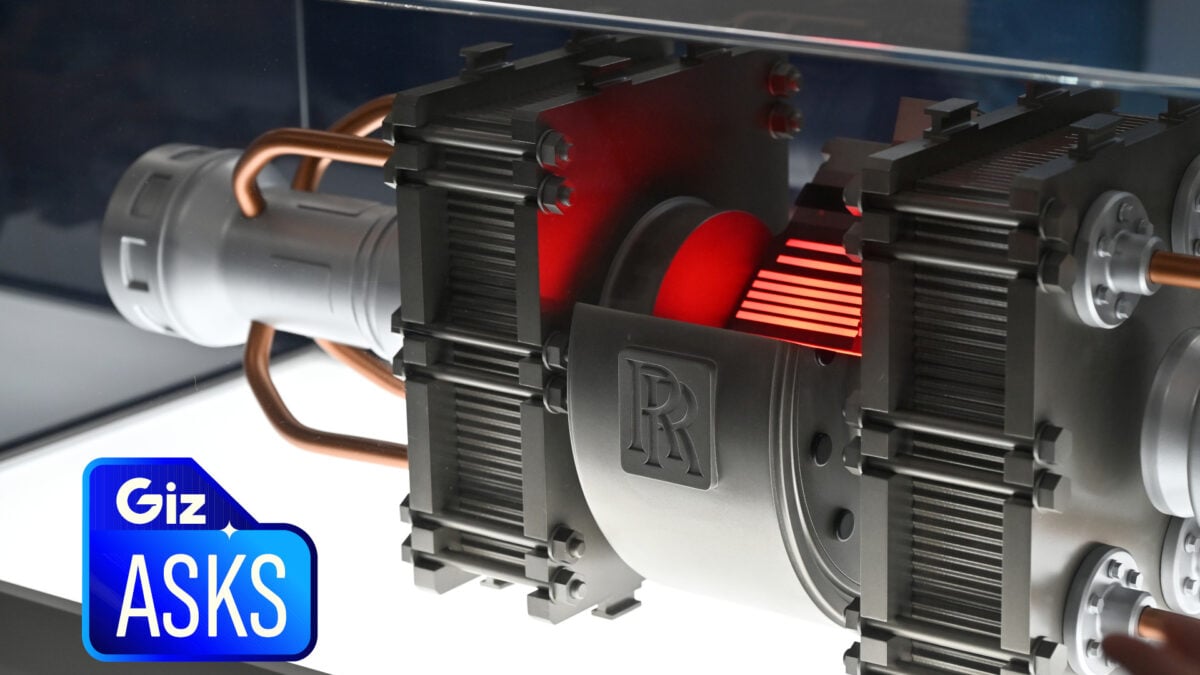
Nuclear Microreactors: Experts Weigh In on Safety Risks and Benefits
Microreactors: The “Spring 2026” Push, The Physics and The Security Nightmare
The Department of Energy’s DOME initiative is officially greenlit for pilot deployment in Spring 2026, promising to drop “transportable” nuclear power onto military bases and remote grids. As a Principal Engineer who has spent the last decade debugging distributed systems and securing critical infrastructure, I seem at this roadmap and I don’t see a revolution. I see a massive, unpatched vulnerability in the national grid’s physical layer. The narrative from Washington is one of “energy independence” and “rapid deployment,” but the engineering reality is a collision between 1950s fission physics and 2026 supply chain constraints.
The Tech TL;DR:
- Deployment Reality: The DOE’s DOME pilot projects are scheduled for Spring 2026, targeting remote military and industrial sites, not residential grids.
- The Security Vector: Unlike centralized plants, microreactors introduce a distributed attack surface, requiring rigorous ICS (Industrial Control Systems) security audits to prevent remote hijacking.
- Fission vs. Fusion: Current microreactors rely on fission (high waste/weaponization risk), whereas fusion variants remain theoretical for commercial deployment until at least the 2030s.
The core value proposition of the microreactor—specifically the Small Modular Reactor (SMR)—is logistical efficiency. The pitch is simple: factory-built, truck-transportable units that run for a decade without refueling. Ralf Kaiser, a former IAEA researcher, notes that the original concept involved sealed units that are simply swapped out. However, current iterations like the ones proposed for the DOME initiative are drifting away from that “sealed box” ideal, introducing complex on-site maintenance requirements that defeat the purpose of modularity.
We need to talk about the energy density math, because the marketing decks are obscuring the thermal realities. A typical microreactor generates between 1 to 20 megawatts electric (MWe). To put that in perspective for the server farm architects reading this: a single hyperscale data center campus can draw upwards of 100MW. You aren’t powering AWS us-east-1 with a single flatbed truck. You are powering a forward operating base or a remote mining operation.
The Thermodynamics of “Plug-and-Play” Power
The allure of microreactors lies in their energy density compared to chemical batteries or diesel generators. However, the thermal management required to keep a fission core stable in a mobile unit is non-trivial. We are looking at passive cooling systems that rely on natural convection—a brilliant fail-safe, but one that imposes strict geometric constraints on the reactor vessel.
When we compare the energy density of High-Assay Low-Enriched Uranium (HALEU) against standard Lithium-Ion storage, the disparity is astronomical, but so is the complexity of the containment system.
| Energy Source | Energy Density (MJ/kg) | Refuel Interval | Waste Profile |
|---|---|---|---|
| Microreactor (Fission) | ~80,000,000 | 3 – 10 Years | High-Level (Spent Fuel) |
| Diesel Generator | ~45 | Days/Weeks | CO2 / Particulates |
| Li-Ion Battery | ~0.9 | N/A (Recharge) | Recyclable / Toxic |
Carlos Romero Talamas, CEO of Terra Fusion, draws a hard line between the current fission-based microreactors and the theoretical fusion alternatives. He argues that fission carries inherent lifecycle risks, from mining to the potential for weaponization of the enriched fuel. “Fission cores have enough fuel to last for months or even years,” Talamas notes. “In a serious accident scenario, there is a chance of radioactive contamination.” Fusion, by contrast, holds only seconds of fuel in the core, drastically reducing the “blast radius” of a containment breach.
The Cybersecurity Blast Radius
Here is where my skepticism shifts from thermal dynamics to information security. Edwin Lyman of the Union of Concerned Scientists raises a critical point that the DOE’s press releases gloss over: the physical security of distributed nuclear assets. If we deploy hundreds of these units across remote locations, we are exponentially increasing the attack surface.
In the software world, we talk about “zero-trust architecture.” In the physical world of microreactors, a “skeleton crew” or automated operation model creates a single point of failure. If a bad actor gains physical access to a microreactor in a remote location, or worse, compromises the SCADA (Supervisory Control and Data Acquisition) system remotely, the consequences are not a data leak—they are a radiological event.
Here’s not a problem you solve with a firewall update. This requires specialized industrial cybersecurity auditors who understand the intersection of OT (Operational Technology) and IT. As these reactors come online, enterprise clients and government contractors will need to engage compliance consultants specifically versed in NRC (Nuclear Regulatory Commission) digital security mandates.
Implementation: Monitoring Core Decay
For the engineers tasked with integrating these power sources into existing grid management software, the data stream will look different than a standard generator. You aren’t just monitoring RPMs and fuel levels; you are monitoring neutron flux and decay heat. Below is a simplified Python class structure representing how a monitoring daemon might handle thermal decay calculations for a microreactor shutdown sequence.
class MicroreactorCore: def __init__(self, thermal_power_mw, enrichment_level): self.thermal_power = thermal_power_mw self.enrichment = enrichment_level self.status = "CRITICAL" def calculate_decay_heat(self, time_since_shutdown_seconds): """ Approximates decay heat using the Way-Wigner formula. Essential for sizing emergency cooling pumps. """ if time_since_shutdown_seconds <= 0: return self.thermal_power * 0.065 # Initial decay approx 6.5% # P(t) = P0 * 0.0622 * (t^-0.2 + (t + T)^-0.2) # Simplified for demonstration decay_factor = 0.0622 * (time_since_shutdown_seconds ** -0.2) return self.thermal_power * decay_factor def trigger_scram(self): self.status = "SCRAMMED" print(f"Alert: Reactor {id(self)} initiated emergency shutdown.") # In a real ICS environment, this would trigger a hardware interrupt # and log to a write-once storage medium for NRC audit. Return True # Usage in a grid management loop reactor = MicroreactorCore(thermal_power_mw=5, enrichment_level=0.19) reactor.trigger_scram() heat_load = reactor.calculate_decay_heat(3600) # 1 hour post-shutdown print(f"Residual Heat Load: {heat_load:.2f} MW") The Supply Chain Bottleneck
John Jackson from the DOE's Office of Nuclear Energy Microreactor Program highlights the versatility of these units for disaster recovery. But he admits the upfront costs are high. The bottleneck isn't just the reactor design; it's the fuel. The US currently lacks a robust domestic supply chain for HALEU. Most of it comes from Russia. Until that supply chain is hardened and domesticated, relying on microreactors for critical infrastructure is a strategic risk.
the "plug-and-play" narrative ignores the grid interconnection standards. You cannot simply plug a 5MW nuclear source into a legacy distribution grid without significant power electronics conditioning. This creates a massive opportunity for power systems integrators who specialize in high-voltage DC/AC conversion and grid stabilization.
Final Verdict: Cautious Optimism, Heavy Auditing
Should we be hyped? If you are running a remote data center in the Arctic or a military outpost, absolutely. The energy density is unbeatable. Should we be freaked out? Yes, if you believe that "innovation" excuses a lax security posture. The move toward distributed nuclear power demands a corresponding evolution in physical and digital security protocols.
We are moving from a centralized model of power generation to a distributed one. In software, we know that distributed systems are harder to secure than monolithic ones. The same physics applies here. As we approach the 2026 pilot dates, the focus must shift from "can we build it" to "can we secure it." For organizations looking to adopt this tech, the first step isn't signing a contract with a reactor vendor; it's hiring a risk management firm to stress-test the deployment scenario.
Disclaimer: The technical analyses and security protocols detailed in this article are for informational purposes only. Always consult with certified IT and cybersecurity professionals before altering enterprise networks or handling sensitive data.