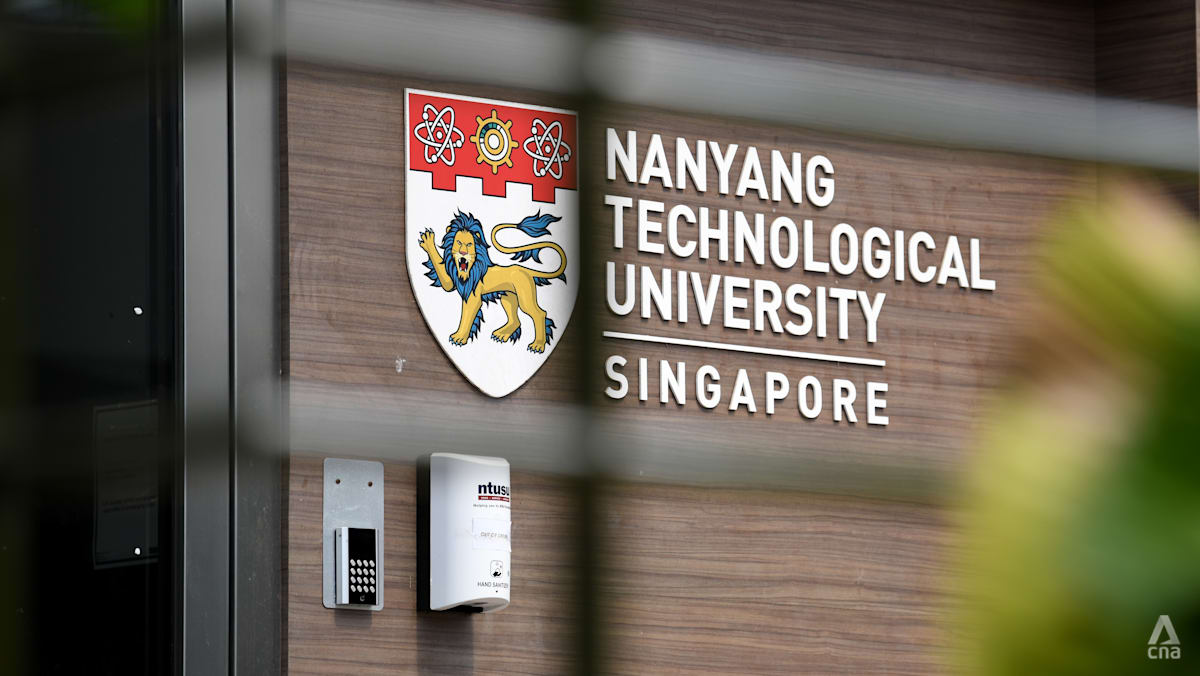
NTU Provides All Students Access to Premium Google AI Tools in Curriculum Overhaul
Nanyang Technological University (NTU) is integrating premium Google AI tools across its entire student body as part of a sweeping curriculum overhaul in Singapore. This strategic pivot aims to institutionalize generative AI proficiency, ensuring graduates possess the high-level technical literacy required by a global workforce increasingly dominated by automated intelligence.
The fiscal implication here isn’t just about software licensing—it’s about the devaluation of traditional cognitive labor. When a top-tier university subsidizes the “intelligence layer” for thousands of students, they are effectively signaling that basic analytical synthesis is no longer a premium skill. For the B2B sector, this creates a massive talent gap in prompt engineering and AI governance. Firms are now scrambling to discover enterprise AI training providers to upskill existing staff who lack this new academic baseline.
This isn’t a mere pedagogical experiment; it is a hedge against the obsolescence of the traditional degree. By embedding Google’s ecosystem into the core curriculum, NTU is accelerating the shift toward “AI-augmented productivity,” where the metric of success shifts from the ability to produce a report to the ability to audit an AI-generated one.
The Capital Expenditure of Cognitive Scaling
From a balance sheet perspective, the integration of premium AI tools represents a shift from traditional capital expenditure (CapEx) in physical libraries and laboratories toward operational expenditure (OpEx) in cloud-based intelligence. Google’s dominance in this space is reinforced not just by the toolset, but by the data moat they build as an entire generation of elite graduates optimizes their workflows within the Gemini ecosystem.

Looking at Alphabet Inc.’s Investor Relations data, the company’s aggressive push into Google Workspace’s AI integration is designed to create “ecosystem lock-in.” When students spend four years mastering a specific AI interface, they carry that preference into the C-suite of the firms that hire them. This is a long-game play for market share in the enterprise SaaS sector.
The volatility of the current AI market means that the “cost per student” for these tools is likely fluctuating based on token usage and API calls. For NTU, the challenge is managing the scalability of these costs without compromising the quality of the academic experience.
“The integration of LLMs into university curricula is not an ‘add-on’—it is a fundamental restructuring of the value proposition of higher education. We are moving from a model of knowledge acquisition to one of knowledge orchestration.” — Marcus Thorne, Managing Director at a leading Global Hedge Fund.
The risk, however, is the “black box” problem. If students rely on premium AI for synthesis without understanding the underlying stochastic parrots, the quality of critical thinking may degrade. This creates a secondary market for specialized academic auditing services to ensure that learning outcomes remain rigorous despite the automation of the output.
The Macro Shift: Three Pillars of the AI Curriculum Overhaul
- The Erosion of Entry-Level Analysis: Traditional “junior analyst” roles—summarizing data, drafting memos, and basic research—are being automated. NTU is pivoting toward “high-order” synthesis, forcing students to operate at a level previously reserved for mid-to-senior management.
- Algorithmic Governance and Ethics: As AI tools become ubiquitous, the ability to detect hallucination and bias becomes a fiduciary responsibility. This creates a surge in demand for corporate compliance law firms specializing in AI ethics and data privacy to guide the transition.
- The Productivity Paradox: While AI increases output volume, it does not necessarily increase value. The focus is shifting toward “prompt precision”—the ability to extract high-fidelity results from an LLM—which is becoming a quantifiable KPI in recruitment.
This transition mirrors the shift in the financial markets during the late 90s when the adoption of Bloomberg terminals fundamentally changed how traders interacted with data. The tool didn’t just make the work faster; it changed the nature of the work itself.
We are seeing a similar pattern in the current IMF Global Financial Stability Reports, which highlight how AI is reshaping labor productivity across advanced economies. The “productivity frontier” is moving, and institutions like NTU are attempting to keep their graduates on the leading edge.
The Institutional Risk and the B2B Opportunity
The primary friction point for NTU will be the “AI Divide.” While premium tools are provided, the ability to utilize them effectively varies wildly. This creates an internal stratification within the student body, where the “power users” gain a disproportionate competitive advantage in the job market.
the reliance on a single provider (Google) introduces a systemic risk. If a service outage occurs or pricing models shift abruptly, the entire academic infrastructure is compromised. This is why forward-thinking institutions are beginning to look at multi-cloud strategies and agnostic AI layers.
From a corporate perspective, the “problem” created by this news is a sudden surge in “AI-native” graduates who may find traditional corporate hierarchies stifling and inefficient. B2B firms that provide organizational design and change management are seeing increased demand as companies restructure their workflows to accommodate a workforce that expects AI-driven efficiency at every touchpoint.
“We are seeing a divergence in human capital value. The premium is no longer on the ‘doer’ but on the ‘architect’ who can direct the AI to do the work with 99% accuracy.” — Elena Rossi, Chief Technology Officer at a Fortune 500 Fintech firm.
The market is currently pricing in this transition. We are seeing a rotation of capital toward firms that provide the “picks and shovels” of the AI revolution—not just the LLMs themselves, but the security, auditing, and integration layers that make these tools viable for the enterprise.
The NTU move is a bellwether for the global education market. As the boundary between “human intelligence” and “machine assistance” blurs, the competitive advantage will shift to those who can manage the intersection of both. For the business community, the mandate is clear: adapt the corporate infrastructure now or face a talent mismatch that could stifle growth for a decade.
Navigating this volatility requires more than just a subscription to a chatbot; it requires a vetted network of strategic partners. Whether you are looking for AI governance experts or enterprise scale-up consultants, the World Today News Directory remains the definitive source for connecting with the B2B entities capable of solving the AI-driven disruptions of the next fiscal quarter.