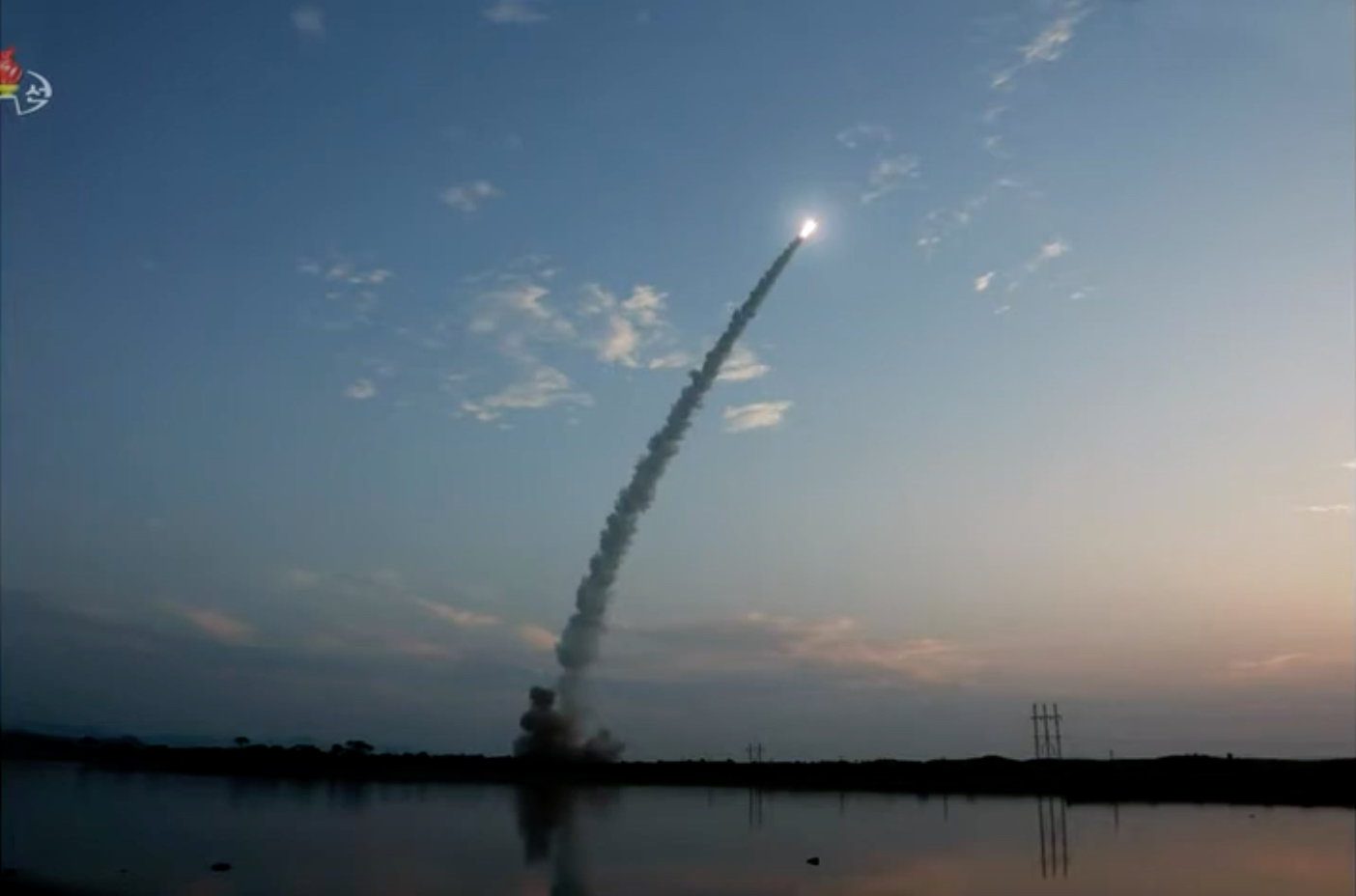
North Korea Fires Ballistic Missile Eastward
On April 18, 2026, at 22:35 UTC, North Korea launched a ballistic missile eastward over the Sea of Japan, marking its second launch in 11 days and reigniting regional security alarms from Seoul to Tokyo. The missile, assessed by South Korea’s Joint Chiefs of Staff as a short-range variant likely derived from the KN-23 series, traveled approximately 500 kilometers before splashing down outside Japan’s exclusive economic zone. This provocation occurs amid stalled denuclearization talks and heightened U.S.-ROK-Japan trilateral coordination, directly challenging regional stability and testing the readiness of missile defense systems across Northeast Asia.
The Immediate Ripple: How a Single Launch Disrupts Daily Life
While the missile did not strike land, its trajectory triggered nationwide civil defense alerts in both South Korea and Japan. In Seoul, subway services paused briefly as emergency protocols activated, and in Tokyo, mobile emergency alerts flooded smartphones at 07:35 local time, disrupting morning commutes. These disruptions are not isolated incidents; they reflect a growing pattern where North Korea’s weapons testing imposes tangible economic and psychological costs on urban centers. The Bank of Korea estimated that repeated missile alerts in 2025 contributed to a 0.3% dip in consumer confidence indices, particularly in border-proximate regions like Gangwon and Gyeonggi provinces.
Beyond immediate disruptions, the launch underscores vulnerabilities in critical infrastructure. Power grids, rail networks, and port operations in both countries routinely activate contingency procedures during such events, leading to cascading delays. For instance, the Port of Busan reported a 90-minute container handling delay following the January 2026 launch, affecting just-in-time supply chains for automotive and electronics manufacturers. These ripple effects highlight the need for resilient systems capable of absorbing geopolitical shocks without grinding regional commerce to a halt.
Historical Context: A Pattern of Provocation Amid Diplomatic Stagnation
This launch is part of a deliberate escalation cycle. Since early 2024, North Korea has conducted over 30 missile tests, exploiting perceived divisions between Washington and its allies. The current frequency — averaging one launch every five days in April 2026 — surpasses even the 2017 “fire and fury” period in tempo, though not in range. Analysts at the Korea Institute for National Unification note that Kim Jong-un’s strategy appears aimed at normalizing nuclear capabilities while extracting concessions through sustained pressure, a tactic dubbed “compressive diplomacy.”
Historically, such cycles have preceded diplomatic breakthroughs — or breakdowns. The 2018 Singapore summit followed a year of intense testing, just as the 2022 collapse of talks came after a surge in hypersonic missile demonstrations. What distinguishes the current phase is the integration of solid-fuel technology, enabling faster launch preparation and reduced detectability. This technological shift complicates preemptive interception strategies and raises the stakes for regional early-warning systems.
“We are no longer reacting to isolated events; we are managing a chronic stressor on our national resilience. Every alert, every drill, every delayed train carries a cost — not just in yen or won, but in public trust.”
The Directory Bridge: Where Professional Services Meet Geopolitical Risk
When missile flights disrupt logistics, delay port operations, or trigger business continuity failures, the organizations that thrive are those built for anticipation. In Seoul’s Yeongdeungpo District, firms specializing in business continuity planning have seen a 40% increase in consultancy requests since January 2026, as multinational corporations seek to stress-test supply chains against geopolitical volatility. These services go beyond IT backups; they map alternative routing for semiconductor shipments, simulate port shutdown scenarios, and coordinate with local emergency management agencies to ensure rapid recovery.
Similarly, in Tokyo’s Minato Ward, legal practices focusing on international regulatory compliance are advising clients on navigating export control violations that may arise from inadvertent dealings with sanctioned North Korean entities — a risk amplified when missile tests trigger sudden sanctions updates. One partner at a leading Tokyo-based firm noted that clients now require real-time sanctions screening integrated into their ERP systems, a service once considered niche but now deemed essential for firms operating in Northeast Asia.
On the municipal front, cities like Fukuoka and Busan are investing in emergency management agency modernization, upgrading siren networks and public alert systems to reduce false alarms and improve multilingual outreach. These upgrades are not merely technical; they involve community engagement programs designed to combat alert fatigue — a growing concern as residents start to dismiss warnings as “just another launch.”
Macro-Economic Strain: The Hidden Tax of Deterrence
The cumulative economic impact of North Korea’s missile program extends far beyond direct defense spending. South Korea’s 2026 defense budget allocates ₩58.2 trillion (~$42.1 billion), a 6.8% increase from 2025, driven largely by investments in L-SAM interceptors and Aegis-equipped destroyers. Japan’s defense expenditure, meanwhile, reached ¥8.4 trillion (~$54.1 billion) in FY2026, marking the fourth consecutive year of growth and exceeding 2% of GDP for the first time since 1960.
Yet the true cost lies in opportunity diversion. Funds channeled into missile defense could otherwise support innovation clusters, green energy transitions, or demographic relief programs. A 2025 study by the Asan Institute estimated that Northeast Asia loses approximately $12 billion annually in potential foreign direct investment due to perceived instability — a figure that rises with each launch. For cities like Yokohama and Incheon, which rely on global capital inflows to finance urban redevelopment, this represents a silent erosion of competitiveness.
“Investors don’t flee because of a single missile. They leave when the noise becomes constant, when planning horizons shrink, and when the cost of uncertainty outweighs the promise of return.”
The Editorial Kicker: Vigilance as a Civic Discipline
North Korea’s missile launches are not merely military signals; they are stress tests on the social fabric of Northeast Asia. Each flight challenges our ability to distinguish between signal and noise, to maintain economic momentum amid uncertainty, and to preserve public trust in institutions tasked with our protection. The solution does not lie in eliminating risk — an impossibility in an anarchic international system — but in building systems that absorb shock without breaking.
For professionals across the region, this means adopting a mindset of continuous preparedness. It means lawyers updating compliance protocols before sanctions shift, engineers designing infrastructure that fails gracefully, and city planners communicating risk without inciting panic. In this environment, the World Today News Directory serves not just as a repository of contacts, but as a vital network of verified experts — the very professionals who help turn geopolitical volatility into manageable, even navigable, reality.