
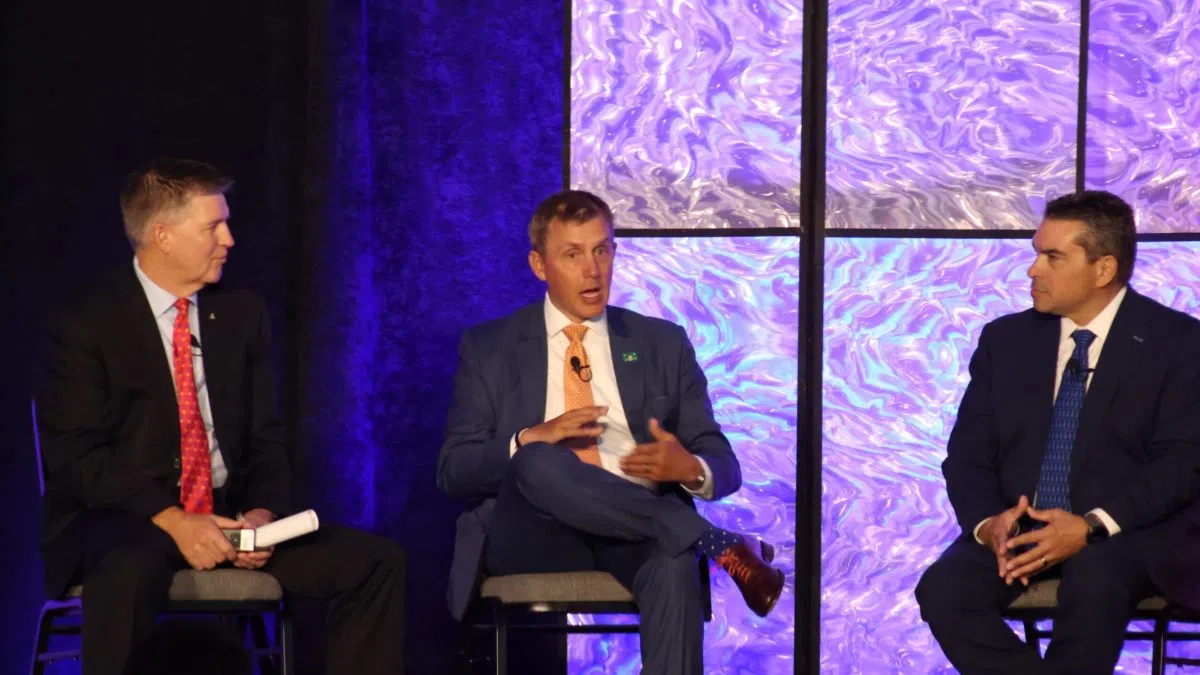
North Dakota Eyes Natural Gas Expansion fueled by AI Growth & Enhanced Oil Recovery
North Dakota is positioning itself too capitalize on increasing natural gas demand, driven by the burgeoning growth of artificial intelligence (AI) data centers and the potential of enhanced oil recovery techniques. Governor Doug Burgum believes the state is uniquely positioned to benefit from this shift, despite challenges related to infrastructure growth and resource management.
The demand for energy, particularly for cooling the massive server farms powering AI applications, is a key factor. “Being cold and windy is not usually a selling point,” remarked Joel Armstrong, North Dakota’s commerce commissioner, highlighting the potential advantage of the state’s climate for data center operations. However,the energy needed to power the cooling systems is significant,creating a new market for natural gas.
While North Dakota’s oil production is projected to decline in coming decades – not due to resource depletion, but due to diminishing reservoir pressure – the industry is actively exploring enhanced oil recovery (EOR) methods to extend the lifespan of existing wells. John Harju of the Energy and Environmental Research Center at the University of North Dakota emphasized the coming years will be critical for advancing these technologies.
A primary EOR method involves injecting carbon dioxide (CO2) underground to repressurize reservoirs. However, North Dakota currently lacks sufficient CO2 production to meet the needs of the Bakken oil field. the proposed Summit Carbon Solutions pipeline, intended to transport CO2 from surrounding states, has faced considerable opposition, possibly hindering access to this resource.
As an alternative, natural gas, specifically “rich gas,” is being investigated as a viable substitute for CO2 in EOR. harju expressed confidence that ”performance with rich gas is going to be an outstanding proxy for CO2,” suggesting a significant prospect for North Dakota’s natural gas resources.
However, realizing this potential isn’t without hurdles. legislators are acknowledging increasing difficulties in securing easements for pipelines and other essential infrastructure. rep. Craig Headland, R-Montpelier, noted a perceived shift in public sentiment, stating, “The public good doesn’t seem to matter like it used to,” during a recent lawmaker panel.
Sen. Mark Enget,R-Powers Lake,echoed this sentiment,citing concerns from North Dakotans regarding property rights. He stressed the importance of respectful communication and collaborative problem-solving with landowners. “North Dakota peopel are vrey reasonable. If you talk to them respectfully and you work towards a solution and discuss it in a way that resonates and makes sense to them, there’s a way through it,” Enget said.
Growth in oil and gas activity in Burke County, Sen. Enget’s home region, has brought challenges alongside economic benefits. These include school overcrowding, infrastructure strain, and increasing concerns about water resource depletion due to hydraulic fracturing. “It creates a problem where many of our water resources in the county are really being drawn down,” Enget explained, expressing worry about the long-term sustainability of water supplies with continued activity.
Sen. Brad Bekkedahl, R-Williston, anticipates these infrastructure, property rights, and resource management issues will be central to the upcoming legislative session. “I think it’s going to loom large in the next session,” he stated.
