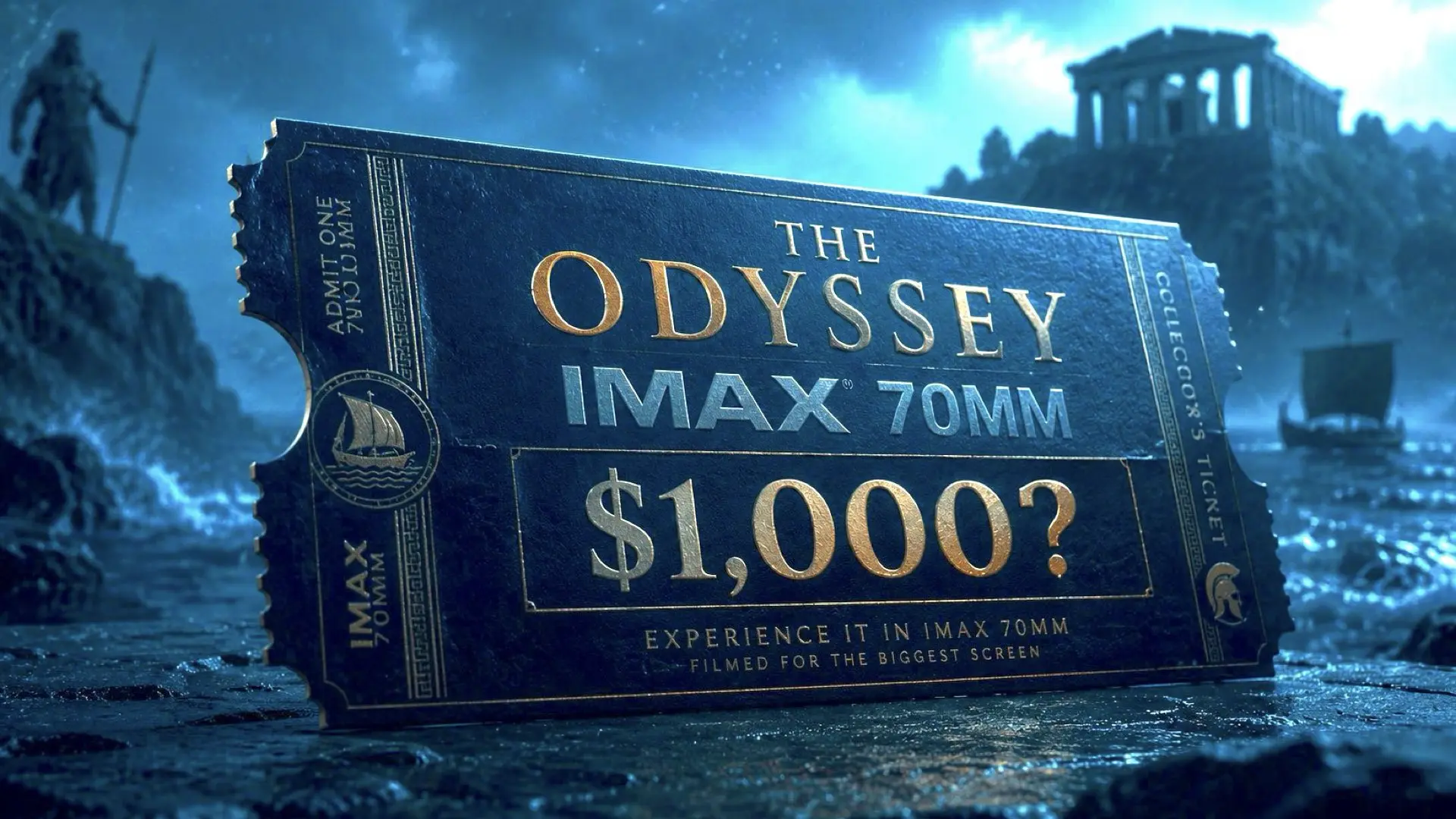
Nolan’s Luxury cinematic experience: The Odyssey IMAX 70mm tickets become ultra-exclusive events
Christopher Nolan’s latest cinematic odyssey, titled The Odyssey, has ignited a fierce debate regarding the commodification of the theater-going experience. With premium tickets for the IMAX 70mm presentation currently commanding prices as high as $1,000 on secondary markets, the film has effectively transformed large-format exhibition into an ultra-exclusive luxury event.
The cultural gravity of Nolan’s work is undeniable, but the current accessibility crisis surrounding his latest project reveals a deepening rift between prestige cinema and the average ticket buyer. As of June 7, 2026, the discourse has shifted from the artistic merits of the film—which Nolan himself describes as a project that “needed to be the biggest film” he has done—to the logistical impossibility of viewing it in its intended format. This is not merely a supply-and-demand issue; it is a fundamental challenge to the brand equity of theatrical exhibition in an era dominated by SVOD platforms.
The Economics of the 70mm Experience
Nolan’s commitment to the analog, large-format process is well-documented. In a recent interview with 60 Minutes, the director detailed the granular, intimate process of physically cutting and gluing IMAX film, an approach that prioritizes tactile craftsmanship over digital efficiency. This technical rigor is the primary driver of the film’s status as a must-see event, yet it creates a bottleneck in distribution. Because IMAX 70mm projectors are rare, the scarcity of venues acts as a natural price floor, which speculators have exploited to drive secondary market costs to extreme levels.
The following table outlines the contrast between traditional theatrical expectations and the current high-stakes market for The Odyssey:
| Metric | Standard Theatrical Model | The Odyssey (IMAX 70mm) |
|---|---|---|
| Distribution | Wide-release saturation | Limited large-format exclusivity |
| Primary Price | Market-standard ($15–$25) | Premium tiered pricing |
| Secondary Market | Negligible | High-volatility surge pricing |
| Viewer Experience | Standard projection | Artisan physical film format |
Why the Scalper Economy Threatens Brand Equity
When tickets for a cultural product reach four-figure sums, the studio’s reputation management teams must contend with a narrative of elitism that risks alienating the core audience. The logistical burden of ensuring fair access to these limited screenings is significant. For high-profile releases, studios often rely on specialized event logistics and security firms to manage the crowd control and ticketing fraud that inevitably accompany such high-demand events. Without these safeguards, the perceived value of the director’s “biggest film” is tarnished by the optics of a pay-to-play gatekeeping system.
Beyond the immediate PR fallout, there is a looming threat of legal scrutiny regarding secondary market practices. Entertainment attorneys suggest that when IP-heavy tentpoles are subject to unchecked scalping, studios may be forced to implement more restrictive digital ticketing protocols. These measures often require collaboration with intellectual property and contract law experts to ensure that the studio retains control over the resale of its own exhibition rights.
The Human Cost of Large-Format Filmmaking
The intensity of Nolan’s production process extends to his cast, who have noted the physical demands of the shoot. Matt Damon, in his role as Odysseus, described the project as “the hardest movie I’ve ever done by far.” This level of commitment is what drives the industry’s interest in the film, yet it also highlights the disconnect between the grueling, multi-year production cycle and the few minutes it takes for a ticket to be purchased by an automated bot. The “scale” Nolan sought to achieve is being met with a scale of secondary market inflation that the original creators likely never intended.
“In taking on ‘The Odyssey,’ it does become about scale. It needed to be the biggest film that we had done. It needed to be challenging to all of us, because that’s the nature of the story.” — Christopher Nolan, via 60 Minutes.
As the summer box office continues to evolve, the case of The Odyssey will likely serve as a case study for how prestige directors and studios manage the intersection of analog film history and modern digital commerce. Whether this trend marks a permanent shift toward “eventized” luxury cinema or a temporary anomaly remains to be seen. What is clear is that the industry must find a balance between artistic ambition and consumer accessibility, lest the theater be reserved only for those with the deepest pockets.
For those managing the fallout of such high-profile cultural events, or for studios looking to mitigate the risks associated with premium-tier distribution, professional guidance remains essential. Engaging with reputation managers and legal counsel early in the distribution cycle is the only way to preserve the integrity of the work in an increasingly volatile market.
Disclaimer: The views and cultural analyses presented in this article are for informational and entertainment purposes only. Information regarding legal disputes or financial data is based on available public records.