
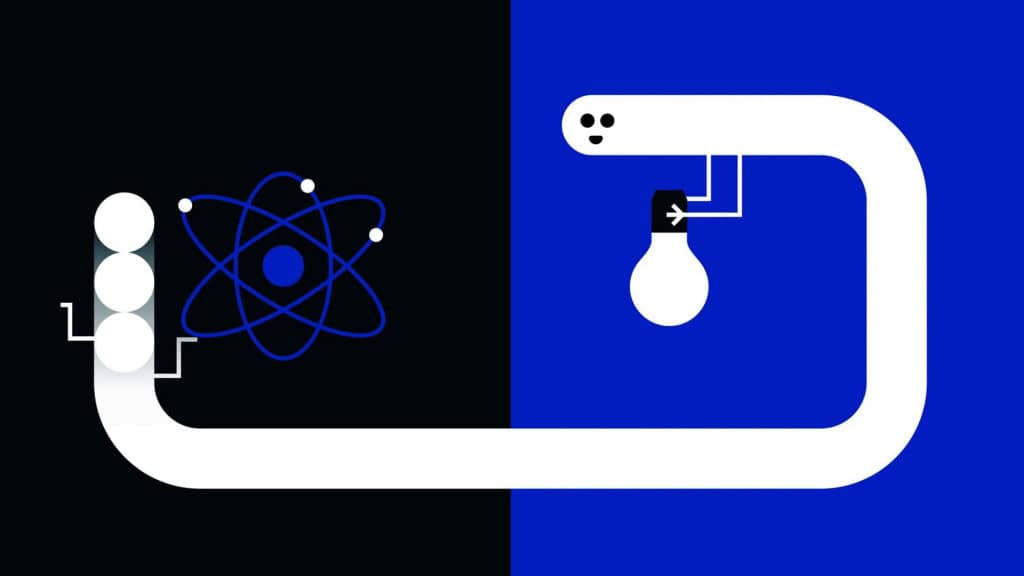
Nobel Prize in Physics 2025 Awarded for Groundbreaking Quantum Tunneling Experiments
STOCKHOLM, SWEDEN – The 2025 Nobel Prize in Physics has been awarded to researchers for their pivotal experiments demonstrating quantum tunneling in macroscopic systems, challenging classical physics adn opening doors to revolutionary technologies. The award recognizes work that proved quantum properties aren’t limited to the microscopic realm, a finding with profound implications for quantum computing, encryption, and sensing.
For decades, quantum tunneling – the ability of a particle to pass through a barrier even if it doesn’t have enough energy to overcome it – was understood to be a phenomenon confined to the atomic and subatomic world. The awarded research,conducted in part at the University of california,Berkeley,successfully observed and controlled quantum tunneling in circuits large enough to be visible,effectively bridging the gap between quantum mechanics and everyday experiance. This breakthrough inaugurated a new frontier for experimental research in quantum physics.
The results obtained have had a meaningful impact on both theoretical understanding and practical applications. Scientists demonstrated that quantum properties do not necessarily diminish in larger systems, a result that challenges classical intuition and reinforces the robustness of quantum theory.
The superconducting circuits utilized in these experiments have become foundational for the progress of qubits, the basic units of information in quantum computers. John Martinis, a key figure in the research, later applied these principles to projects central to the global pursuit of quantum computing.
Beyond computing, the discovery has bolstered advancements in quantum encryption, enabling the creation of virtually unhackable dialog systems, and ultrasensitive sensors capable of measuring magnetic fields and physical phenomena with unprecedented precision. This award-winning research not only answered a fundamental question in physics but also laid the groundwork for the next generation of quantum technologies.
(Source: Nobel Prize official website – https://www.nobelprize.org/uploads/2025/10/press-physicsprize2025.pdf, https://www.nobelprize.org/uploads/2025/10/popular-physicsprize2025.pdf,https://www.nobelprize.org/uploads/2025/10/advanced-physicsprize2025.pdf.)
