
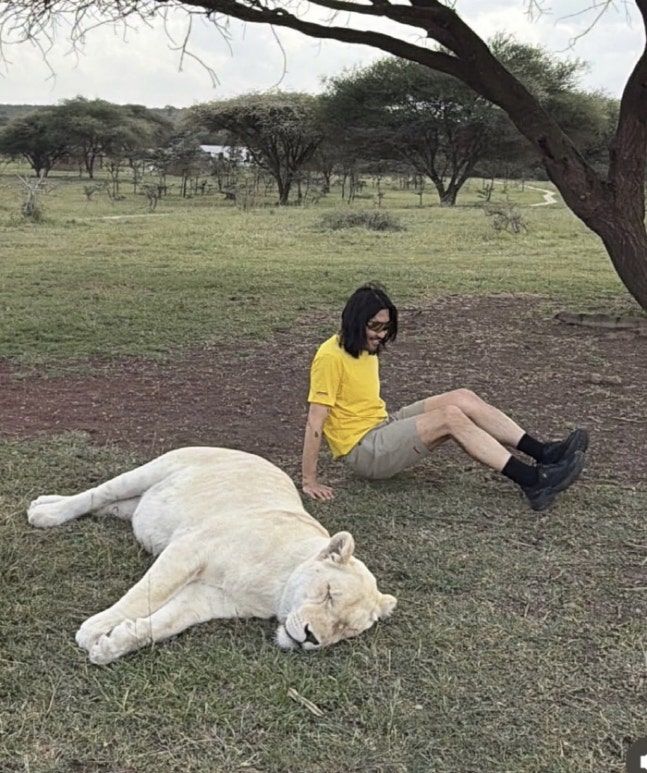
South Korean broadcaster Noh Hong-chul is facing renewed scrutiny after allegations of animal exploitation during a recent trip to Tanzania resurfaced, prompting a public response from the entertainer and the safari company involved. The controversy began on January 30th when Noh posted photos and videos to his social media accounts depicting close interactions with lions at the ‘Serbal Wildlife’ safari park, including touching a sleeping lion’s belly and stroking its fur.
The images quickly drew criticism, with some observers questioning the lions’ apparent lack of reaction to Noh’s actions. An African travel specialist publicly accused Noh of interacting with a drugged animal, suggesting the lion had been sedated with tranquilizers or other drugs. The specialist shared the post on social media, stating, “Even if you try to portray this sleeping lion as a fairytale, this lion is drugged,” and linking the practice to the controversial “canned hunting” industry and concerns about animal welfare.
Noh Hong-chul responded to the allegations on February 16th, posting a message on his social media account stating he had inquired with the local travel agencies, the facility, and others who had posted alongside him. He shared a response from the safari company, which vehemently denied the use of drugs on the animals. According to the company, “The administration of drugs is absolutely not true. In Tanzania, animal drugs are not sold freely, and even for surgeries or necessary procedures, they can only be purchased through the government.”
The safari company further explained the lions’ behavior, stating that lions typically sleep during the hottest part of the day, and the photograph was likely taken during that time. They asserted the lion was simply resting. A separate message from the company, also shared by Noh, emphasized the strict regulations surrounding animal medication in Tanzania.
The safari facility in question is located near Kilimanjaro National Park and has gained popularity on social media for offering close encounters with wildlife. However, some past visitor reviews have expressed concerns about the animals appearing unusually lethargic. Whether or not drugs are actually used at the facility remains unconfirmed.
The controversy echoes concerns raised in the 2015 documentary “Blood Lions,” which exposed the practice of drugging lions for tourist interactions and the subsequent impact on their health and well-being, including premature death and inbreeding. The documentary highlighted the connection between such facilities and the canned hunting industry.
As of February 16th, Noh Hong-chul has not issued a further statement, and the safari company has not responded to requests for additional comment. The debate continues online, with users divided over the authenticity of the images and the ethical implications of wildlife tourism.
