NJDEP Leads Statewide Effort to Destroy PFAS “Forever Chemicals” in Firefighting Foam
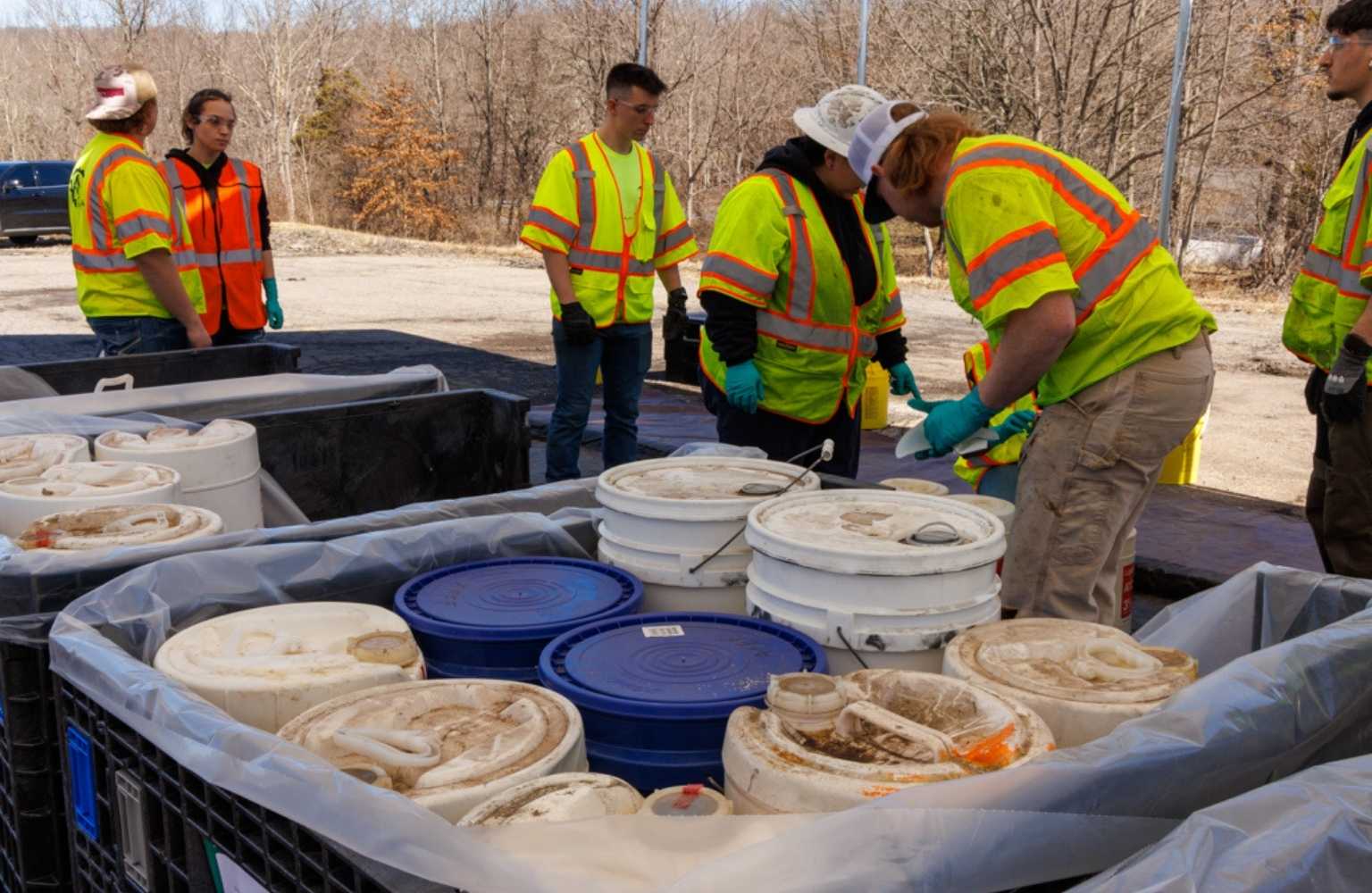
New Jersey officials highlighted the completion of statewide collection events on March 20 for firefighting foam containing per- and polyfluoroalkyl substances (PFAS), marking one of the largest coordinated initiatives of its kind in the United States.
The program, designed to remove and safely destroy aqueous film-forming foam (AFFF) from firehouses and fire academies across the state, anticipates the collection and destruction of over 150,000 gallons of AFFF. PFAS, often referred to as “forever chemicals,” have been linked to a range of health concerns, including cancer and immune system complications, and are known for their persistence in the environment.
The New Jersey Department of Environmental Protection (NJDEP) contracted with Revive Environmental to manage the program, with logistical support from Republic Services. This collaboration encompassed the coordination of collection events, transportation, storage, and the destruction of the collected AFFF.
The collected foam is being transported to Revive’s permitted facility in Columbus, Ohio, where it will be processed using the PFAS Annihilator, a technology employing supercritical water oxidation (SCWO). According to the company, SCWO breaks down chemical bonds, converting PFAS compounds into benign mineralized byproducts, a process independently verified through analytical testing.
“The DEP is delivering on one of the Sherrill administration’s environmental priorities to mitigate harmful PFAS, keeping them out of the environment and avoiding the extremely high cost of cleanup down the road,” said NJDEP Acting Commissioner Ed Potosnak.
The initiative comes as New Jersey has taken increasingly stringent steps to address PFAS contamination. In June 2025, the NJDEP amended the Discharges of Petroleum and Other Hazardous Substances (DPHS) Program rules, expanding the list of hazardous substances to include over 200 PFAS compounds, up from the previous three – perfluorooctanoic acid (PFOA), perfluorooctane sulfonic acid (PFOS), and perfluorononanoic acid (PFNA). These changes align with the state’s “Forever No More: New Jersey’s Commitment to PFAS Action” initiative launched in July 2025.
The expanded definition of hazardous substances under the Spill Act grants the NJDEP greater authority to seek damages for PFAS releases and to mandate response actions where these compounds are discovered, impacting regulated parties and Licensed Site Remediation Professionals (LSRPs).
Beyond the AFFF collection program, New Jersey has too seen advancements in PFAS detection technology. In 2025, the New Jersey Institute of Technology (NJIT) and New Jersey Innovation Institute (NJII) launched PureTrace Labs, a startup focused on commercializing NJIT-developed technology for the rapid detection of PFAS. Simultaneously, Rowan University’s Dongmei Dong received a $200,000 National Science Foundation grant to develop an affordable and portable device for detecting trace levels of PFAS.
Further demonstrating a coordinated response, Camden-based American Water and Calgon Carbon finalized a supply agreement in 2025 to support PFAS treatment in ten states.
The NJDEP’s statewide soil investigation, the results of which were released in September 2025, revealed PFAS detection in all 157 surface soil samples collected from public lands, though none exceeded the state’s interim soil remediation standards for PFOA, PFNA, PFOS, and GenX. The study indicated widespread aerial dispersion of these compounds, potentially originating from industrialized areas and neighboring states.