
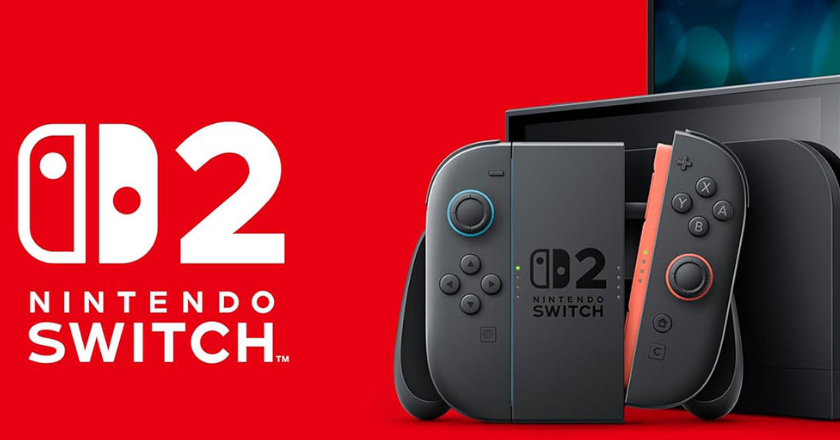
Nintendo Switch 2 Price Hike: Reasons and Market Impact
Nintendo Co., Ltd. Is raising the MSRP of the Nintendo Switch 2 to $499.99 in the U.S., Canada, and Europe effective September 1, 2026, citing shifting market conditions and a global business outlook. The move follows record-breaking sales of 19.86 million units but signals anticipated headwinds for future demand and hardware penetration.
This is not a simple price adjustment; it is a defensive maneuver against systemic margin erosion. When a company with Nintendo’s balance sheet admits that “market conditions” necessitate a global price hike, the industry is seeing a signal of deep-seated volatility in the semiconductor pipeline. For most consumer electronics firms, this volatility creates an immediate need for supply chain optimization experts to mitigate the risk of component cost spikes eating into quarterly EBITDA.
The Cost of Hardware: A Global Price Breakdown
The scale of this revision is comprehensive, affecting not only the next-generation Switch 2 but also the legacy hardware still circulating in the Japanese market. The disparity in effective dates—May for Japan and September for the West—suggests a staggered approach to managing inventory and consumer sentiment across different economic zones.
| Region/Product | Current MSRP | Revised MSRP | Effective Date |
|---|---|---|---|
| Nintendo Switch 2 (USA) | $449.99 | $499.99 | September 1, 2026 |
| Nintendo Switch 2 (Canada) | $629.99 | $679.99 | September 1, 2026 |
| Nintendo Switch 2 (Europe) | €469.99 | €499.99 | September 1, 2026 |
| Nintendo Switch 2 (Japan) | ¥49,980 | ¥59,980 | May 25, 2026 |
| Switch OLED (Japan) | ¥37,980 | ¥47,980 | May 25, 2026 |
| Switch Lite (Japan) | ¥21,978 | ¥29,980 | May 25, 2026 |
The Japanese market is absorbing a significantly steeper hike on legacy models, with some prices jumping by nearly 10,000 yen. This suggests that the cost of maintaining older production lines has become fiscally unsustainable in the face of rising material costs.
Margin preservation is the only priority here.
Analyzing the Unit Velocity Paradox
The timing of this announcement is surgically precise. Nintendo recently revealed that the Switch 2 has sold 19.86 million units, establishing it as the fastest-selling home console of all time. On paper, this should provide the company with immense pricing power. However, the internal projections tell a more cautious story: Nintendo expects sales to dip to 16.5 million units next year.
This projected decline is a direct admission of the “barrier to entry” problem. President Shuntaro Furukawa has acknowledged that the price increase will raise the hurdle for new adopters. In financial terms, Nintendo is betting that a higher Average Selling Price (ASP) will offset the decline in total unit volume. They are trading market share for profitability.
“In light of changes in market conditions, and after considering the global business outlook, Nintendo will revise the manufacturer’s suggested retail prices (MSRP) of the Nintendo Switch 2 system.”
The “market conditions” mentioned by Nintendo are not an isolated phenomenon. This is the second wave of a broader industry trend. In March, Sony implemented price hikes for the PlayStation 5 family ranging between $100 and $150. The common denominator is an AI-fueled chip supply crunch that has redirected high-end silicon away from gaming consoles and toward data centers. As the cost of procurement rises, hardware manufacturers are forced to pass these expenses to the consumer or watch their gross margins collapse.
For firms struggling to balance these pricing pressures without alienating their customer base, the role of strategic pricing consultants has become critical in determining the exact tipping point of consumer price elasticity.
The Macro-Economic Ripple Effect
The ripple effect of this decision extends beyond the gaming community and into the broader consumer electronics sector. When the industry leader in handheld gaming shifts its pricing strategy, it validates a higher price floor for the entire category. We are seeing a fundamental shift from the “loss-leader” hardware model—where consoles are sold at a loss to drive software sales—toward a model where hardware must be self-sustaining from day one.

This shift is exacerbated by global inflationary pressures and the instability of international trade. As Nintendo navigates these revisions across the U.S., Canada, Europe, and Japan, the company must manage complex tax implications and regulatory scrutiny regarding price gouging in various jurisdictions. This is where international trade legal experts become indispensable, ensuring that MSRP revisions comply with local consumer protection laws while maximizing global revenue.
The risk, however, is the “demand cliff.” If the $499.99 price point pushes the Switch 2 out of the “impulse buy” or “giftable” category for the average consumer, the projected decline to 16.5 million units could be an optimistic estimate.
The market is now watching to see if the software ecosystem—the high-margin side of the business—can sustain the momentum if hardware adoption slows.
The Fiscal Trajectory
Looking ahead to the next few fiscal quarters, Nintendo’s success will depend on its ability to maintain the perceived value of the Switch 2. If the hardware is viewed as a premium luxury rather than a mass-market toy, the price hike will be seen as a masterstroke of brand positioning. If not, it will be remembered as the moment the company prioritized short-term margins over long-term ecosystem growth.
The gaming industry is entering a period of consolidation, and austerity. The days of subsidized hardware are fading, replaced by a pragmatic, high-margin approach to consumer tech. As the landscape shifts, businesses must be agile, partnering with vetted B2B providers to navigate supply shocks and pricing volatility. To find the strategic partners necessary to survive this economic transition, explore the specialized listings in the World Today News Directory.