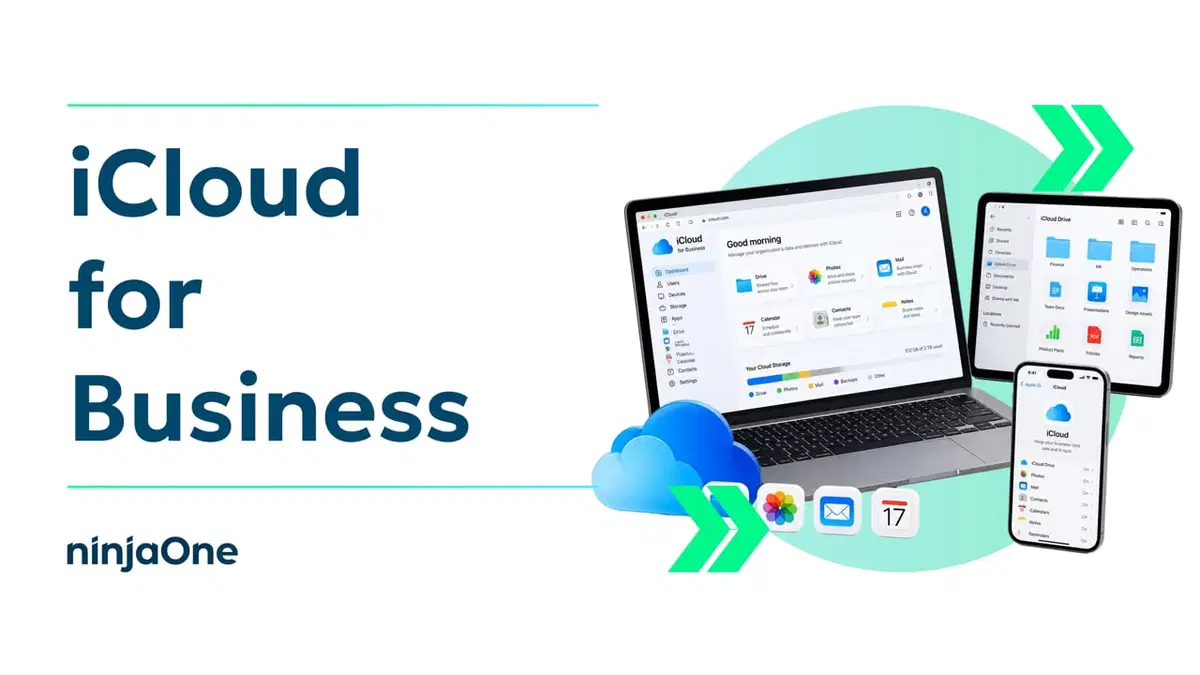
NinjaOne Explains iCloud Role in Business With MDM and ABM
iCloud plays a distinct role in business environments, creating risks if misunderstood, NinjaOne reported.
The cloud service synchronizes data and restores backups for users tied to an Apple ID, not to the device itself, the IT firm explained. This distinction complicates business use.
“A personal ID belongs to the employee, which means the data tied to it belongs to them too, even after they leave or the device gets reassigned,” NinjaOne said. “That’s an off-boarding risk hiding in plain sight.”
Organizations can use personal Apple IDs or managed Apple accounts, the report noted. A managed account is owned by the organization, giving IT control over available services and predictable onboarding and de-provisioning workflows.
iCloud, Mobile Device Management (MDM), and Apple Business Manager (ABM) are not competing tools but separate layers, NinjaOne reported. iCloud handles data and identity, MDM configures and secures the device, and ABM manages the device’s lifecycle.
The majority of iCloud problems in business stem from assumptions rather than technical failures, the firm reported. Company data residing in personal accounts and low visibility into iCloud usage are common risks.
The solution, according to NinjaOne, is to establish clear policies on identity, devices, and ownership in advance. When paired with MDM and ABM, iCloud can support a business with predictable storage, sync, recovery, and continuity.
“When you pair it deliberately with MDM and Apple Business Manager, you get an Apple environment with clear ownership, predictable life cycles, and a lot fewer surprises,” NinjaOne reported.
For more information, NinjaOne linked to its official blog post on iCloud for Business in the video description.