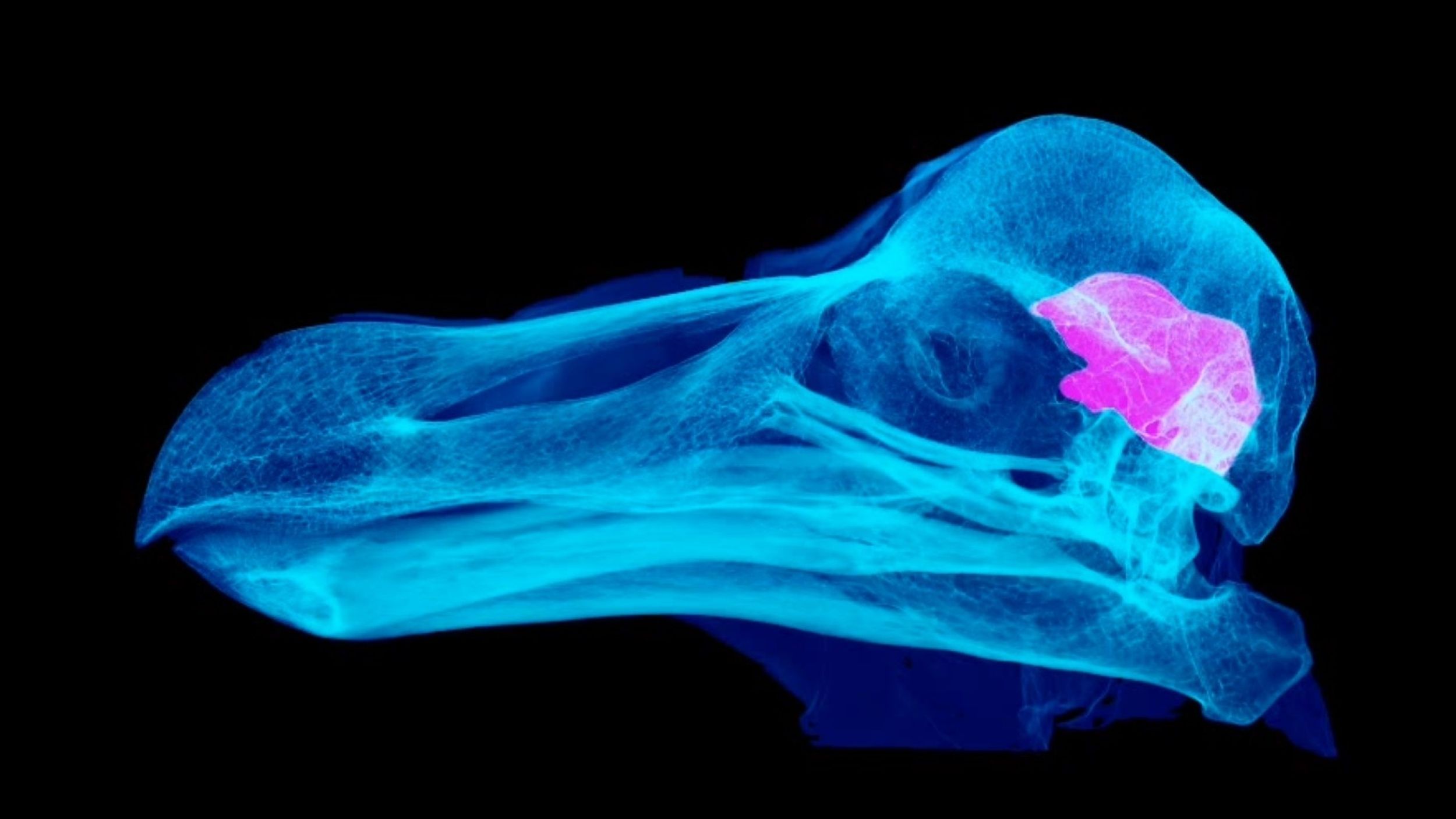
New Study Reveals Dodo Birds Were Not Bird-Brains and May Have Lived in the Dark
According to a study published Aug. 5 in the Zoological Journal of the Linnean Society, the dodo bird was not the unintelligent, bumbling creature of historical caricature, but rather possessed brain proportions comparable to modern pigeons and likely adapted to low-light foraging. Researchers analyzing high-resolution computed tomography (CT) scans found that the iconic flightless bird from Mauritius featured an optic lobe structure indicative of poor daytime sight and potentially crepuscular or nocturnal habits.
- CT scans of preserved dodo skulls revealed a brain-to-body mass ratio consistent with other pigeon and dove species, indicating normal avian intelligence rather than cognitive deficit.
- The optic lobes responsible for processing visual data were significantly reduced, suggesting the species relied heavily on non-visual senses such as smell in low-light conditions.
- The historical perception of dodo stupidity stems from sailors exploiting the bird’s natural lack of fear and its tendency to approach distressed peers in the absence of native mammalian predators.
Anatomical Evidence Challenges Centuries of Stigma
Generations of natural historians have cast the dodo as an evolutionary failure, but recent cranial reconstructions tell a different neurological story. Study first author Sara Citron, a doctoral candidate in behavior and evolution at the University of Lethbridge in Canada, noted during interviews that scans of available dodo skulls showed forebrains linked to cognition and memory proportional to living pigeon relatives. “Our interpretation is that this species was really, really not relying much on sight,” Citron stated, pointing out that reduced visual processing typically signals alternative behavioral patterns.
Professor Vera Weisbecker from Flinders University in Adelaide, Australia, noted in commentary published via The Conversation that these findings dismantle the longstanding stereotype of the dodo as a clumsy daytime forager. The research team compared cranial models against 36 living species of pigeons and doves, alongside the extinct Rodrigues solitaire (Pezophaps solitaria), confirming that the dodo’s brain structure fell safely within expected parameters for a giant ground-dwelling pigeon relative.
Ecological Pressures and the Reality of Island Evolution
Native to the island of Mauritius, the dodo survived for millennia without encountering mammalian predators. When Dutch sailors arrived in 1598, the birds displayed no innate fear, rendering them vulnerable to rapid exploitation. Historical accounts cited by researchers describe how sailors capitalized on this trait by capturing a single bird and letting it scream, prompting other dodos to run toward the distress calls. Far from indicating a lack of survival instinct, this behavior reflected an ecosystem completely devoid of predators prior to human settlement.

Human arrival brought not only direct hunting but also invasive species including dogs, cats, pigs, and rats that decimated nests and preyed on flightless adults.
Re-evaluating Sensory Adaptation and Behavior
Beyond cognitive capacity, the analysis of the dodo’s reduced optic lobes points toward specialized sensory adaptations. Researchers theorize that enhanced olfactory capabilities and low-light vision allowed the dodo to forage during twilight or nighttime hours, reducing direct competition with giant tortoises and other diurnal fauna on Mauritius. While historical logs lack explicit confirmation of nocturnal activity, the anatomical data strongly support alternative ecological niches.
The persistent myth of the dodo’s extreme ineptitude continues to shape public perceptions of endangered wildlife today. Citron emphasized that animals driven to extinction by human intervention were highly adapted to their environments for millions of years. As contemporary conservation scientists work to protect vulnerable taxa—and biotechnology firms explore genetic restoration techniques—understanding the true biology of extinct species provides critical baseline data for modern biodiversity preservation.