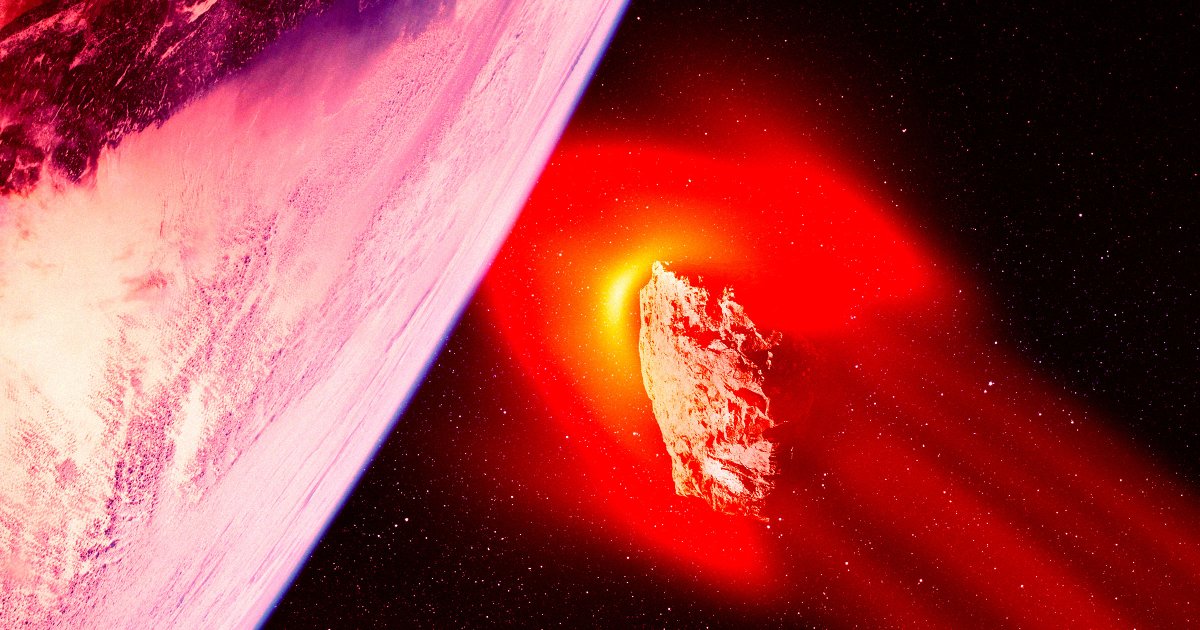
New Study Challenges Theory That Comets Seeded Life on Earth
“Historically, scientists thought that comets were important for the origin of life on Earth, because they carried carbon- and nitrogen-bearing molecules, so these giant space snowballs were almost like a ‘get out of jail free card’ that brought all the molecules a planet would need to seed life,” said lead author Dr. Richard Anslow from the University of Cambridge’s Institute of Astronomy, cnn.com reported. That long-standing theory that comets kick-started life on Earth by delivering vital organic molecules may be incorrect, according to computer simulations published in the journal Scientific Reports.
The Tech TL;DR:
- New computer simulations show comet impacts on early Earth were generally too fast and violent for fragile organic molecules like hydrogen cyanide to survive intact.
- The study, published in Scientific Reports, counters decades of scientific thinking dating back to at least 1961 regarding comets as the primary delivery mechanism for prebiotic chemistry.
- Researchers suggest alternative pathways, such as asteroid impacts or in-situ synthesis on Earth or ancient Mars, require closer scientific evaluation.
Simulating Over One Hundred Thousand Impact Scenarios
To test the hypothesis, the research team used modern models of comet formation and evolution to simulate Earth’s heavy bombardment period over four billion years ago. During this epoch, Earth may have experienced impacts from more than 100,000 comets larger than 100 meters, or 328 feet, according to cnn.com. The team ran these simulations 100,000 times to determine whether the icy bodies could successfully deposit intact organic compounds.
The results showed that 54% of the simulations produced no successful impacts at all. The remaining 46% recorded at least one collision, with a tiny minority registering up to three. Lead author Richard Anslow noted that the typical velocities of these comets meant very few, if any, could deliver intact organic molecules. When comets strike a planet, they undergo extreme temperatures and pressures, which research indicates can destroy precursor molecules during the impact event, cnn.com reported.
Hydrogen Cyanide and the Limits of Prebiotic Chemistry
The study focused primarily on hydrogen cyanide, or HCN, a naturally occurring chemical compound composed of hydrogen, carbon, and nitrogen. HCN has been detected in dozens of comets, and is considered an important precursor in prebiotic chemistry that can form amino acids when combined with water, cnn.com noted. Mashable reported that lab experiments show concentrated HCN can produce fats, sugars, and the nucleic acids that make up DNA and RNA.
However, the new models indicate that even if a successful impact occurred, it would be unlikely to deliver the chemical in a useful concentration. An impact into an early ocean would cause the compound to quickly dissolve.
Asteroids and Ancient Mars May Have Seeded Prebiotic Chemistry
With comets appearing less viable for seeding prebiotic chemistry, researchers are pointing toward alternative avenues. One competing theory involves asteroids, which struck Earth more frequently and at slower speeds than comets, Mashable noted. Recent analyses of samples from asteroids Bennu and Ryugu confirm they contain the majority of protein-building amino acids.

The study also highlights ancient Mars as a potentially more favorable environment for comet-delivered molecules. Because Mars is smaller and farther from the sun, the impact velocity of incoming comets is lower, preventing the widespread destruction of hydrogen cyanide observed in Earth-based simulations, cnn.com reported.