New South African Fossil Nyana Roiwalensis Shows Early Sauropod Ancestor Path
A newly identified dinosaur species, Nyana rooiwalensis, has been discovered in South Africa, providing researchers with evidence of how early ancestors of giant sauropods began their evolutionary path toward massive body sizes.
While famous long-necked giants like Brachiosaurus reached weights of 80 tonnes 150 million years ago, Nyana rooiwalensis lived roughly 210 million years ago during the Late Triassic period, The Conversation reported.
- Nyana rooiwalensis weighed approximately 400 kilogrammes despite being a young individual at the time of death.
- The fossil was recovered from the Elliot Formation, a rock sequence deposited between 215 million and 185 million years ago.
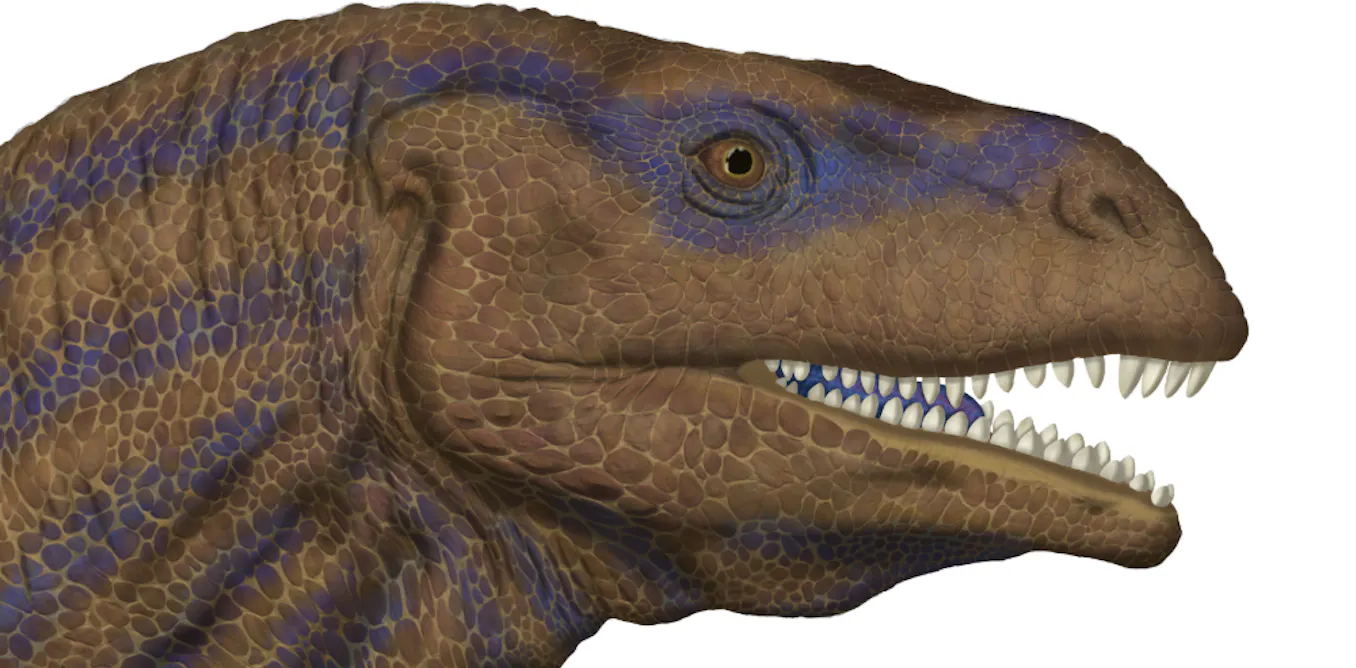
- The specimen features a nearly complete, well-preserved skull, a rarity for fossils from this geological period.
The discovery includes a skull with intact braincase, palate, and throat structures, allowing scientists to study anatomical proportions that are typically lost in incomplete specimens, according to The Conversation.
Microscopic analysis of the dinosaur’s bone tissue revealed at most two lines of seasonal growth, indicating the animal reached a substantial size while still at an early life stage. This suggests that the rapid growth strategies eventually associated with gigantism were already present in early sauropodomorphs.
Researchers found the fossil near the village of Qhemegha in the Eastern Cape province. The team chose the name Nyana—meaning "son" or "child" in isiXhosa and "small" in Sesotho—to reflect the dinosaur’s youth and size, while rooiwalensis references the local Rooiwal area, The Conversation noted. Atashni Moopen at the fossil site of Nyana rooiwalensis.
South Africa’s fossil record also contains Ledumahadi mafube, a 12-tonne relative of sauropods that lived nearly 200 million years ago, Eurekalert reported. While Nyana provides a look at early growth, Ledumahadi represents a later, transitional stage toward the massive sauropods of the Jurassic period.
“The first thing that struck me about this animal is the incredible robustness of the limb bones.”
says lead author, Dr Blair McPhee.
““It was also interesting to see that the bone tissues display aspects of both basal sauropodomorphs and the more derived sauropods, showing that Ledumahadi represents a transitional stage between these two major groups of dinosaurs.”” says Dr. Jennifer Botha-Brink.
Scientists, including a team led by Jonah Choiniere, described Ledumahadi as an evolutionary "experiment" in body size, as its limbs were significantly thicker than those of later, more slender giants, according to Eurekalert. Analysis of Ledumahadi bone tissue by Dr. Jennifer Botha-Brink showed that the animal grew rapidly before reaching adulthood, confirming that the path toward gigantism in the sauropodomorph lineage was highly dynamic.
Nyana rooiwalensis: South Africa's earliest near-complete sauropodomorph dinosaur skull from the Late Triassic of the Eastern Cape Province https://t.co/PTTWuPEL9U
The recovery of these specimens highlights how different, non-linear strategies for movement and growth emerged within the group. "Many giant dinosaurs walked on four legs but had ancestors that walked on two legs," Dr. Roger Benson said, as reported by Eurekalert.