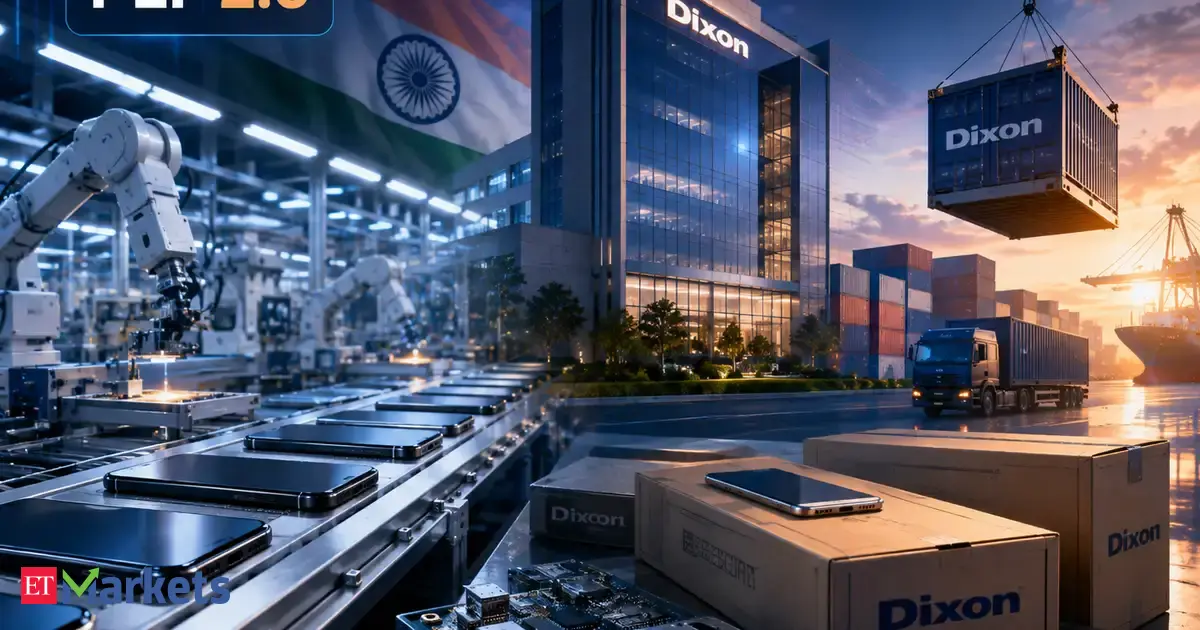
New Mobile Manufacturing Scheme to Boost Dixon Technologies and Sector Growth
The Indian government’s proposed Production Linked Incentive (PLI) 2.0 scheme for mobile phones is engineered to reward manufacturing scale, export capabilities, and robust domestic supply chains, according to an assessment released by Motilal Oswal. The policy shift targets structural gaps in local electronics assembly by tying financial rewards closer to incremental sales volumes and deeper backward integration.
Rewarding Scale and Export Capabilities in Indian Manufacturing
For large-scale original equipment manufacturers operating within the subcontinental electronics hub, the revamped framework introduces a distinct fiscal equation. Companies that expand export footprints while simultaneously localizing component sourcing stand to capture outsized subsidies. Under current market conditions, supply chain friction and import dependencies for sub-assemblies often erode operating margins.
Dixon Technologies Positioned as a Primary Beneficiary
Motilal Oswal identifies Dixon Technologies as a key beneficiary of the incoming PLI 2.0 architecture, citing the firm’s established manufacturing footprint and operational readiness to scale. As the policy framework emphasizes incremental growth over baseline production, contract manufacturers with diversified client portfolios hold a clear competitive advantage.
Operating cash flows and EBITDA margins across the contract manufacturing sector face constant pressure from component price volatility and capital expenditure requirements for facility expansions. Navigating the rigorous compliance and verification standards mandated by federal disbursement agencies requires specialized institutional oversight.
Shifting Focus Toward Backward Integration
The structural evolution from basic assembly to comprehensive component manufacturing marks a significant shift for India’s electronics sector. Previous iterations of production incentives catalyzed assembly operations, yet high-value components often remained imported. PLI 2.0 directly addresses this dependency by restructuring incentive slabs to favor domestic sub-assembly production.

Execution, Capital Allocation, and International Timelines
Achieving true backward integration demands significant capital allocation and technical partnerships. As global electronics brands diversify their manufacturing bases away from legacy hubs, Indian assemblers must scale capacity rapidly to meet stringent international delivery timelines.
As capital flows into domestic electronics manufacturing, institutional investors will closely monitor operating leverage and export conversion rates across participating firms.