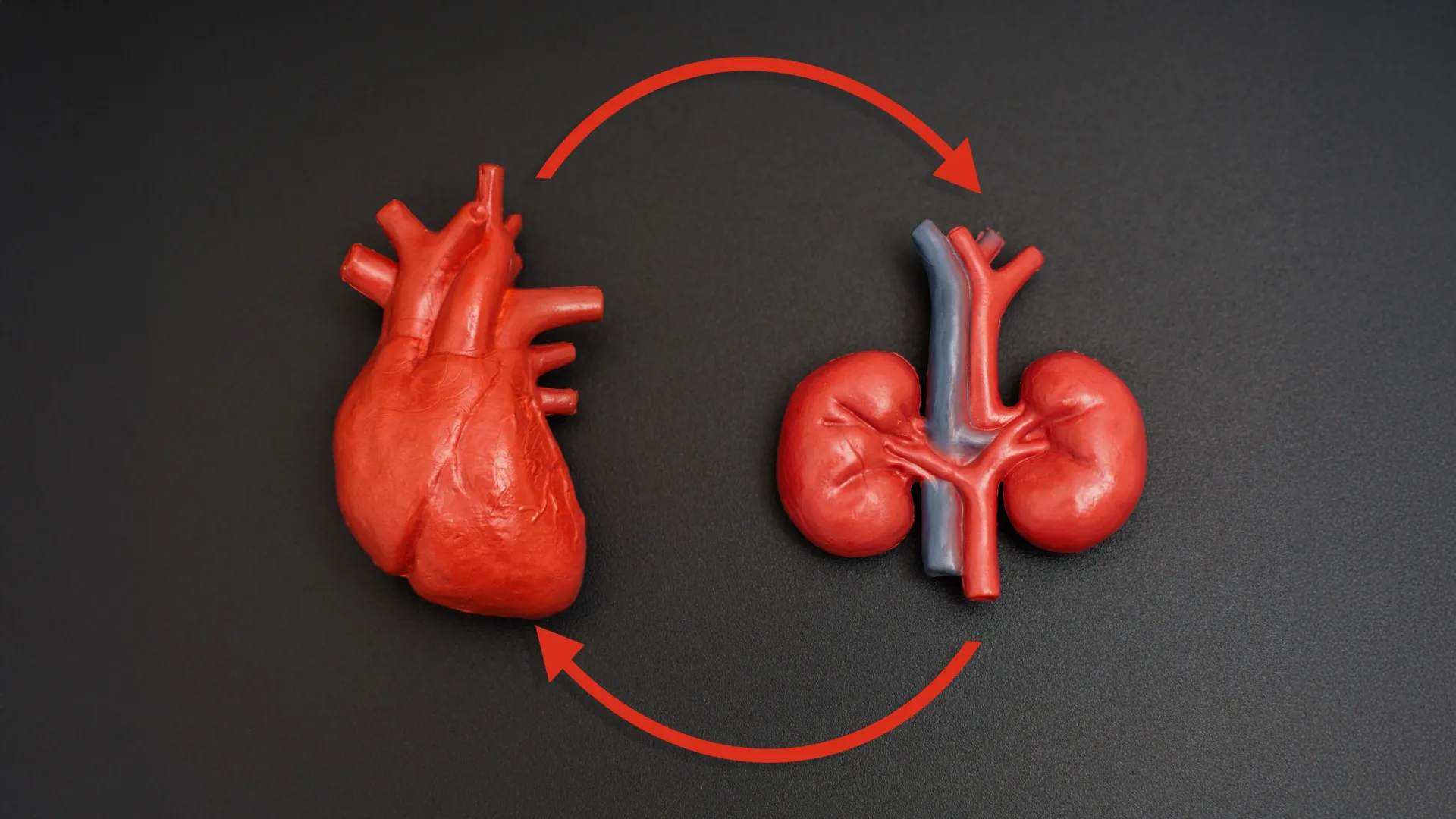
New Medical Guidelines Aim to Break the Cycle of Interconnected Heart and Kidney Disease
Cardiovascular disease and chronic kidney disease reinforce each other in a destructive clinical feedback loop, prompting the European Society of Cardiology and the European Renal Association to publish the first dedicated guidelines on August 28, 2026, recommending routine kidney function screening for all heart disease patients to catch complications early.
- All patients diagnosed with cardiovascular disease must now be screened for chronic kidney disease using blood creatinine and urine albumin tests under the new guidelines published in the European Heart Journal.
- The guidelines introduce the ‘STAMP on CKD’ acronym to streamline clinical workflows: Screen, Triage, Address CKD Risk, Modify CVD management, and Plan health services.
- Task Force experts emphasize that early administration of RAS inhibitors, SGLT2 inhibitors, and statin-based therapy significantly reduces both renal and cardiovascular complications.
The Interconnected Pathogenesis of Cardiovascular and Renal Decline
Heart and kidney conditions rarely develop in isolation. Chronic kidney disease affects an estimated 100 million people across Europe, placing every single affected individual at a severely elevated risk of adverse cardiovascular events. According to Task Force Chair Associate Professor Kevin Damman from the University Medical Centre Groningen in the Netherlands, each disease accelerates the progression of the other, frequently driving patients toward premature dialysis and fatal cardiovascular incidents.
Left unchecked, declining glomerular filtration rates alter pharmacokinetics, making standard heart failure medications dangerous or ineffective if clinicians fail to adjust dosing based on real-time renal clearance data.
Implementing the STAMP on CKD Framework in Daily Practice
The newly released guidelines establish a concrete operational roadmap for physicians via the ‘STAMP on CKD’ framework. The process begins with universal screening, requiring clinicians to evaluate estimated glomerular filtration rates alongside urine albumin-to-creatinine ratios in every newly diagnosed cardiac patient. Task Force Chair Professor William Herrington from the University of Oxford notes that because large populations of chronic kidney disease patients receive primary care within cardiology settings, expanding routine biomarker testing will capture vulnerable cohorts before irreversible organ damage occurs.

Triage protocols within the new standards rely on validated risk-scoring systems that factor in declining kidney function to predict 10-year survival probabilities. Once high-risk profiles are identified, physicians are directed to modify standard therapeutic strategies. For instance, incorporating specific agents that safely halt renal scarring while managing blood pressure is critical.
Overcoming Specialty Silos Through Multidisciplinary Planning
Successfully interrupting the cardiovascular-kidney cycle requires dismantling historical barriers between cardiologists and nephrologists. The guidelines advocate for proactive health service planning to guarantee that high-risk patients experience minimal friction when transitioning between specialists. Active communication channels allow care teams to address complex comorbidities, such as fluid overload and resistant hypertension, with unified precision.
As health systems adopt these updated standards, administrative and clinical workflows must adapt to accommodate mandatory screening metrics. Engaging patients and their caregivers directly in this multidisciplinary process ensures that therapeutic goals remain aligned with individual patient priorities, ultimately improving adherence and long-term prognosis.
*Disclaimer: The information provided in this article is for educational and scientific communication purposes only and does not constitute medical advice. Always consult with a qualified healthcare provider regarding any medical condition, diagnosis, or treatment plan.*