
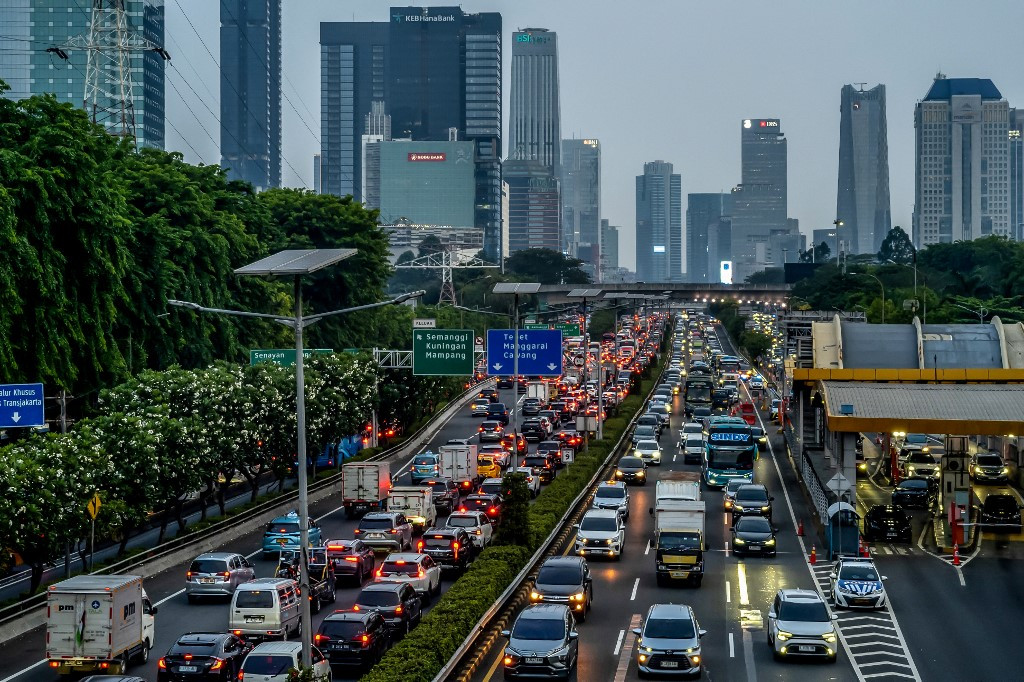
Java’s Urbanites Fuel Climate Change More Than Rural Counterparts
New Study Links City Living to Higher Carbon Emissions
Residents of Java’s major urban centers are significantly contributing to global heating, emitting considerably more carbon dioxide than their rural counterparts, a recent report reveals.
Urban Carbon Footprint Revealed
A study conducted by the Jakarta-based Institute for Essential Services Reform (IESR) analyzed data from 423 individuals across nine diverse locations on Java. Participants meticulously logged daily travel, food choices, and electricity consumption via the IESR’s online platform, jejakkarbnoku.id, to calculate their personal carbon footprints. A subsequent survey aimed to verify the recorded information.
Disparities in Emissions
The findings indicate that individuals residing in densely populated urban hubs like South Jakarta, Bandung, and Yogyakarta exhibit markedly higher CO2 emissions. These city dwellers generate approximately 3.4 tonnes of carbon annually, a figure that is 45 percent greater than emissions from residents in rural areas such as Cianjur or Purworejo.
Furthermore, urban residents produce 21 percent more greenhouse gases than those living in smaller cities, including Bogor and Serang. This disparity highlights the environmental impact of urban lifestyles.
Call for Behavioral Change Policies
In light of these findings, researchers from IESR are advocating for governmental policies designed to encourage behavioral shifts among urban populations. Such measures, they suggest, are crucial components of broader climate mitigation strategies aimed at reducing greenhouse gas emissions, the primary driver of climate change.
Globally, urban areas are often centers of consumption. For example, a 2023 UN-Habitat report indicated that cities account for over 70% of global carbon emissions, underscoring the need for targeted interventions (UN-Habitat 2023).
